
Castello di Vicarello is the Tuscan dream, generations in the making

hotels

lodges

Places we've
stayed
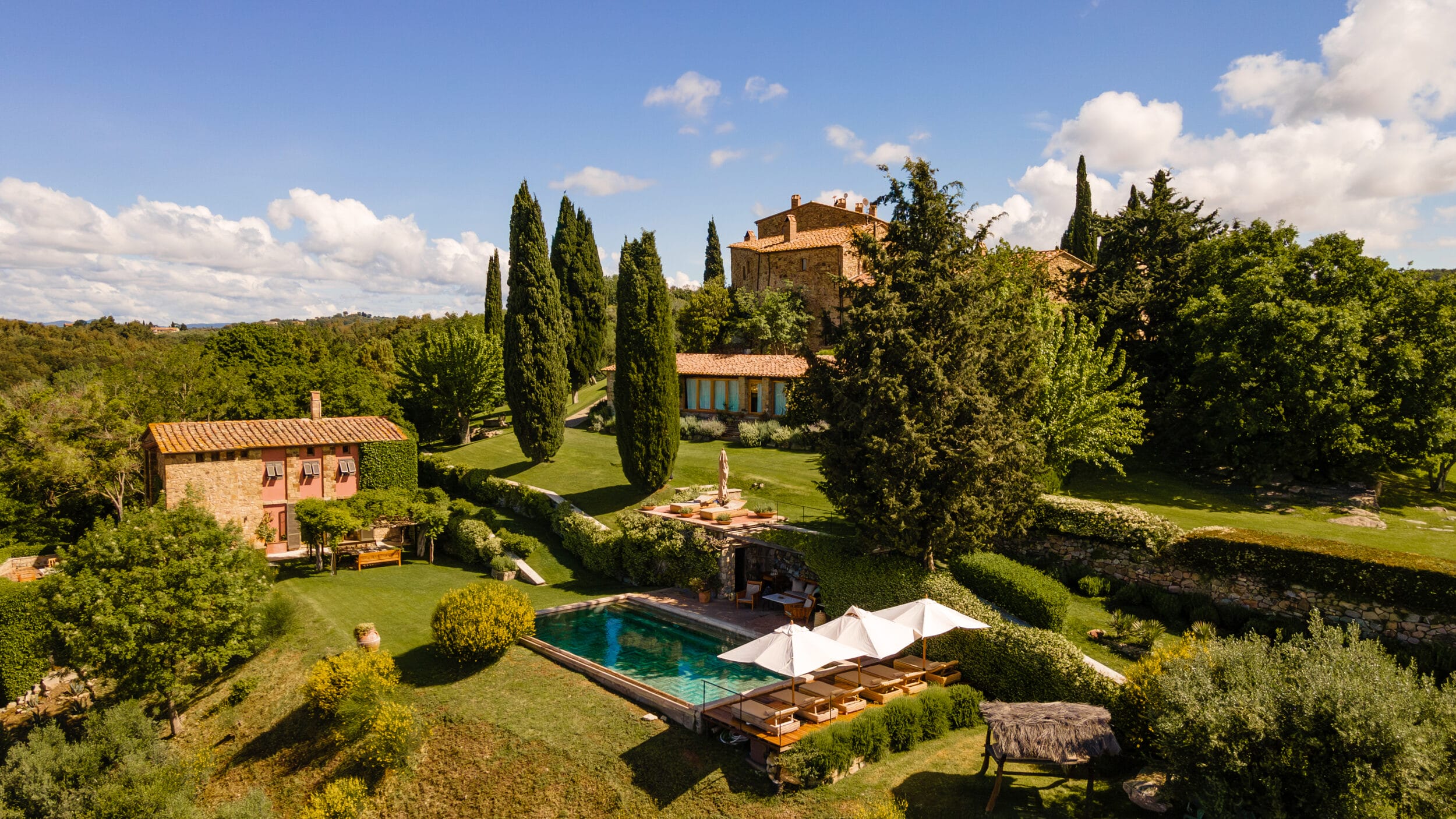
Castello di Vicarello. Image credit: Victor Fitz
Buried in oak forests and olive groves in Tuscany’s wild southern Maremma, this 12th-century hilltop fortress was a ruin when a Milan fashion couple found it in the 1980s. After 12 years of restoration, Castello di Vicarello is now one of Italy’s most remarkable boutique hotels
A decades-long labour of love of the Baccheschi Bertis family, the 12th century Castello di Vicarello is hidden amid oak forests, olive groves and vineyards in Tuscany’s wild southern Maremma region. As remote as it feels, it’s only an hour’s drive to Siena and 40 minutes to Italy’s west coast.
In the 1980s, Carlo and Aurora Baccheschi Berti were dividing their time between Milan and Bali, immersed in the worlds of fashion, textiles and furniture design. When Aurora discovered the ruins of Castello di Vicarello, which had once been a fortress of the Republic of Siena, they relocated to Maremma with their three young sons to embark on a meticulous 12-year restoration project.
In 2003, they opened the Castello as a one-of-a-kind luxury boutique hotel, which not only showcased a centuries-old Tuscan heritage but also a contemporary design aesthetic that melded Italian style with Indonesian artefacts and a striking personal art collection. Starting with just three suites, they now have 10, plus the four-storey, two-bedroom Villa La Vedetta, which opened in April 2025 in a former guard tower.
While Carlo and Aurora are still intimately involved in the Castello’s design decisions, they now live on the Greek island of Sifnos and have passed management to their three sons: Youngest Corso oversees Castello di Vicarello’s hotel operations, oldest Brando manages the estate’s vineyards and winemaking operations, while middle child Neri runs a sister property, the boutique Vico Milano hotel in Milan.
While You’re Here
Make time to visit Siena – the spa town of Bagno Vignoni – with its spectacular Piazza del Campo and cathedral. And the medieval hilltop villages of Montalcino and Montepulciano, renowned for their Sangiovese-based red wine. Or, go for a swim off the sandy beaches in Maremma National Park.
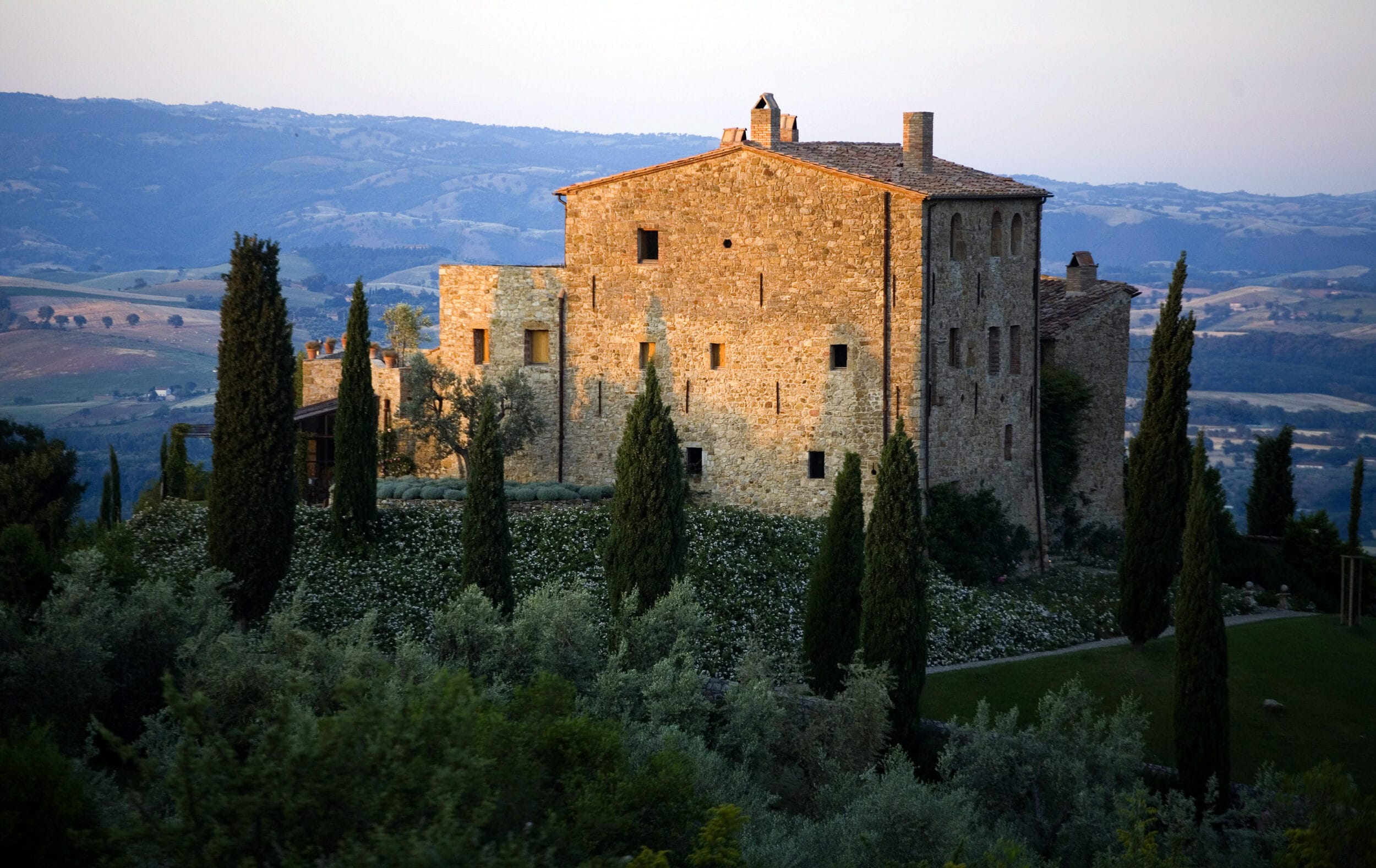
A welcome with a view
After following winding country roads with jawdropping views across undulating valleys, we arrive at the cypress-tree-framed Castello di Vicarello on a blue-sky day in June. The hilltop castle is imposing, a soaring fortified post of stone that must have rebuffed many an invader. Today, we walk through an archway into an intimate stone courtyard, adorned with fragrant creepers and pots of red geraniums. Corso and the family’s beloved dog Uva offer a warm welcome.
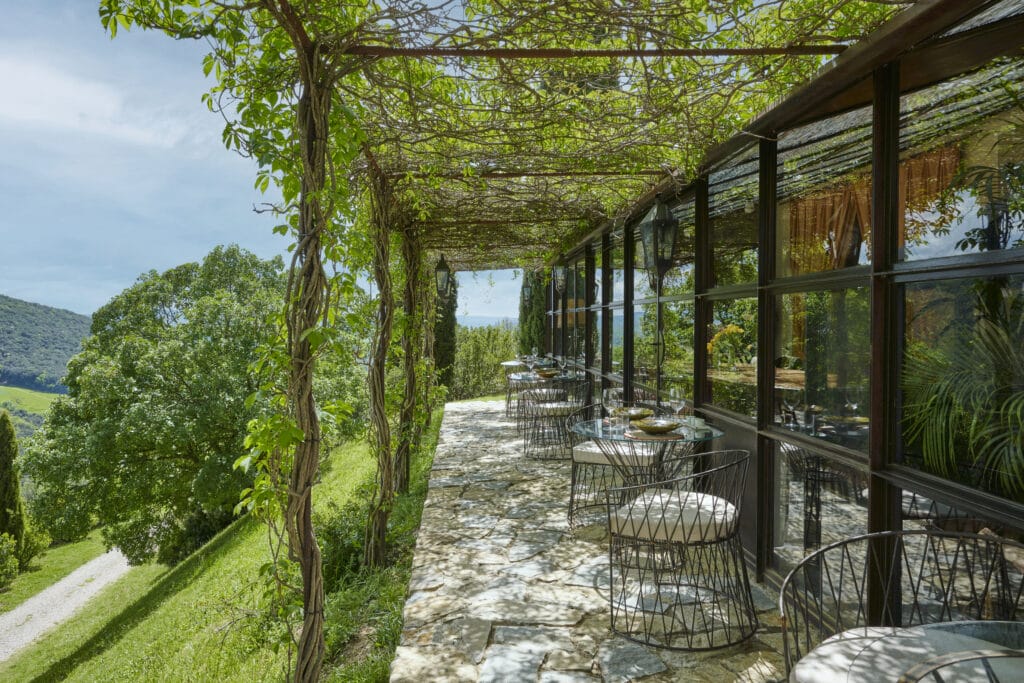
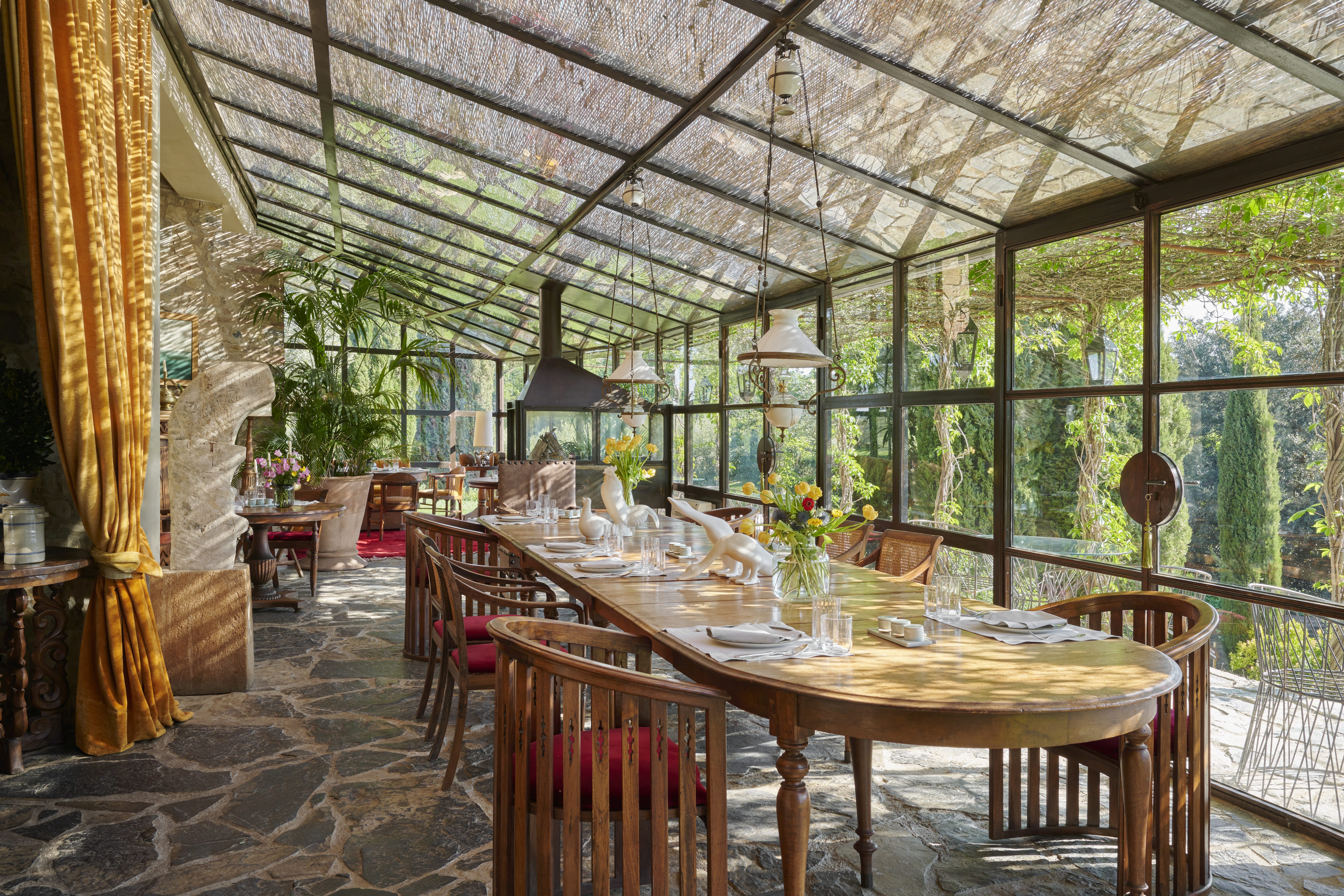
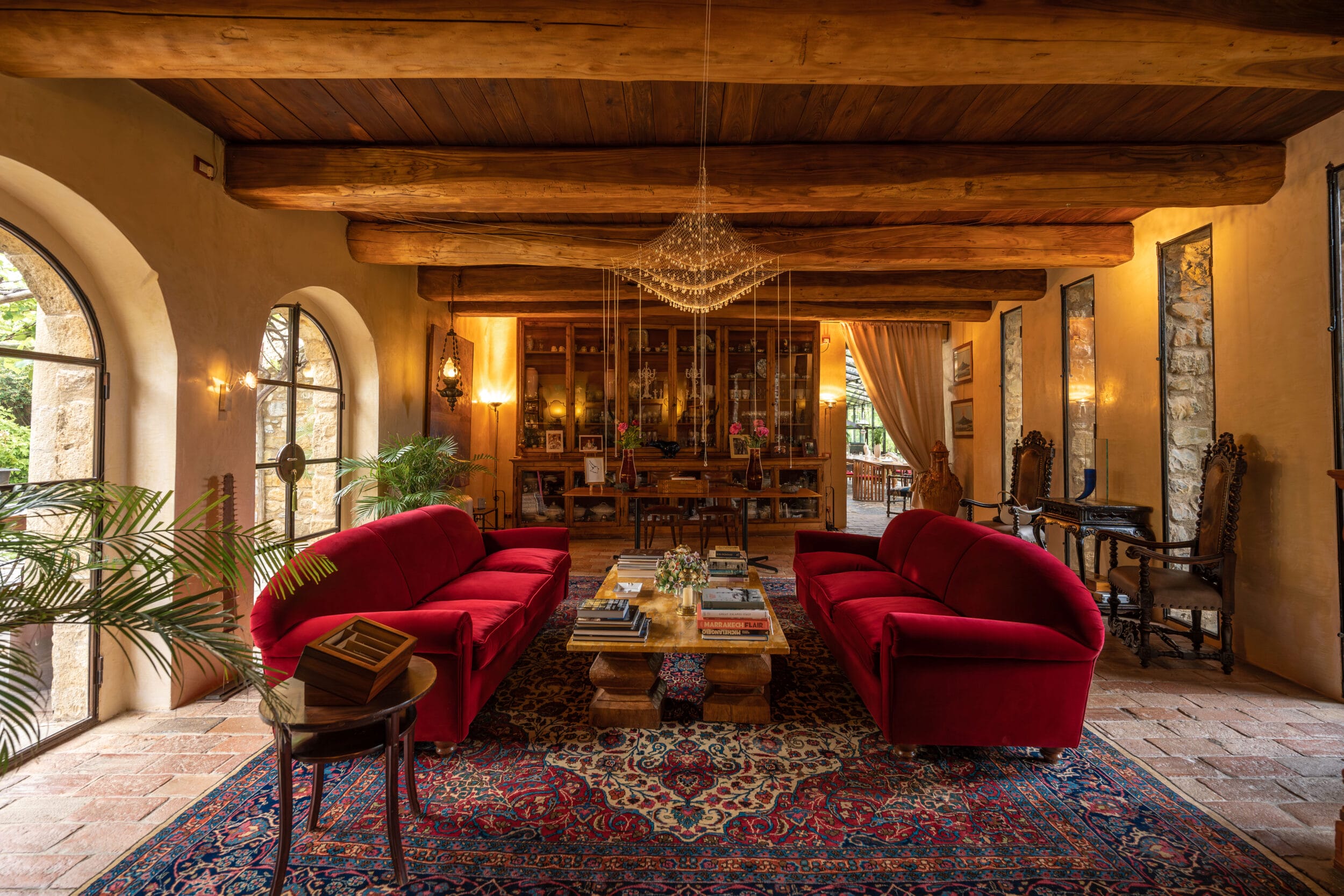
The atmosphere is informal with no real reception area – just an intimate office filled with museum-worthy antiques. We visit the original arched medieval kitchen, which opens out to a luminous greenhouse with a long dining table. Nearby is a winter living area decked in maroon velvet sofas and piles of art books on a large coffee table underneath a contemporary chandelier of crystal orbs.
The castle is surrounded by the estate’s vineyards and olive groves as well as a walled kitchen garden. There are two pools: a travertine infinity pool offers sweeping views across the Tuscan landscape, and a heated green-marble wellness pool is nestled in the olive grove.
Tuscan dreams
The Torre Suite with vaulted, beamed ceilings is atop the castle tower. This is where Carlo and Aurora stay when they are at Castello di Vicarello and, as such, it offers key insights into their design philosophy. A king-sized sleigh bed is positioned to capture the best views, with a comfortable sofa and velvet chairs surrounding a large stone fireplace. An antique writing bureau invites journaling, and an eclectic collection of paintings and objets d’art highlight the family’s wide-ranging travels.
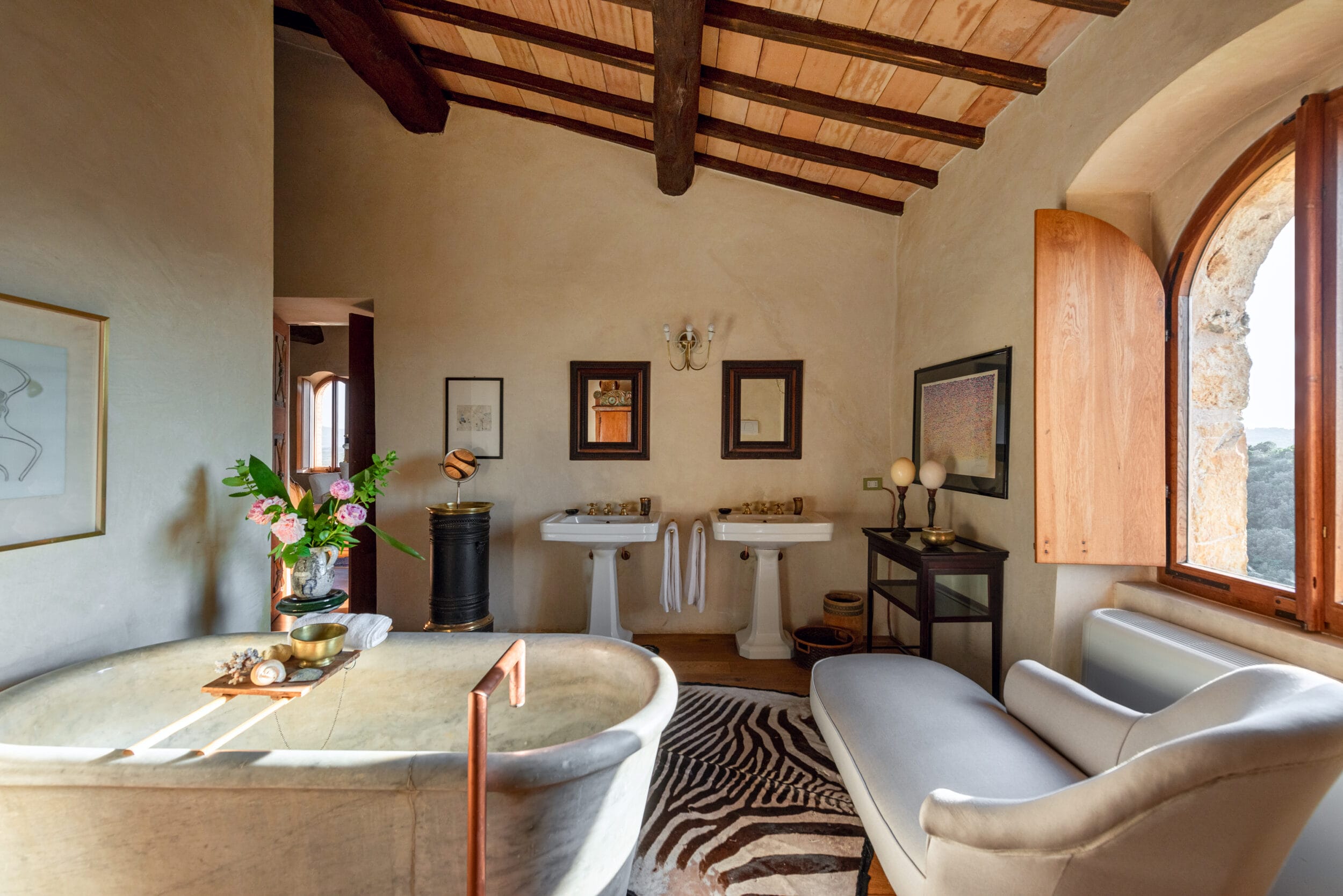
There’s a large dressing room with an armoire and Indonesia rattan day bed, and the spacious bathroom features a grey marble bath, glassed-in shower stall, two vanities and an inviting chaise lounge. The suite also has a terrace with fabulous views over the castle courtyard and gardens to the undulating Tuscan countryside in the distance.
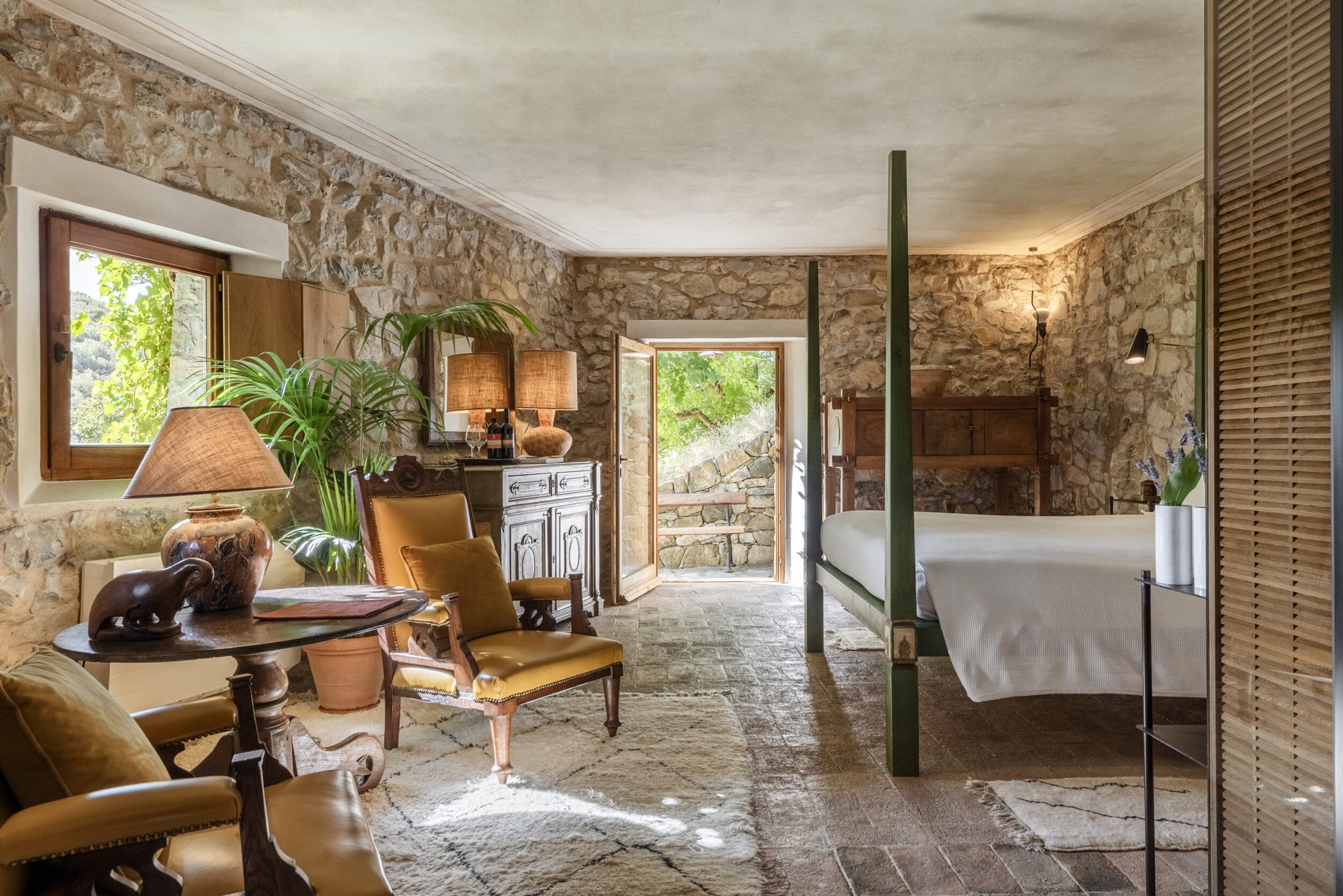
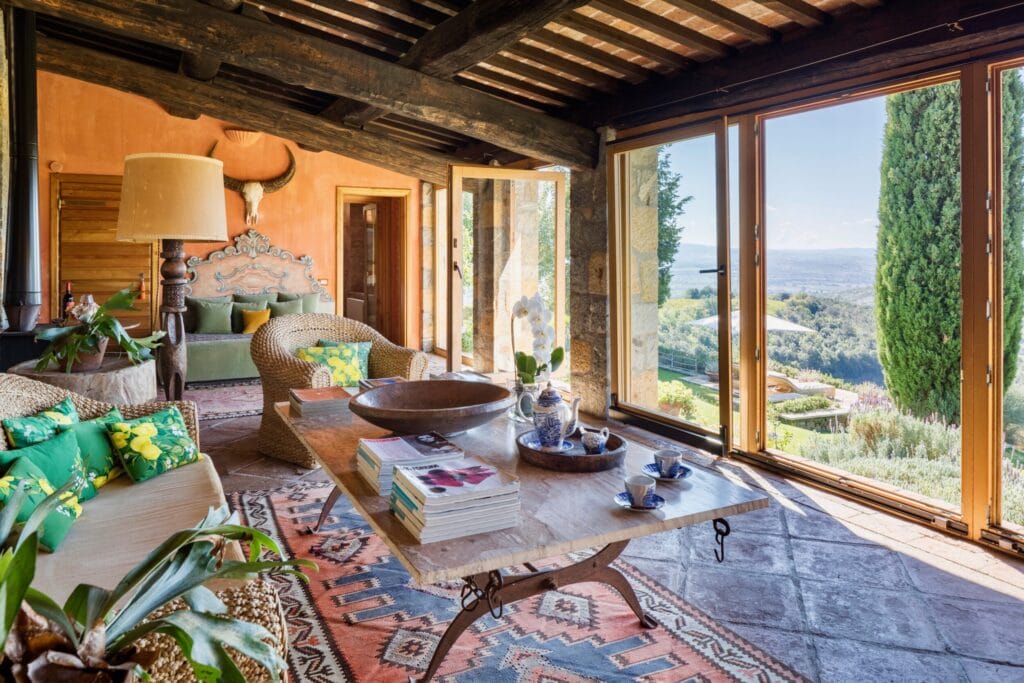
We’re staying in the apricot-toned Sassi Suite, a separate stone building set just below the castle. Its elongated terracotta-floored living area sports a comfortable couch perfectly positioned in front of floor-to-ceiling windows with views across the travertine pool to the valley beyond. The bedroom features a very comfortable, hand-carved bed while the large bathroom is lusciously appointed in pink marble.
The self-contained Villa Vedetta has an expansive living area with leather wing-back chairs around a stone fireplace – as well as a dining room and kitchen in a glass winter garden, which opens onto the sundeck overlooking a heated marble swimming pool. The rooftop deck offers panoramic views across the estate’s vineyards towards the Castello. Each of the two bedrooms sport marble showers in their black-and-white marbled ensuite bathrooms, with one also featuring a copper bathtub.
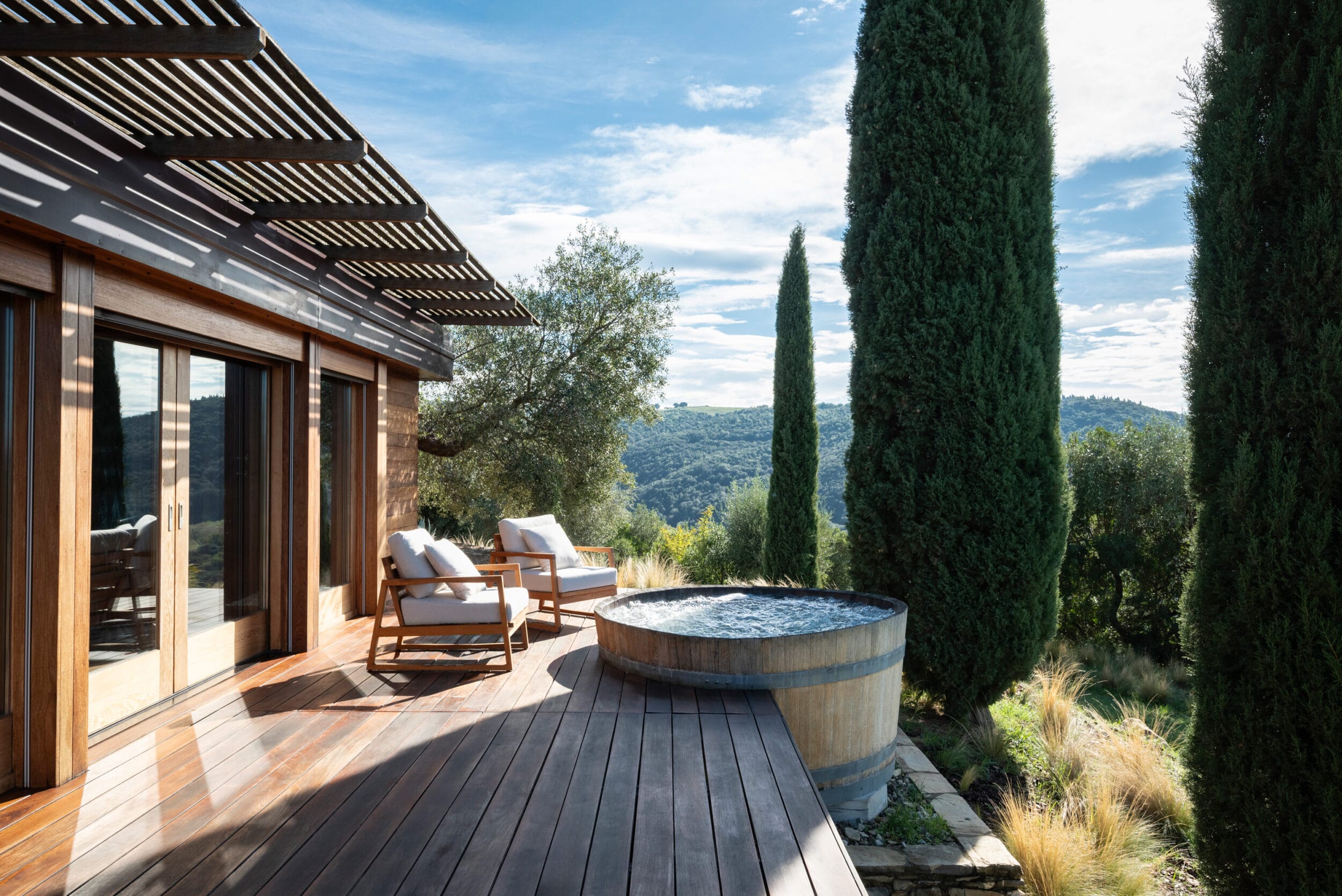
Organic beauty treatments, massages and yoga classes take place in an outdoor Balinese-inspired sala, which is set on a quiet terrace overlooking the olive groves. For the ultimate experience, guests can also stay in the modern, teak-lined spa suite, complete with hammam and sauna, floor-to-ceiling windows overlooking the Tuscan countryside, and an oak-barrel hot tub on the sun deck.
After spending the afternoon hiking the estate’s five-kilometre trail down to the tranquil Ombrone River, we enjoy a splendid candlelit dinner atop the castle’s grassy rooftop terrace.
Country dining
We enjoy a delicious breakfast of house-made pastries, breads and jams, eggs from the estate’s free-range chickens, and freshly squeezed orange juice at a marble table on the courtyard terrace before a cooking class with head chef Massimiliano Volonterio. He takes us to the kitchen garden to collect tomatoes and basil, before teaching us how to make pappa al pomodoro, the traditional Tuscan soup of tomatoes, garlic, bread and basil, alongside fresh tagliatelle pasta and a delectable tiramisu. As we feast on our creations, we think of Aurora, whose My Tuscan Kitchen cookbook inspired all the recipes.
After spending the afternoon hiking the estate’s five-kilometre trail down to the tranquil Ombrone River, we enjoy a splendid candlelit dinner atop the castle’s grassy rooftop terrace. The feast centres around a succulent Florentine T-bone steak, sourced from chef Massimiliano’s favourite farmer, which we wash down with Castello di Vicarello’s superb Tuscan red wine made from a blend of cabernet sauvignon, cabernet Franc and petit verdot. A full moon bathes the scene in an ethereal light and the ever-vigilant Uva makes sure no scrap is wasted.
Hotel Notes
Castello di Vicarello is a two-hour drive from Florence. Suites start from around AU$1,000 on a bed-and-breakfast basis.
castellodivicarello.com
Latest Articles
Don't miss the latest from Luxury Travel