
Japan Lodges
Inside the quiet beauty of Setouchi Retreat Aonagi on Shikoku

lodges

Places we've
stayed
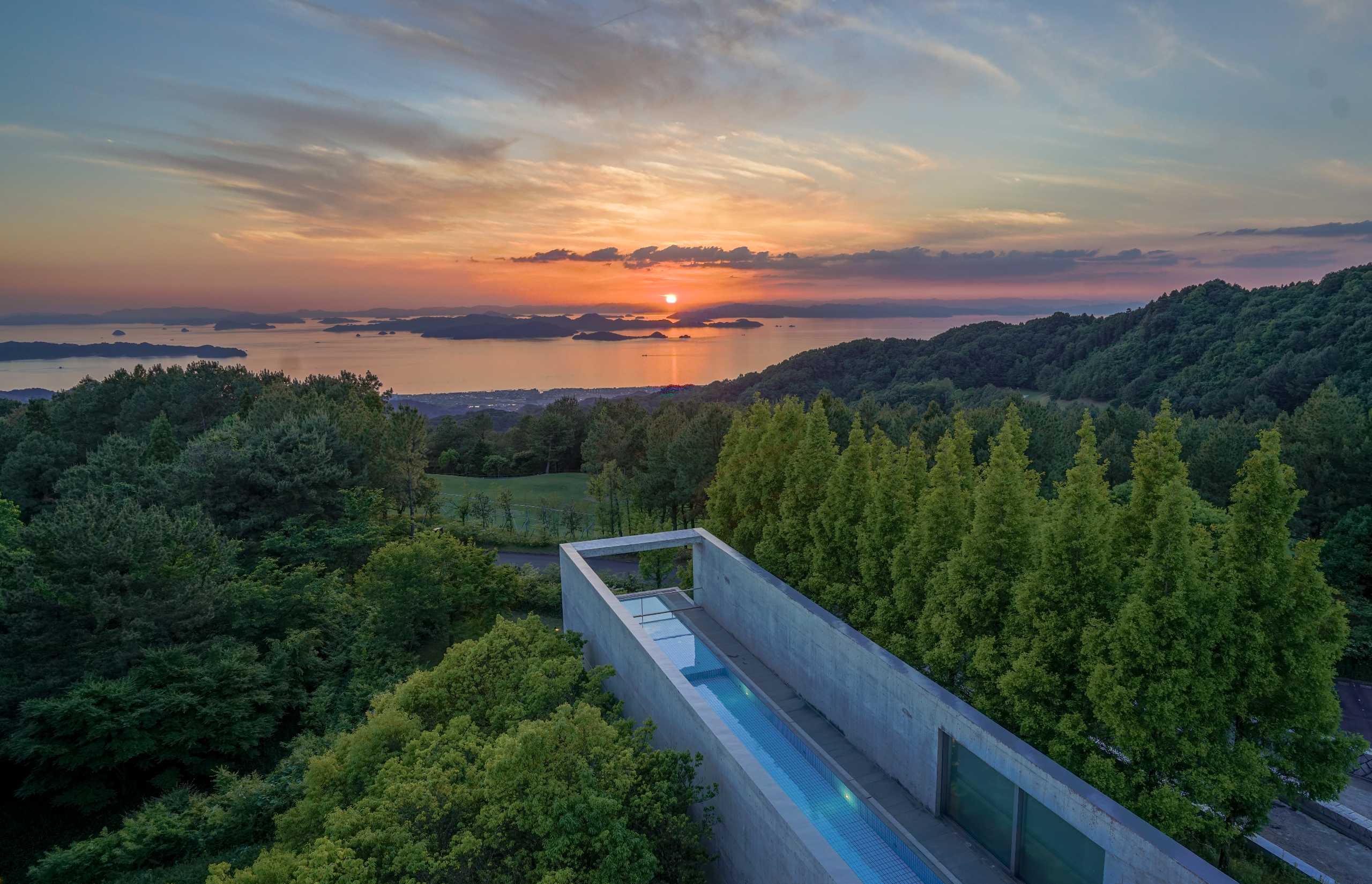
Matsuyama Summer | Setouchi Retreat Aonagi
Set on Shikoku’s forested northern edge, Setouchi Retreat Aonagi redefines Japanese luxury through stillness, craft and Tadao Ando’s poetic minimalism. Seven sweeping suites, private onsens and kaiseki dining create a rare retreat shaped by light, landscape and a deep sense of calm
The road curls like a smoky wisp through the woodland on Shikoku’s northern edge, and then the building appears, all quiet geometry and pale concrete, tucked into the green as if it’s been waiting centuries, not a decade. You don’t arrive so much as soften in. There are stays that impress you and stays that rearrange you. Setouchi Retreat Aonagi, part of the Japanese hospitality company Onko Chishin, belongs to the second kind. On a mission to “revisit the old to better understand the new” it honours a Confucian belief in preserving cultural heritage with custom made concepts.
And how.
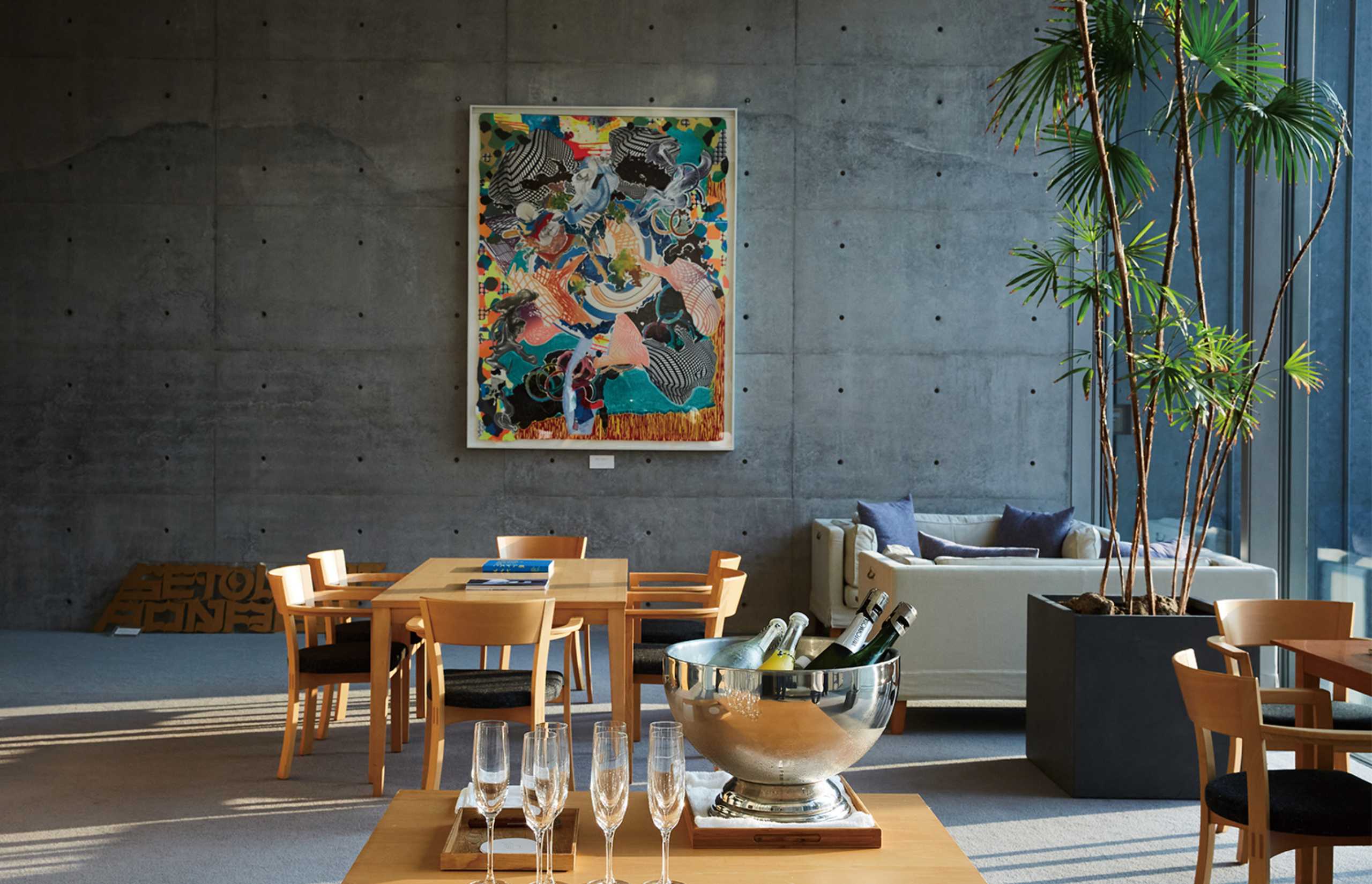
Brett Cox, my English-speaking host, meets me at the entryway, having my luggage whisked away and steering me toward a comfy sofa for check in where culinary little somethings await alongside a flute of bubbling happiness. “Shall I get you a glass of our orange juice?” he asks. Already I know, from being in Setouchi for a few days, that one never – ever – turns down a glass of anything containing citrus in this region. It’s the best you’ll ever have.
Tadao Ando’s quiet architecture
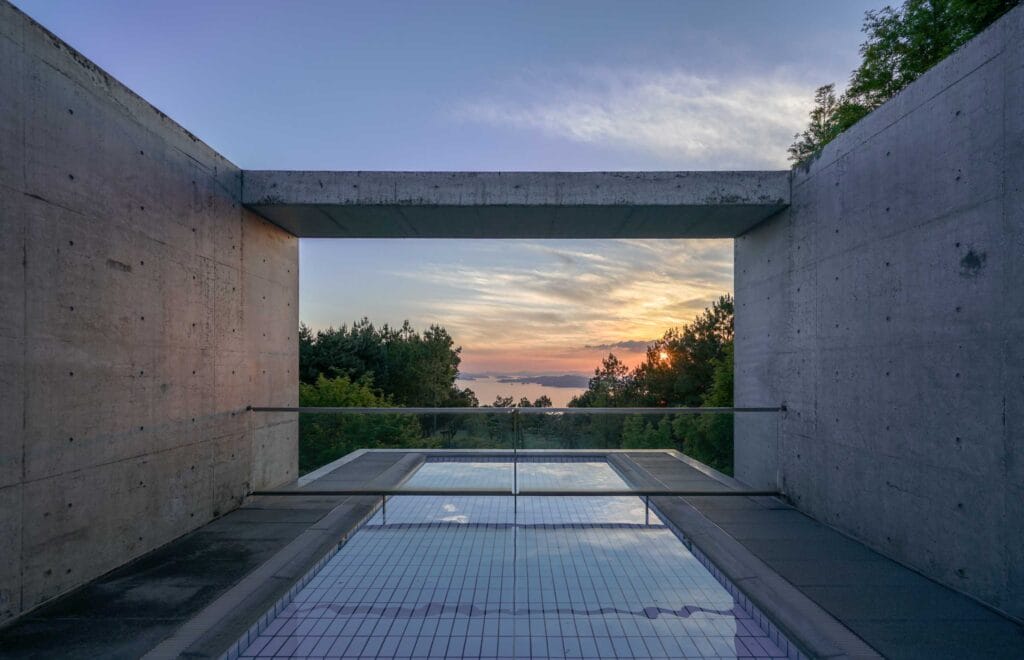
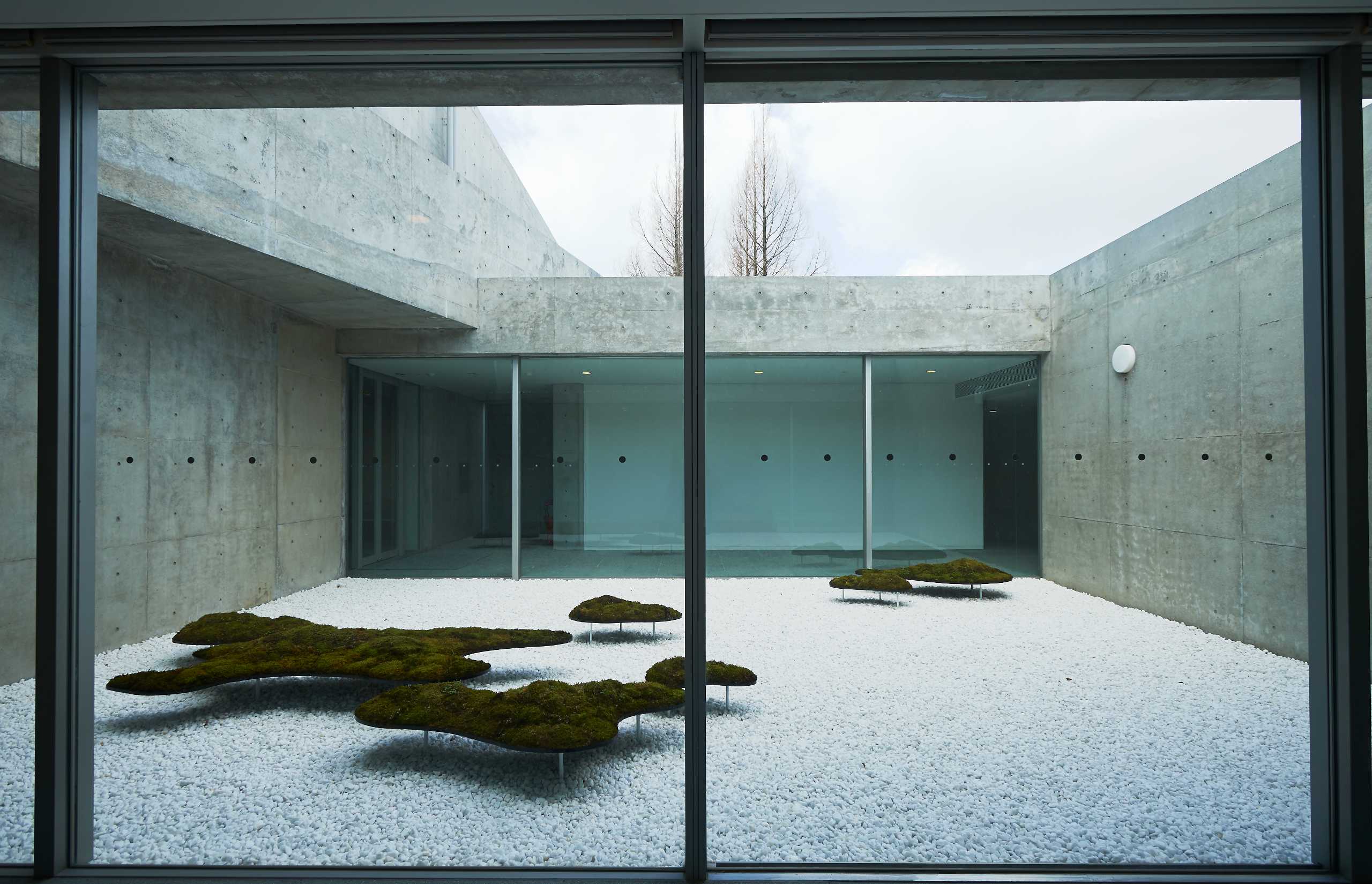
The famed Pritzker prize-winning architect and master of minimalism Tadao Ando designed this structure long before it became a hotel, back when Japan’s bubble-era optimism meant that even a private guesthouse could be approached like a museum. Ando’s fingerprints are everywhere; the shadow-play, the way the walls coax light into behaving differently. He’s famous for concrete, but here somehow, it feels warm, almost gentle, as if the forest has been teaching it manners. His touch is unmistakable, the building shaped so that it steps back and the landscape takes the lead.
The suites
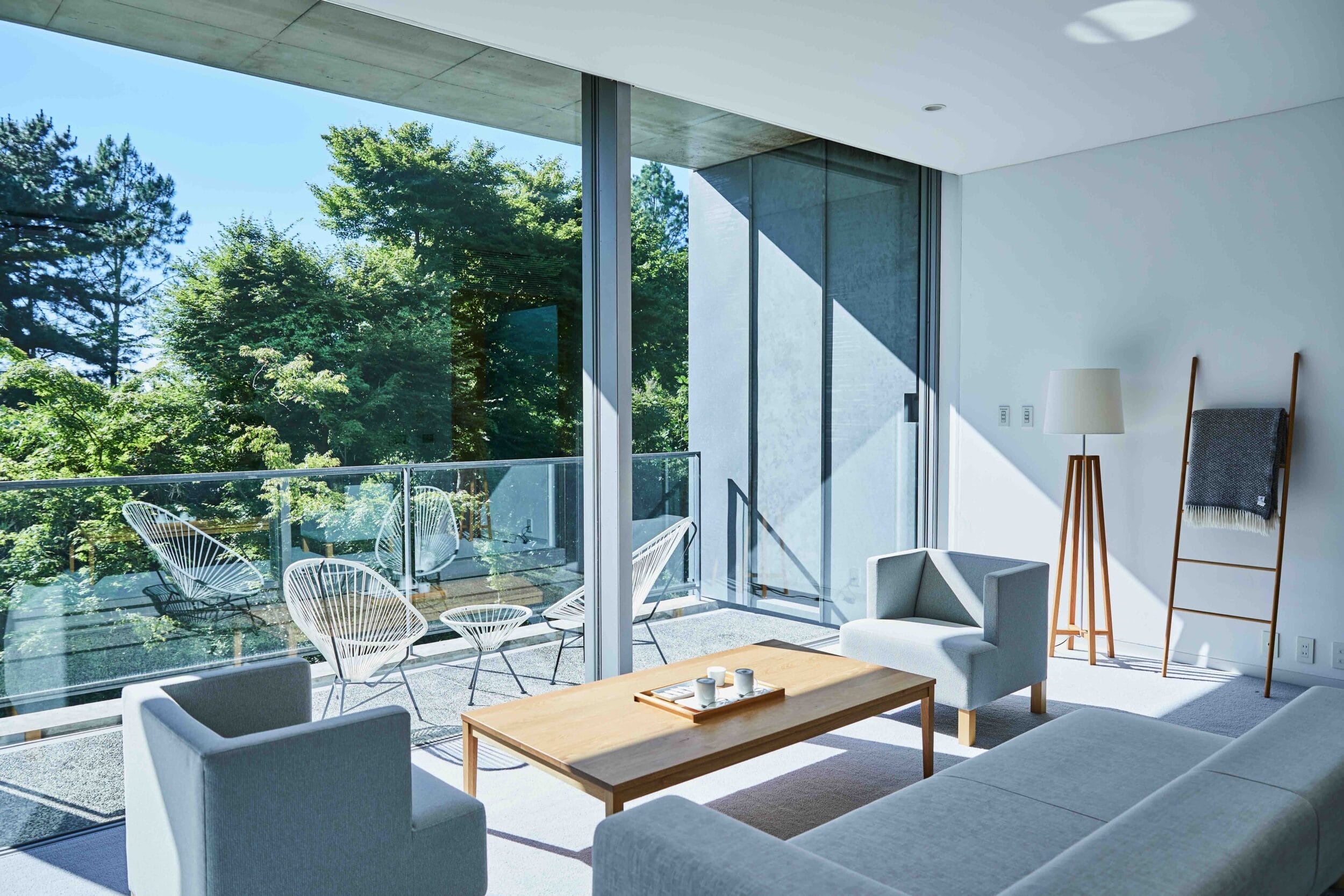
Seven suites await, that’s it – each covering an entire sprawling floor. The exclusivity is part of the intimacy, but not in the ‘private butler’ sense. It’s more in the way you can hear your own footsteps again, in the lack of bustle. My room is the forest-view hot spring suite; a treehouse of glass and vast space at 102 m² of elemental sanctuary. It’s wide and uncluttered with a view of meticulously groomed bushland. There’s art on the walls, thoughtful pieces placed sparingly like everything here is, and every amenity imaginable is provided. I keep thinking how Australian luxury often means spectacle, where here, luxury is almost a subtlety. Think attention without the theatrics.
While some hotels seem to want to impress you with abundance, Aonagi does the opposite. It asks you to notice and it provides the space for you to do so.
Design, detail and the private onsen
That smooth concrete replays the shift in the light as it moves, the corridors connecting spaces spar with moss gardens, and the in-room onsen, oh my word the in-room onsen. It’s mine and mine alone, private to my suite. Half indoors and half out, lying here partially submerged in this natural mineral water with evening filtering through the leafy expanse, makes the world feel both enormous and very small indeed.
The famed Pritzker prize-winning architect and master of minimalism Tadao Ando designed this structure long before it became a hotel, back when Japan’s bubble-era optimism meant that even a private guesthouse could be approached like a museum.
Dining & kaiseki
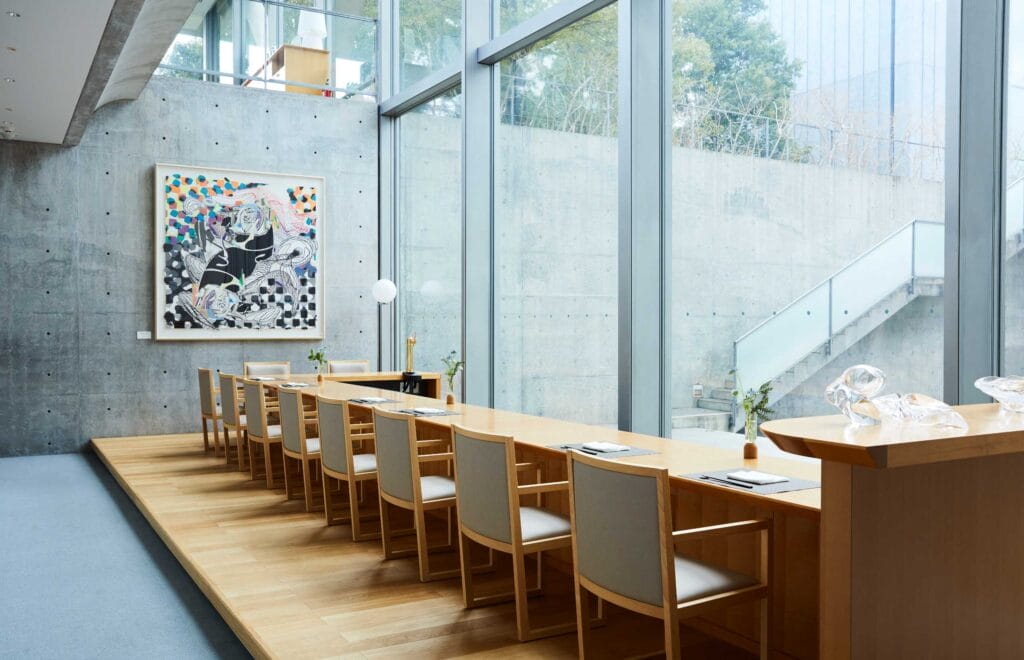
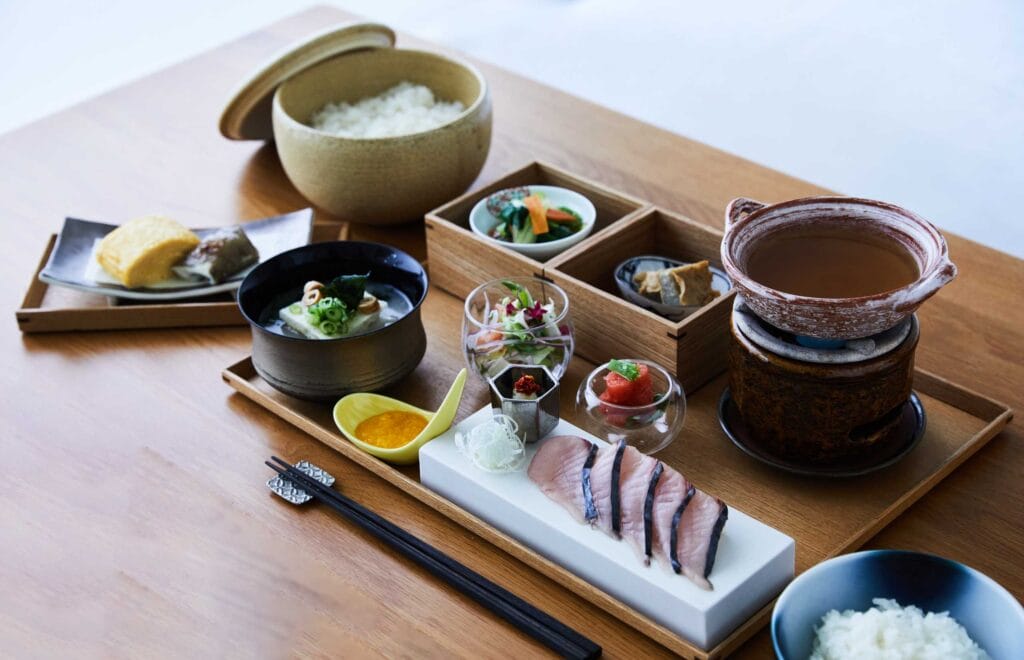
Dinner is an unhurried, deeply local wade through the Chef Hideya Honjo’s kaiseki-style plates. His English is better than my Japanese, and he tells me he appreciates the challenge of using what’s native to create degustation-level cuisine. Offerings change with the seasons, though the Seto Inland Sea provides a bounty right at the door. It’s a multi-course sensory experience in every sense of the imagination, from plating to presentation to wine pairings; though despite the delicacy to the courses, nothing is overly precious. Dishes might include conger eel with lotus root tofu and caviar or Akane wagyu shabu-shabu with tuna dashi broth and almost always ends with a homemade mikan (mandarin) cake – the deliciousness of which cannot be overstated.
Pools & wellness
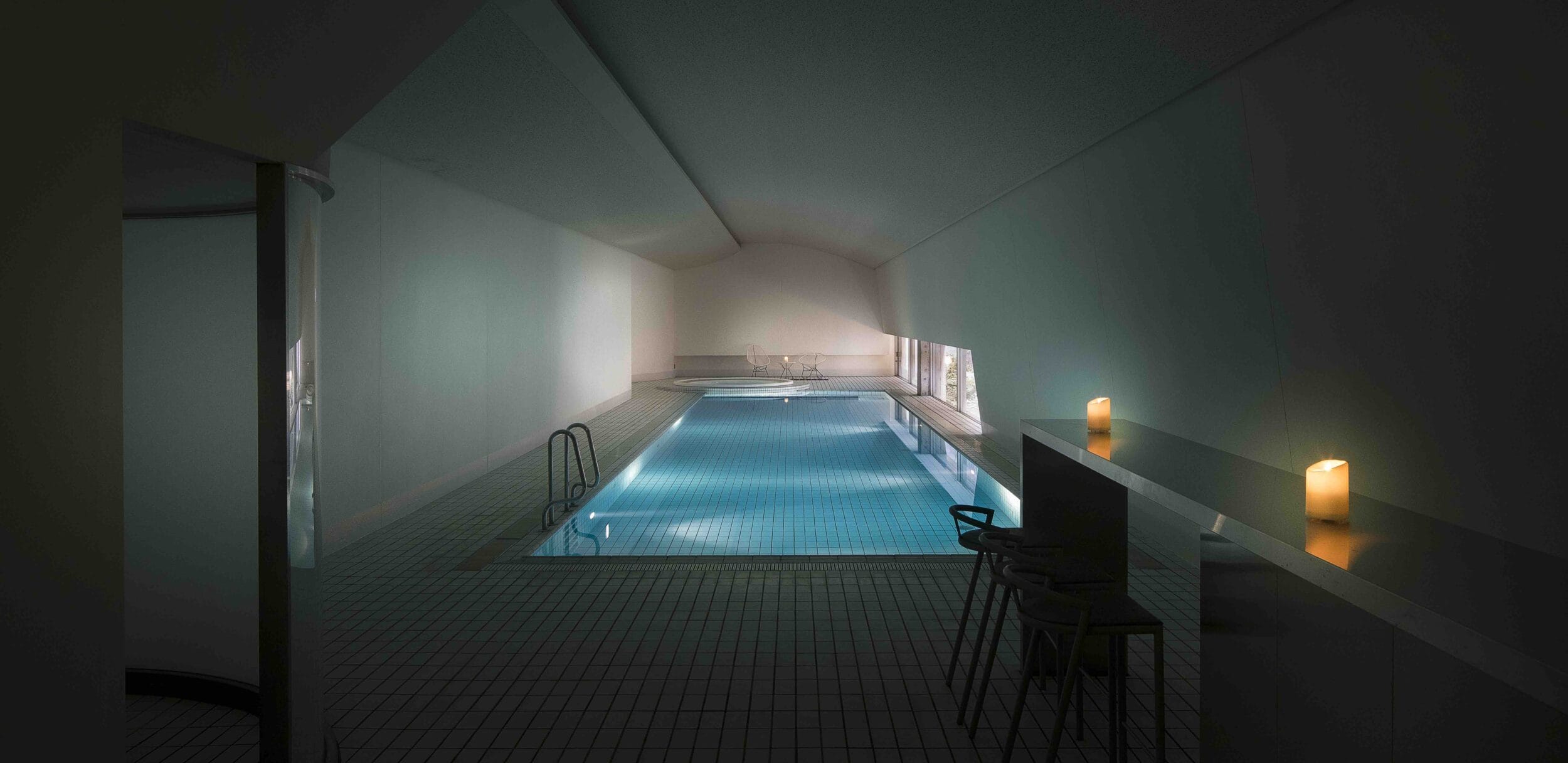
Later that night, I book the indoor pool, the cavernous one carved into the lower level; the slight drizzle drives me away from the one up top exposed to the elements. And yes, it’s all for me, 20 metres of exclusive blue bliss. On one end, a natural hot spa burbles and steams. Modest swimsuits (this is Japan, after all) hang in the vanity area, for guest’s use, but since I’m swimming solo, I wear my birthday suit instead.
Exploring Setouchi
Beyond the retreat, the Setouchi seascape stretches in every direction, a scatter of fishing villages and the famous ‘art islands’ like Naoshima close by. Even from a distance, you sense the creativity of the region and the way it attracts aesthetes and dreamers.
On my last morning, mist pools between the trees and looks like the coastline outside my balcony. I stand with a cup of tea and watch the weather change and the fog burn off like it was never there. Nothing spectacular happens. No dramatic sunrise. No cinematic wildlife cameo. Just a slow unfurling of the day and the feeling of a modest and steadying reset. The softening in is complete.
Hotel Notes
To reach Setouchi Retreat Aonagi, fly into Matsuyama Airport, then drive a short half an hour into the hills; the hotel can organise transfers. Rooms begin at around AUD1500 per night and rise depending on the season and the suite. setouchi.by
Latest Articles
Don't miss the latest from Luxury Travel