
India
India, from the Golden Triangle to the Ganges
Published
8 May 2026
In Jaipur, I hand the Vedic astrologer my birthdate, time and place. Dr Brijmohan Khatri steps back, eyes closed, fingers steepled – as if leafing through some invisible filing cabinet in his mind. Then he looks me in the eye: “You’re loyal, restless, on the brink of reinvention.” I laugh because it’s oddly spot on, and because it could just as easily describe this trip.
I’m on the ‘India’s Golden Triangle and Sacred Ganges’ voyage with Uniworld, a journey that threads together two very different personas of the country: an on-land passage through the Golden Triangle of Delhi, Agra and Jaipur, followed by a week onboard the Ganges Voyager II, the most elegant ship on India’s most sacred river.
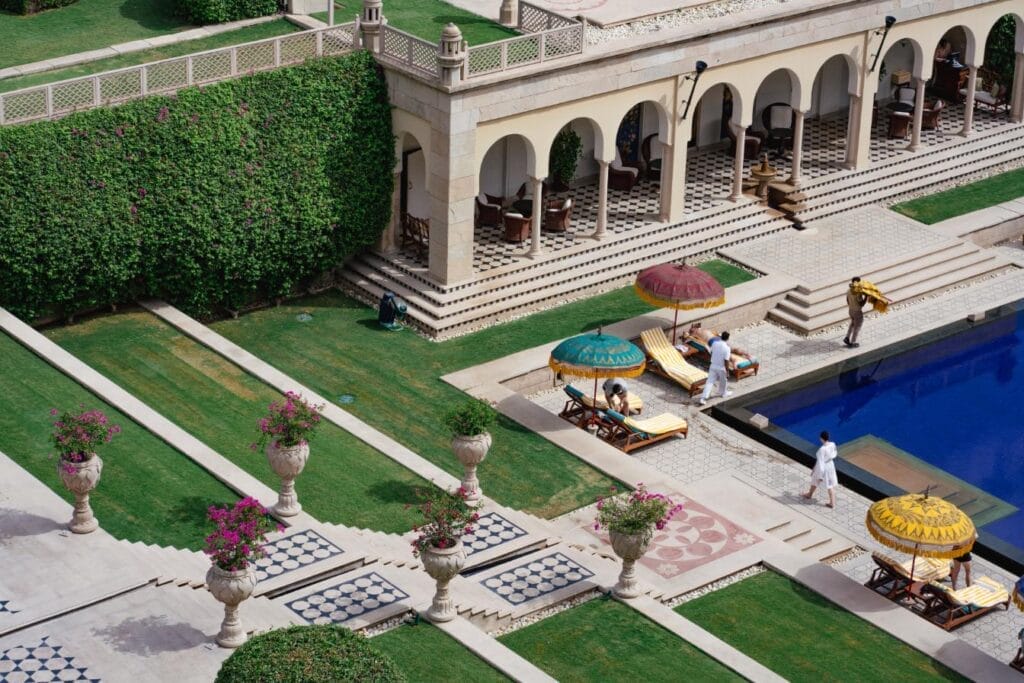
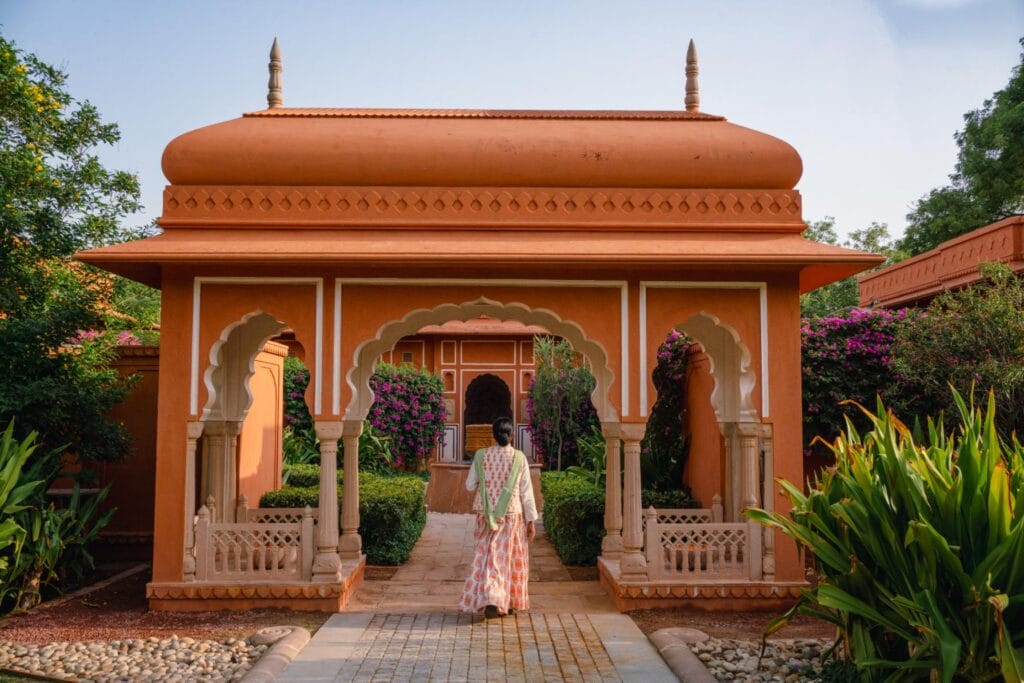
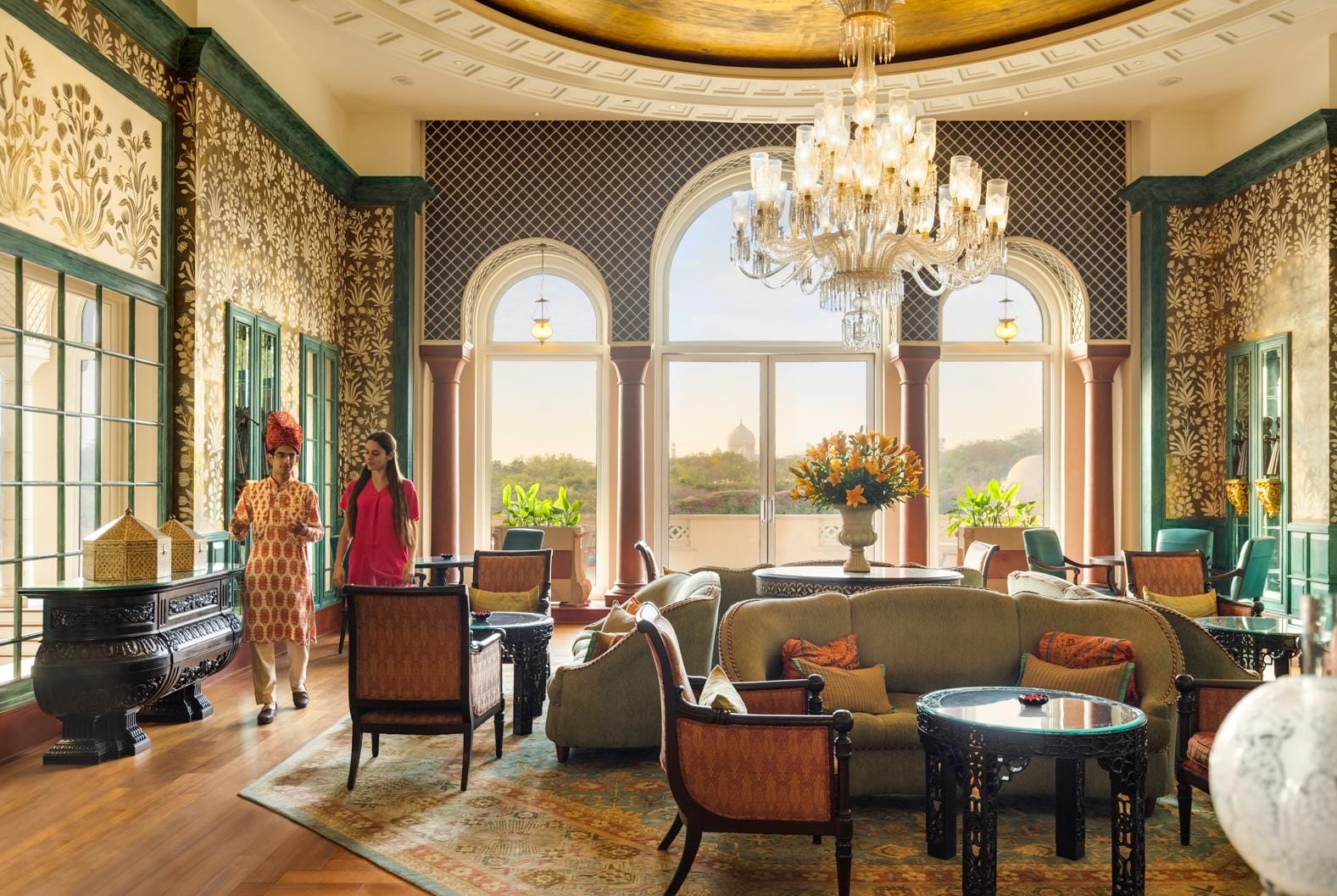
Oberoi hotels anchor the land-based leg of the journey – a choice I quickly come to appreciate. At Jaipur’s Oberoi Rajvilas, a palatial compound spread across 13 hectares of gardens, the calls of more than 300 peacocks replace the city’s honking horns.
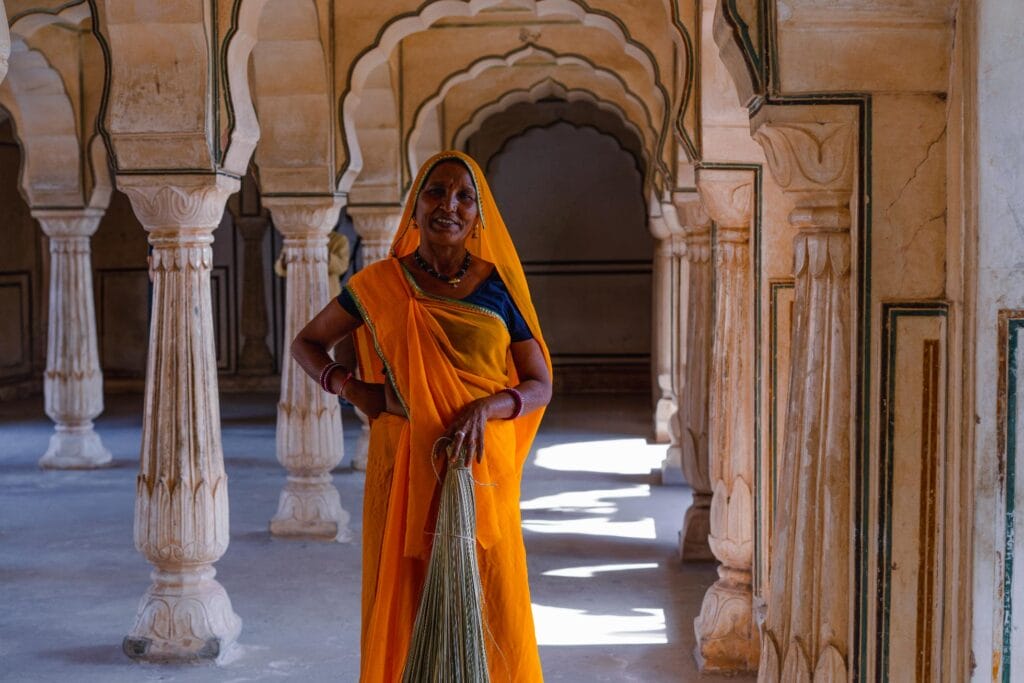
An optional excursion takes us to Jantar Mantar, an 18th-century astronomical park home to the world’s largest sundial, a 27-metre wedge slicing the sky with a shadow that moves six centimetres a minute. In the afternoon, we’re chauffeured around the city once more, visiting the famous Amber Palace with a guide before some of us split off to explore the bazaars. I slip into the hotel’s pool and finally exhale, grateful for travel that doesn’t force a choice between adventure and downtime – here, both come in perfect measure.
Delhi, Agra and the Taj Mahal
The wider journey begins in New Delhi, where traffic, spice markets, colour and heat all clamour for my attention. As in Jaipur, The Oberoi New Delhi is a counterpoint to the city’s intensity, with rooftop gardens – and purified air cleaner than London’s right now – creating a quiet perch from which to watch the city’s layers without being swept up entirely.
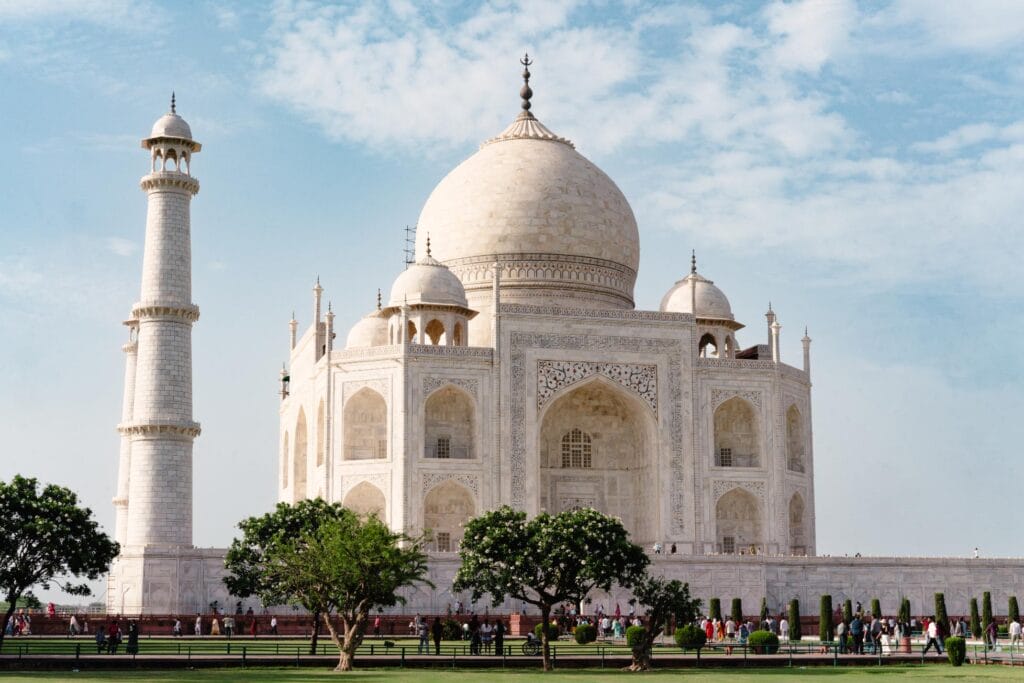
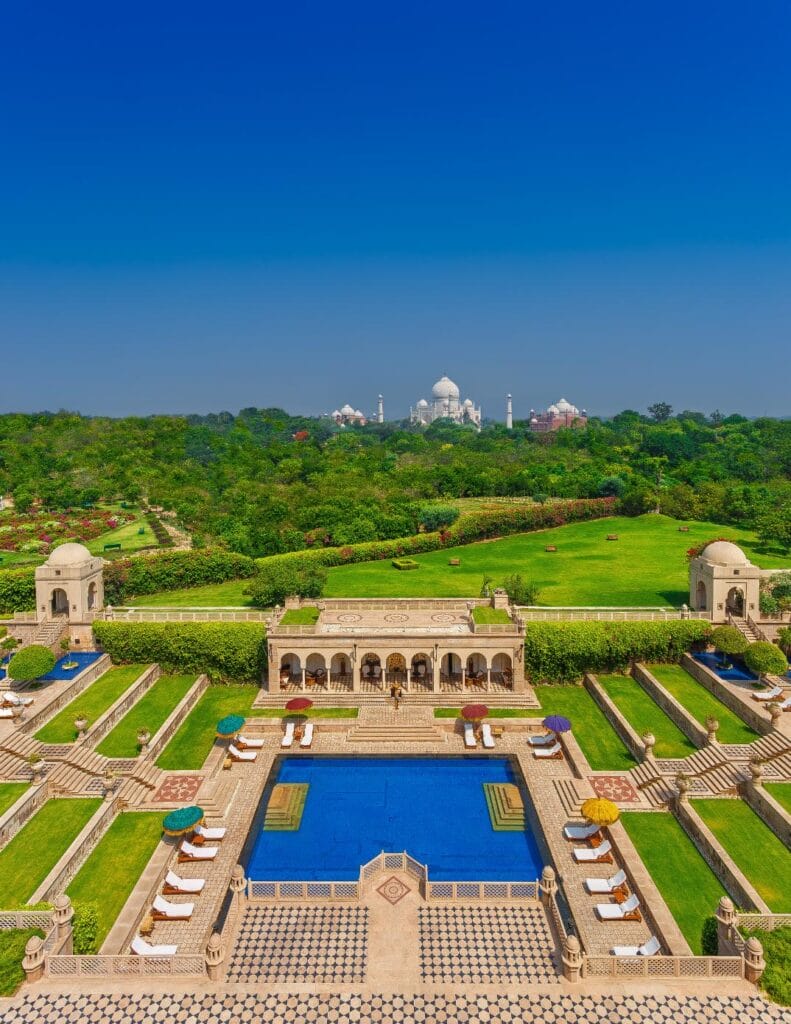
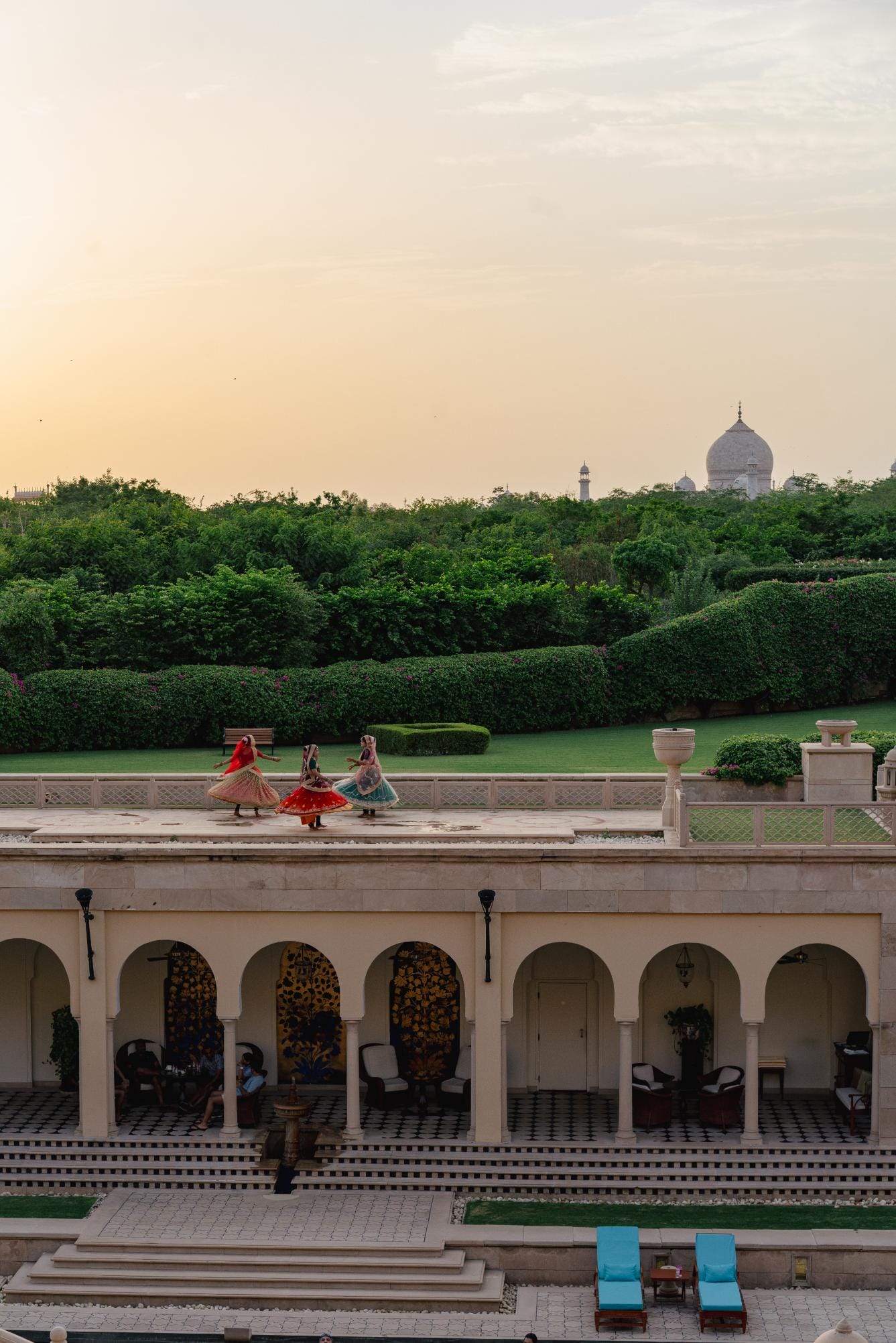
This continues through the Golden Triangle. In Agra, The Oberoi Amarvilas sits impossibly close to the Taj Mahal. From my suite, I watch the marble shift from blush to gold as the sun rises, while the hotel’s Mughal-inspired gardens, fountains and reflecting pools frame the monument in a way that feels completely private, reserved for guests alone.
Later, I visit Akbar International, where sixth- and seventh-generation artisans, descendants of those who built the Taj, set gemstones into marble with hypnotic precision. Their fingers glide with practised ease, like buttering toast – watching them work feels almost voyeuristic, like interrupting a prayer. “You need the right hands,” says Pratibimb Sharma, the store’s sales manager. “Long fingers are good for shaping. Square hands like mine? We chisel.” He has been here 30 years. I try carving a sliver myself. The tool wobbles, my grip slips, and I hand it back, defeated.
While You’re Here
Markets in Jaipur are treasure troves for textiles, jewellery and crafts. Look for hand-embroidered silks, block-printed fabrics at Bapu Bazaar, and silver or gemstone jewellery at Johari Bazaar. Don’t be afraid to bargain – it’s expected.
Aboard the Ganges Voyager II
On day six, after a short flight, the voyage turns eastward to Kolkata, where we eagerly board the Ganges Voyager II. If the Oberoi hotels represent India at its most polished, the river cruise shows it in its most authentic rhythms.
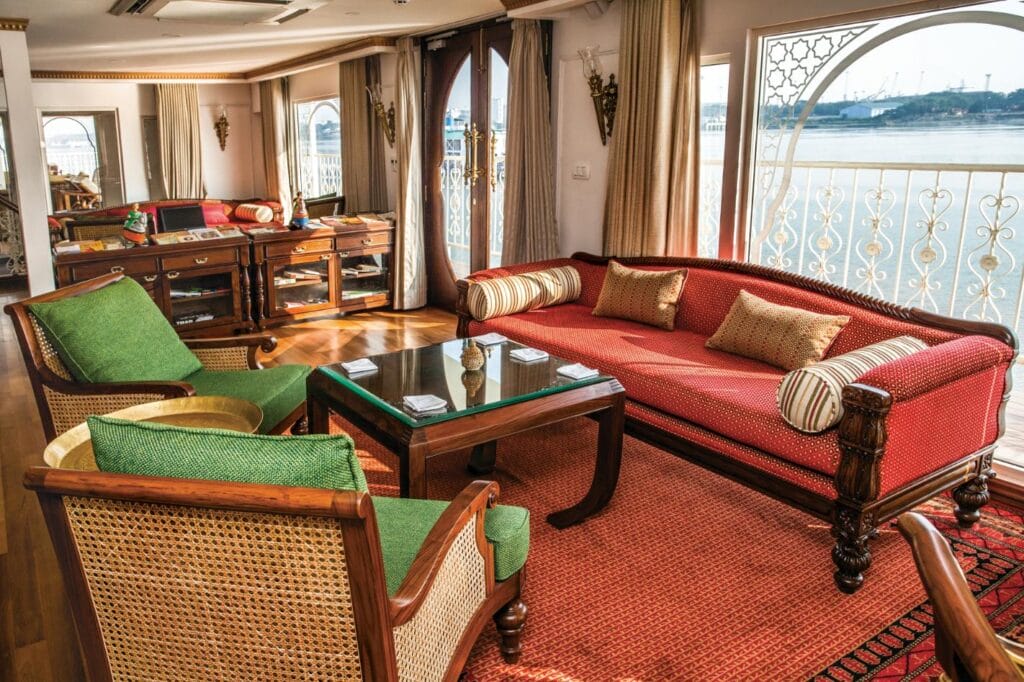
The ship is intimate, accommodating just 56 guests in colonial-style suites, each with a French balcony. Onboard, there’s a spa, a small fitness room, and a dining area where every meal is shared with fellow travellers. The menu, served buffet-style, highlights West Bengal cuisine, with occasional cooking demonstrations for those keen to master samosas at home and to fill the time during sailings.
I visit Akbar International, where sixth- and seventh-generation artisans, descendants of those who built the Taj, set gemstones into marble with hypnotic precision. Their fingers glide with practised ease, like buttering toast.
The real luxury, though, is the perspective. Floating down the Ganges, I witness an India most travellers never see: women scrubbing saris in jewel tones along the banks, children bathing in the Ovaltine-coloured river and temple spires rising above fields of mustard flowers. After a few days sailing up the river, I notice the Ganges is everything here – sacred and ordinary, life-giving and symbolic.
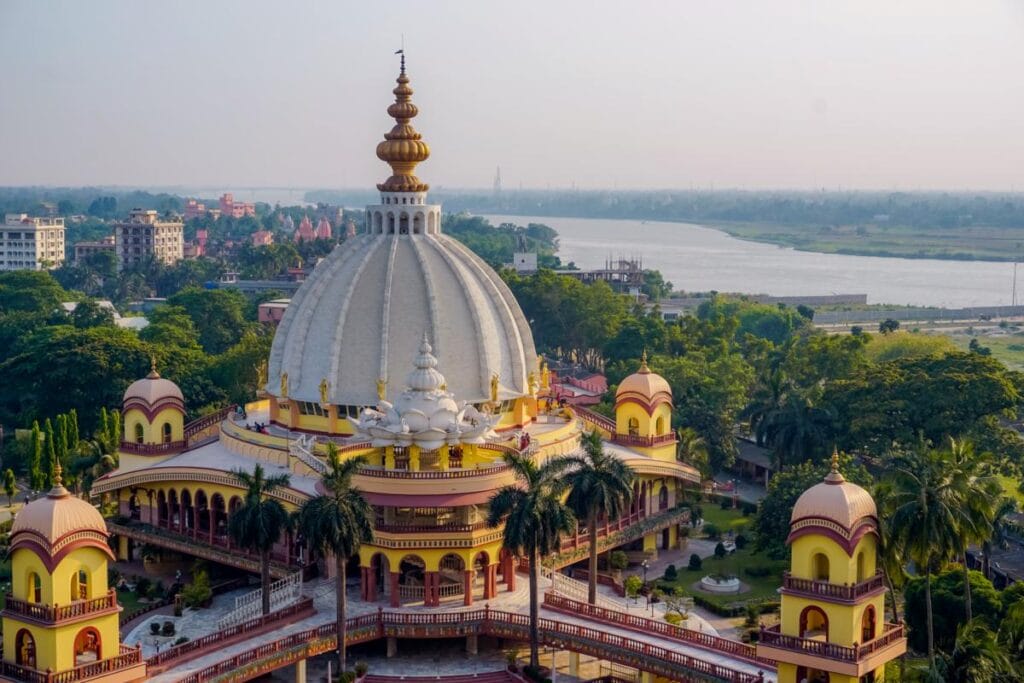
Days are spent hopping between riverside towns, like Kalna, famous for its 108 terracotta temples. Its fish market is also something else. Think men sitting cross-legged over tables stacked with headless river fish and lots of yelling. The cruise drifts as far as Mayapur, the spiritual capital of the world, pausing in villages famous for brass work and mosques, before turning back to Kolkata for the final days.
Good to know
While cards are accepted in many hotels and larger shops, cash is king in markets and smaller towns. ATMs are common in cities but can be scarce in rural areas. Carry enough rupees for daily expenses, especially when visiting the villages along the Ganges.
Kolkata, before the journey ends
One of the voyage’s most touching moments comes in Kolkata on the penultimate day through Uniworld’s ‘Make Travel Matter’ program: a visit to Calcutta Rescue, a school supporting children from some of the city’s poorest neighbourhoods. Kids shyly, or with bold confidence, show their drawings and recite English phrases to us, and we hand over bags of school supplies we’ve brought for them. The courtyard erupts in cheers.
Subhajit Sana, an assistant project officer, tells us the school has supported more than 3,000 students. “Some have gone on to higher education, others into the workforce and a few have returned as teachers,” he says. “It’s not always easy. But when you see a kid rise out of the worst conditions and become someone – that’s everything.”
Before this trip, I expected colour, chaos and sensory overload. And India delivered all of that. What I didn’t expect was the quiet. The stillness of the Ganges at dawn – or a boy holding his pencil like it were the most important thing in the world.
Journey Notes
Uniworld’s 13-day ‘India’s Golden Triangle and Sacred Ganges’ journey begins in New Delhi, with five nights across Oberoi properties in Delhi, Agra and Jaipur. After exploring the Golden Triangle, guests fly to Kolkata and board the Ganges Voyager II for a seven-day cruise along the sacred river, stopping at riverside villages such as Kalna, Matiari and Chandannagar. The itinerary ends in Kolkata, with an optional post-cruise extension to Varanasi. Prices for a Colonial Suite start at AU$7,199, including hotels and flights to Kolkata. uniworld.com
Latest Articles
Don't miss the latest from Luxury Travel