
Bali Countryside, Wellness
Inside Buahan Bali: The jungle retreat with no walls and no doors
Buahan, a Banyan Tree Escape
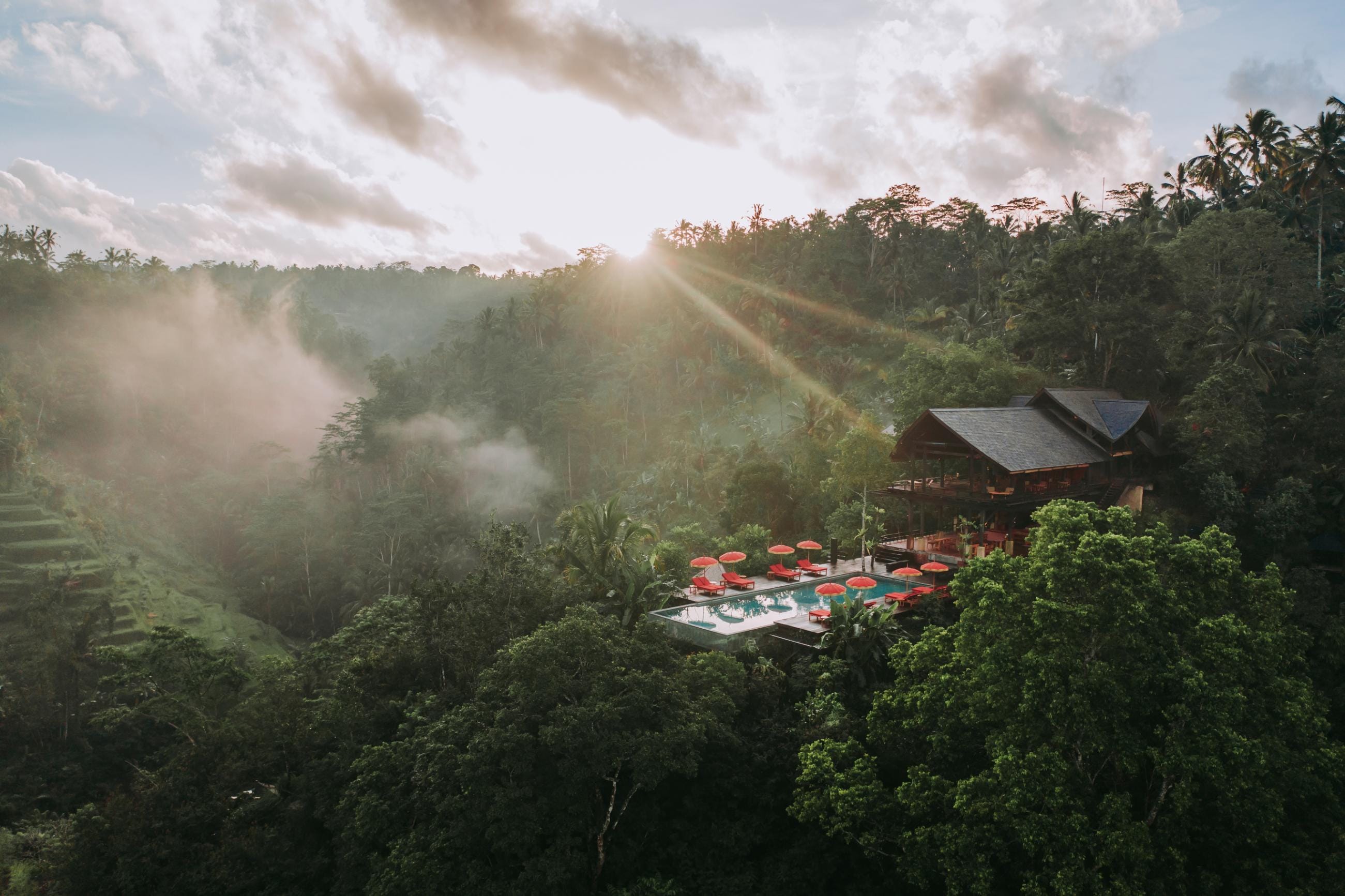
Tucked into the Ayung River valley 30 minutes north of Ubud, Buahan is a Banyan Tree Escape built around a radical premise – no walls, no doors, just jungle. It’s a Bali healing retreat centred on purification rituals, pranic healing and open-air living in 16 private villas. Its greatest offering, though, is simpler: a place to be still
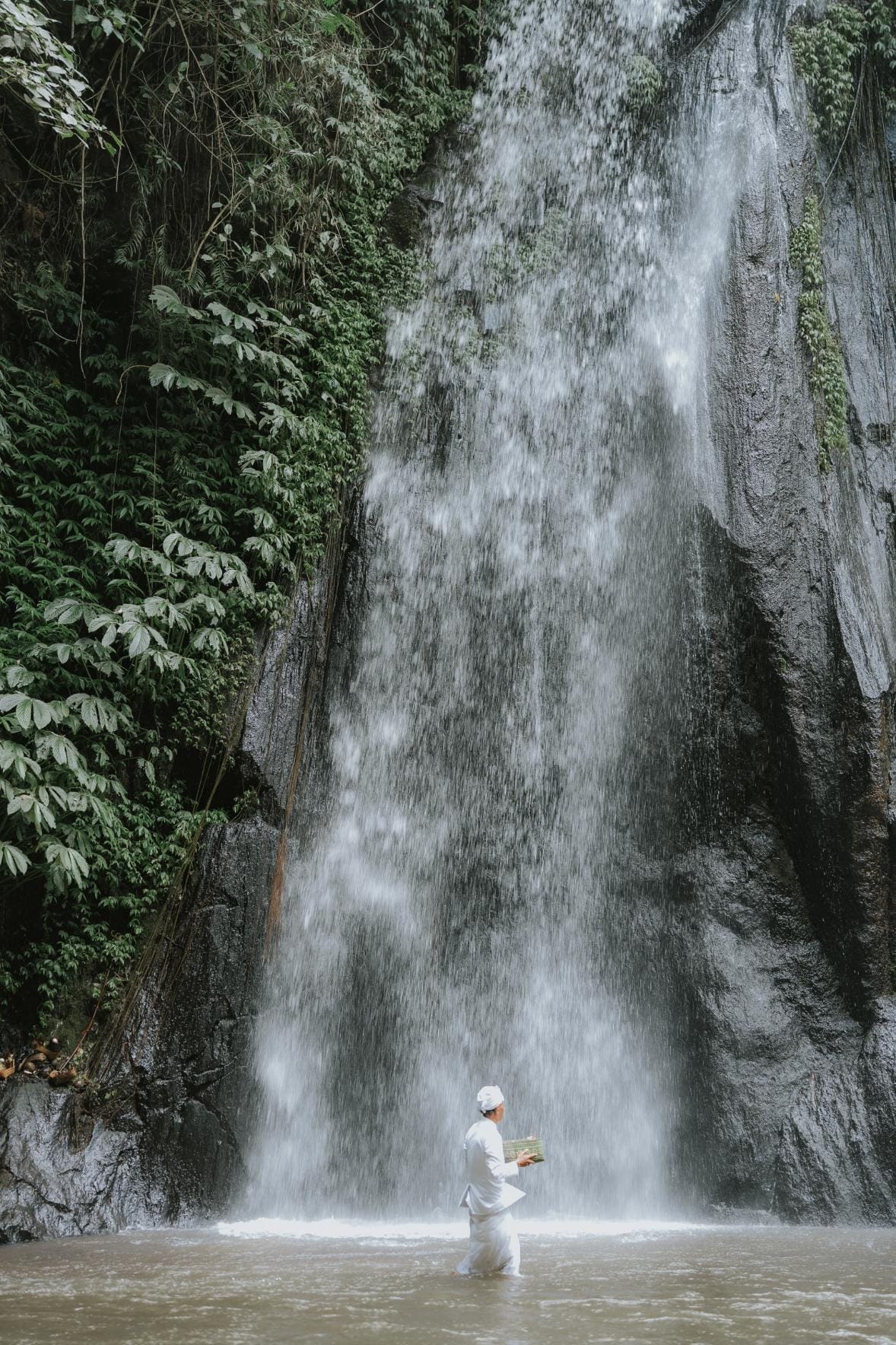
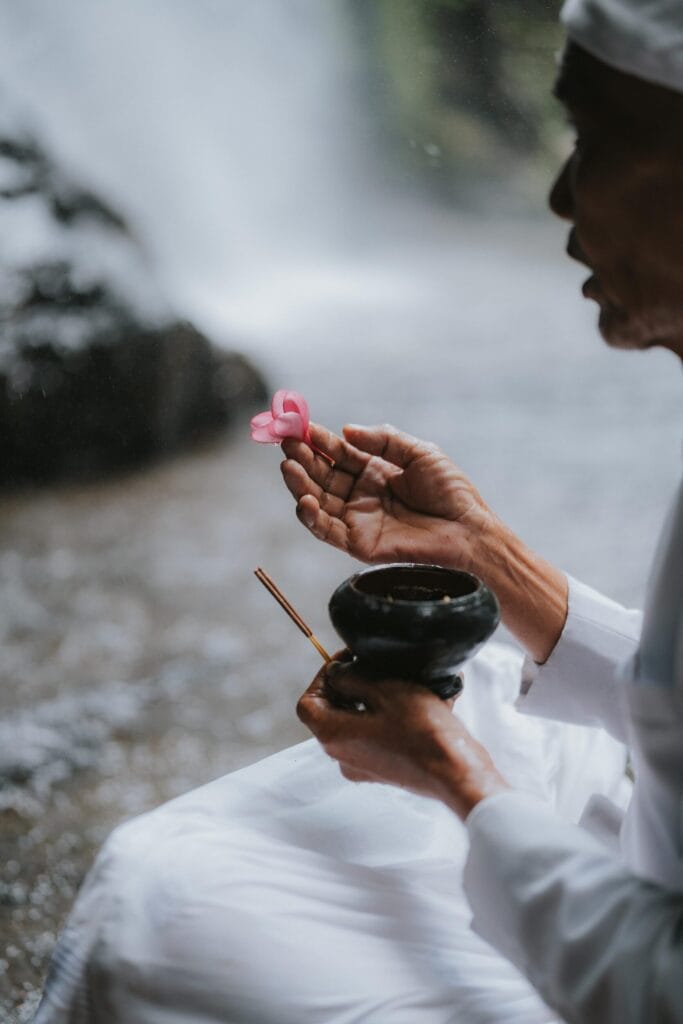
With the white noise of the Tjampuhan Waterfall behind us, the priest hands me a canang sari – a Balinese offering of flowers and incense, and asks me what I would like to release. I’m wearing traditional attire – a kebaya lace blouse, kamen wrapped skirt and selendang waist sash – and we’ve just trekked down some steep terrain to the Ayung river, where holy water flows out of the valley walls. As I decide on what I’d like to purge, I place the offering on the water. It floats away downstream, taking what no longer serves me far away and out of my life.
The ‘Soul Freedom Journey’ experience offered at Buahan, a Banyan Tree Escape in central Bali, is inspired by a traditional melukat purification ritual, used to cleanse both spiritual and energetic impurities and bring a person back into balance. It’s a fitting goal for my time at Buahan, where I’m spending three nights of rare solitude at the start of the rainy season, and am set on resting and disconnecting. I discover quickly that this is not difficult at the property, which is blissfully remote, located about 30 minutes north of Bali’s spiritual centre of Ubud in the even lusher Payangan region.
Within minutes of arriving, Bali’s increasingly gridlocked roads become a distant memory as I take in Buahan’s enveloping view of the mist-shrouded jungle of the Ayung River valley and the seven peaks of Bali’s highest summits beyond.
No walls, no doors
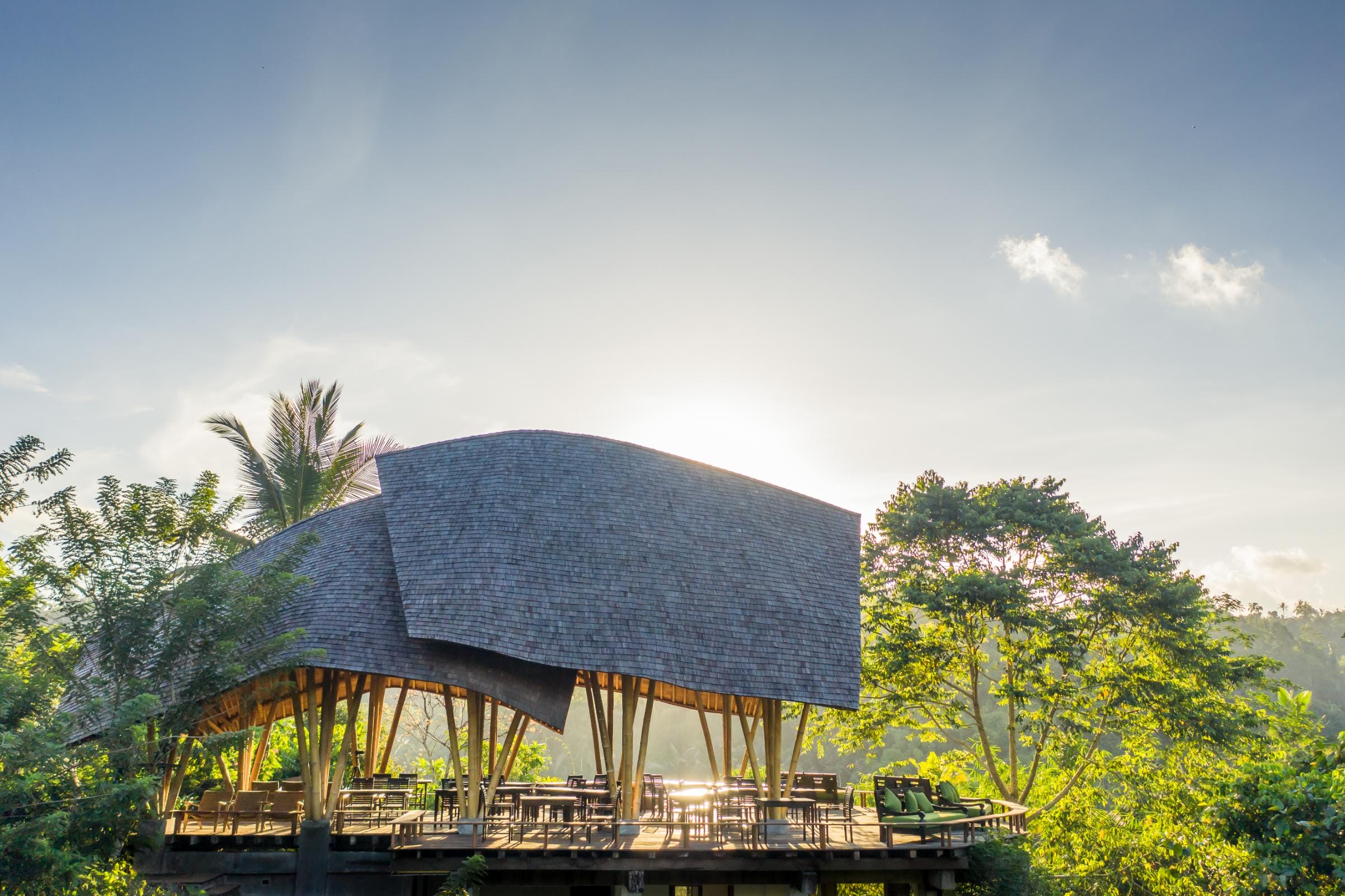
The first property in Banyan Tree’s Escape portfolio, which centres on deep immersion, simplicity and connection to place, Buahan quite literally breaks the barriers between the inside and outside, manmade and nature. Its ‘no walls, no doors’ concept is bold and, to me, compelling – although one colleague confessed she cancelled her stay at the eleventh hour for that very reason.
Resort manager Puspa Anggareni is not surprised to hear this, telling me that some people are concerned that ‘no doors’ amounts to a lack of security or privacy, while others are simply deterred by the idea of bugs. As an Australian, I am largely unfazed by the latter, while the privacy issue is more likely to be a consideration for couples – although the villas are spaced so far apart, they shouldn’t worry. As for the security question, it’s a valid one, especially for solo female travellers like myself. But Anggareni explains that Buahan’s isolation and remoteness creates a layer of security in itself. The jungle becomes a natural fortress, with the community of Buahan – the nearby town that is the retreat’s namesake – the property’s willing protectors.
Buahan is not for everyone, but, with just 16 villas, it’s not trying to be. “It’s like your baby, right? Nobody else thinks your baby is the most beautiful thing in the world – but you do,” says Anggareni. And I do think Buahan is, indeed, a very beautiful baby, and the type of property many people (like me) are yearning for – a place for rest, retreat and recovery. Concerns or stressors from life back home – life beyond the treetops – tend to simply melt away whenever you look up or out, near or far here – no matter where you find yourself in the 16-hectare ribbon of untouched rainforest.
Home in the trees
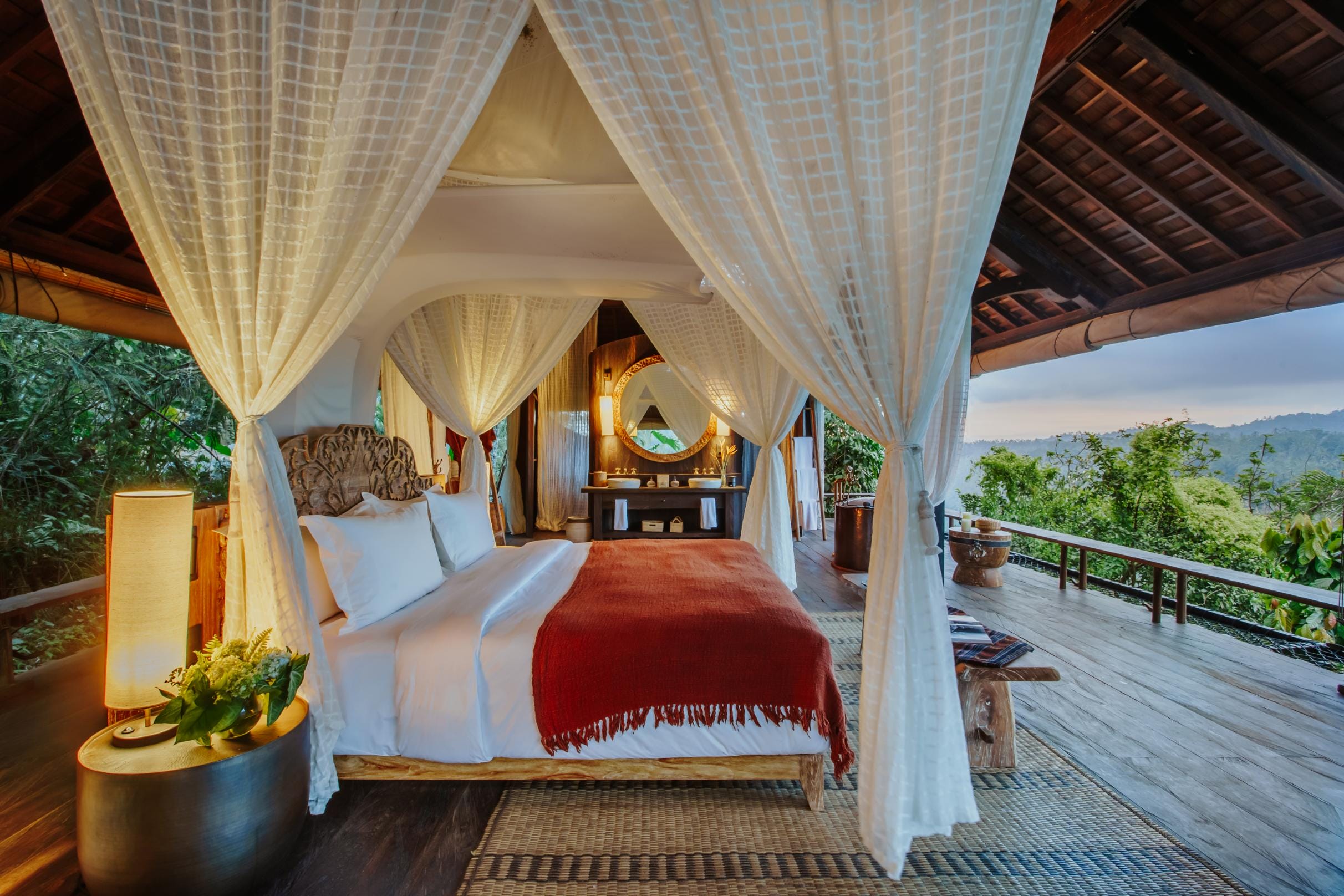
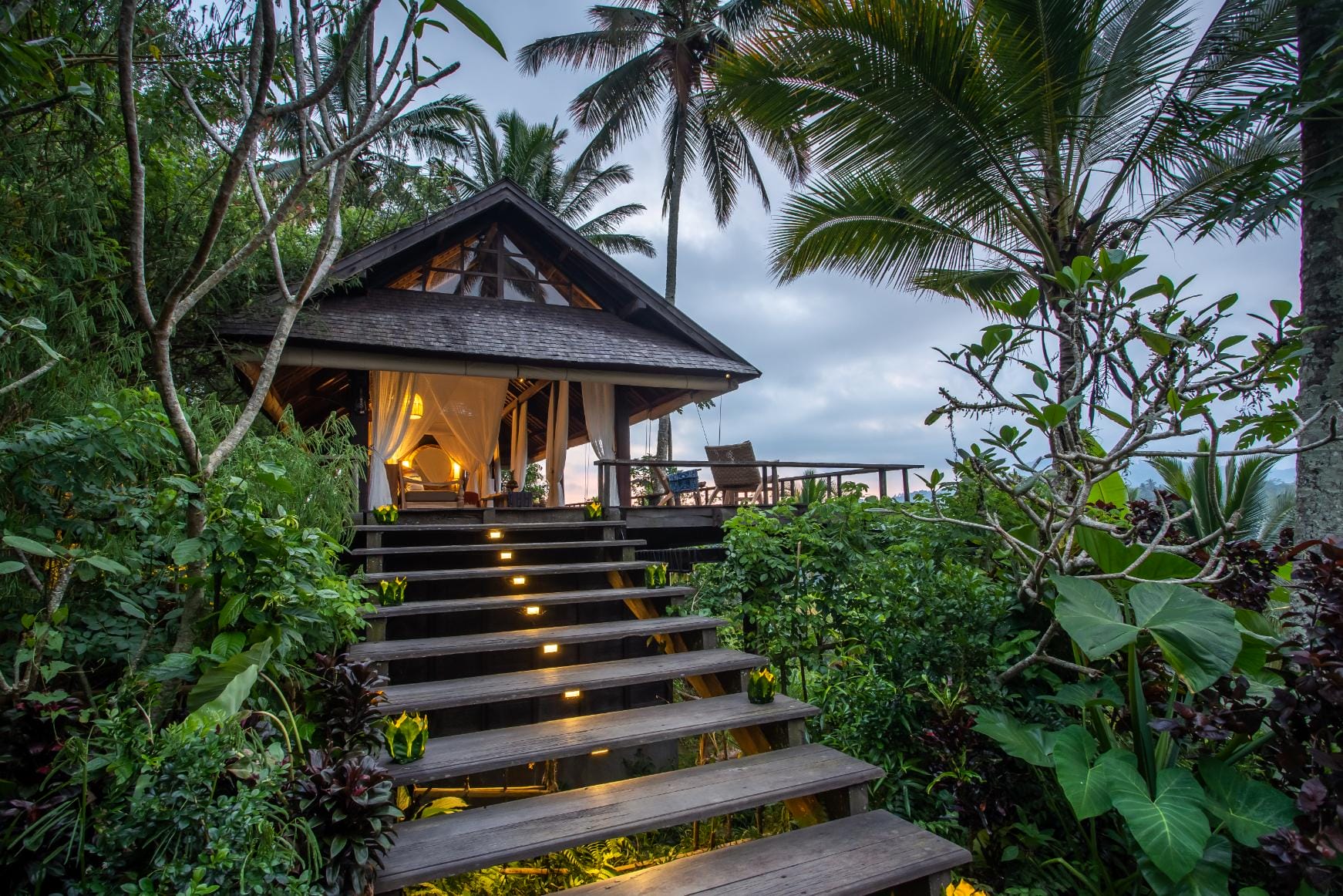
Buahan’s open-air villas nestle seamlessly into the jungle, dissolving into the landscape as they trickle down the hillside towards the mighty Ayung river. My sprawling 160-square-metre Buahan Valley Pool Bale villa is inspired by Balinese bale banjar (traditional open-air pavilions), high up on the hill with a breathtaking, vivid green panorama, perfectly offset by the villa’s dark wood. The heated pool is framed by a deck with lounges and a bale, and one afternoon I spend hours here reading and watching squirrels in the trees, dragonflies and black butterflies in the breeze – no fewer than 18 finches flutter, bathe and drink from the 32-degree pool water.
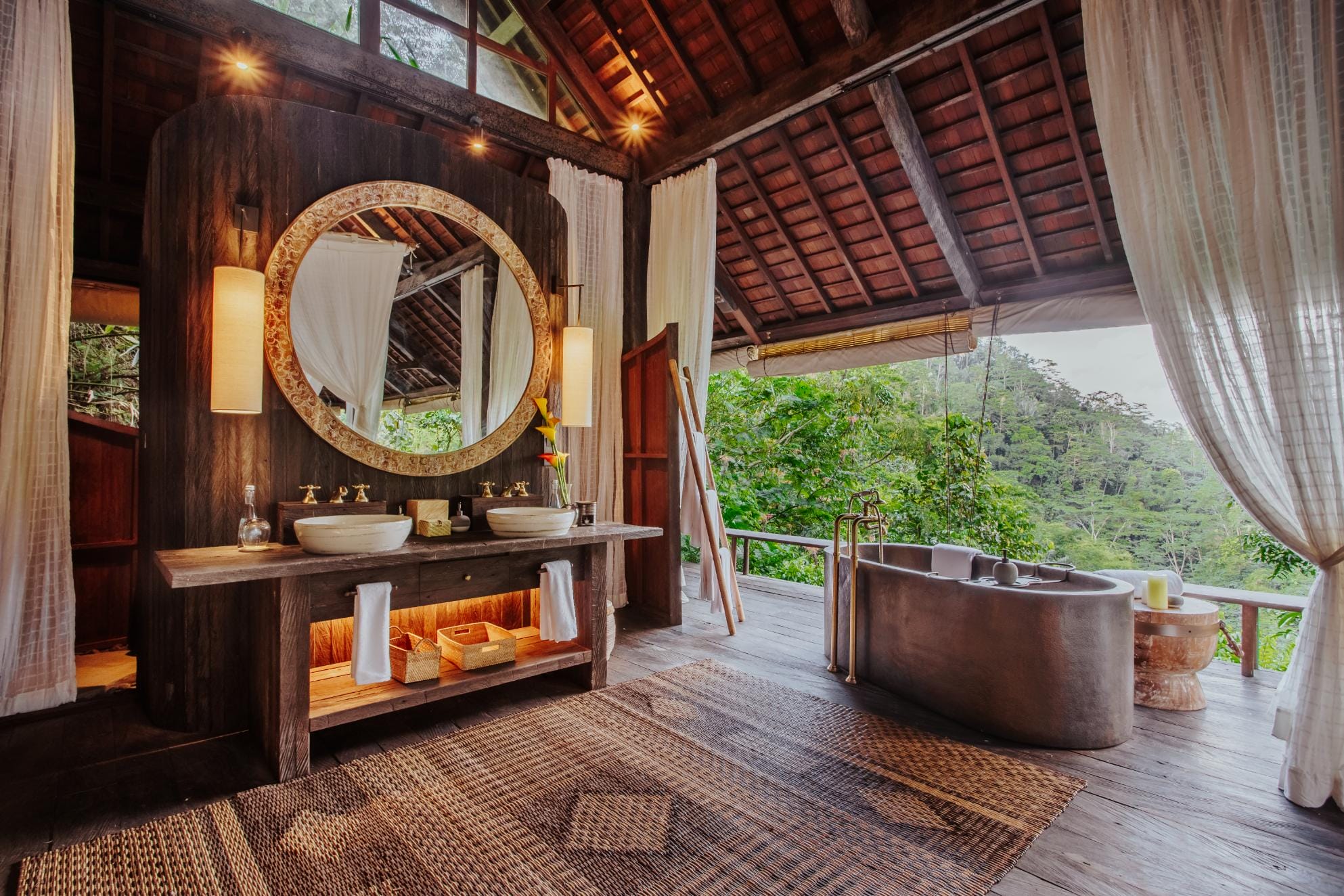
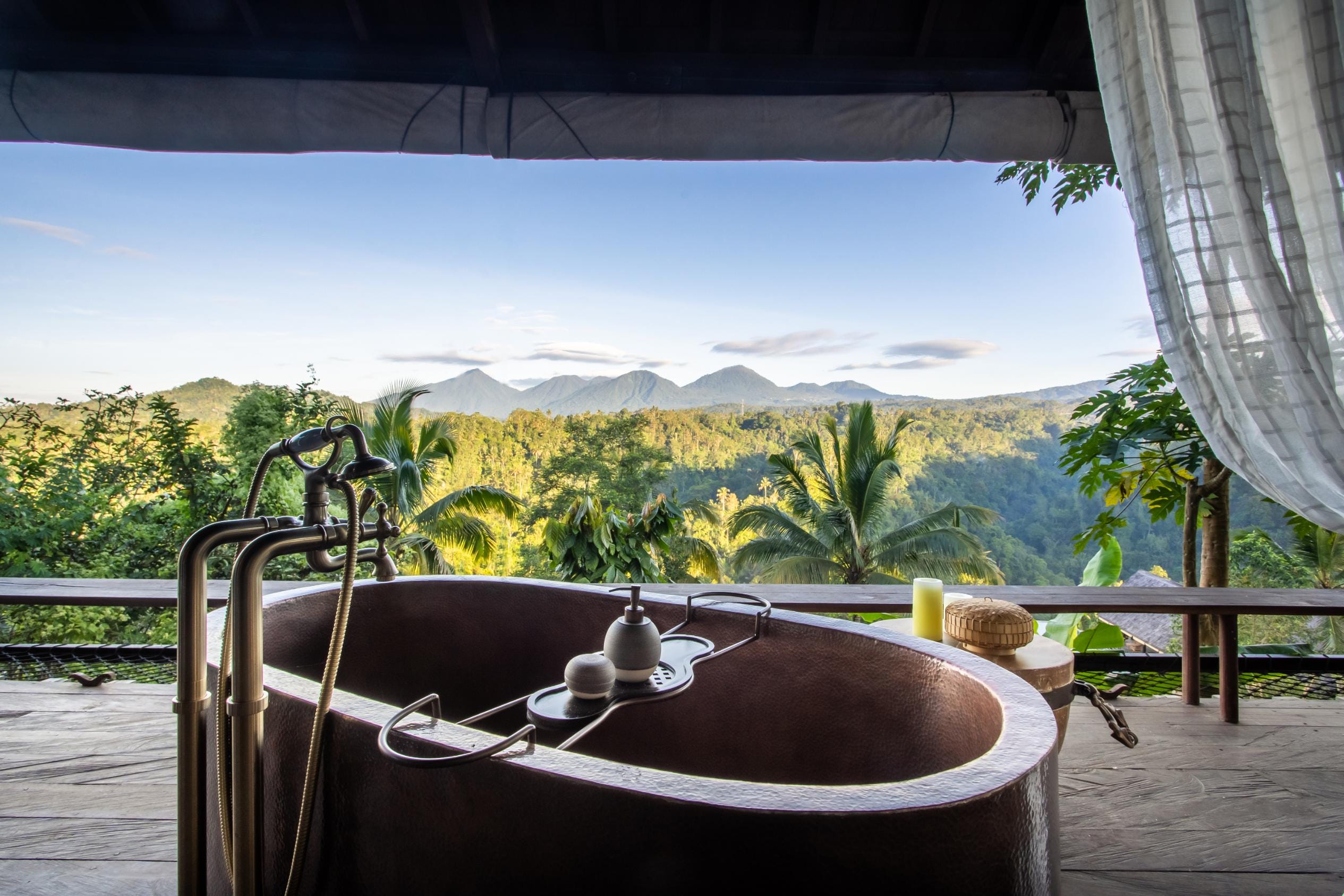
The elegant, open-plan living and sleeping area has a firepit on the balcony, a stunning hand-carved wooden bed and lounge, and handwoven, plant-dyed textiles throughout. The bathroom end of the villa boasts ceramic sinks made by local artisans and a deep beaten copper tub in the perfect spot to soak – and soak up the views.
Good to know
Every villa features an ingenious, adjustable climate canopy that directs cooled air over the bed, creating a cocoon of comfort inside the cotton mosquito nets. When it rains, there are rattan and plastic sheeting barriers that unwind from the roof to keep the space dry.
Local delicacies
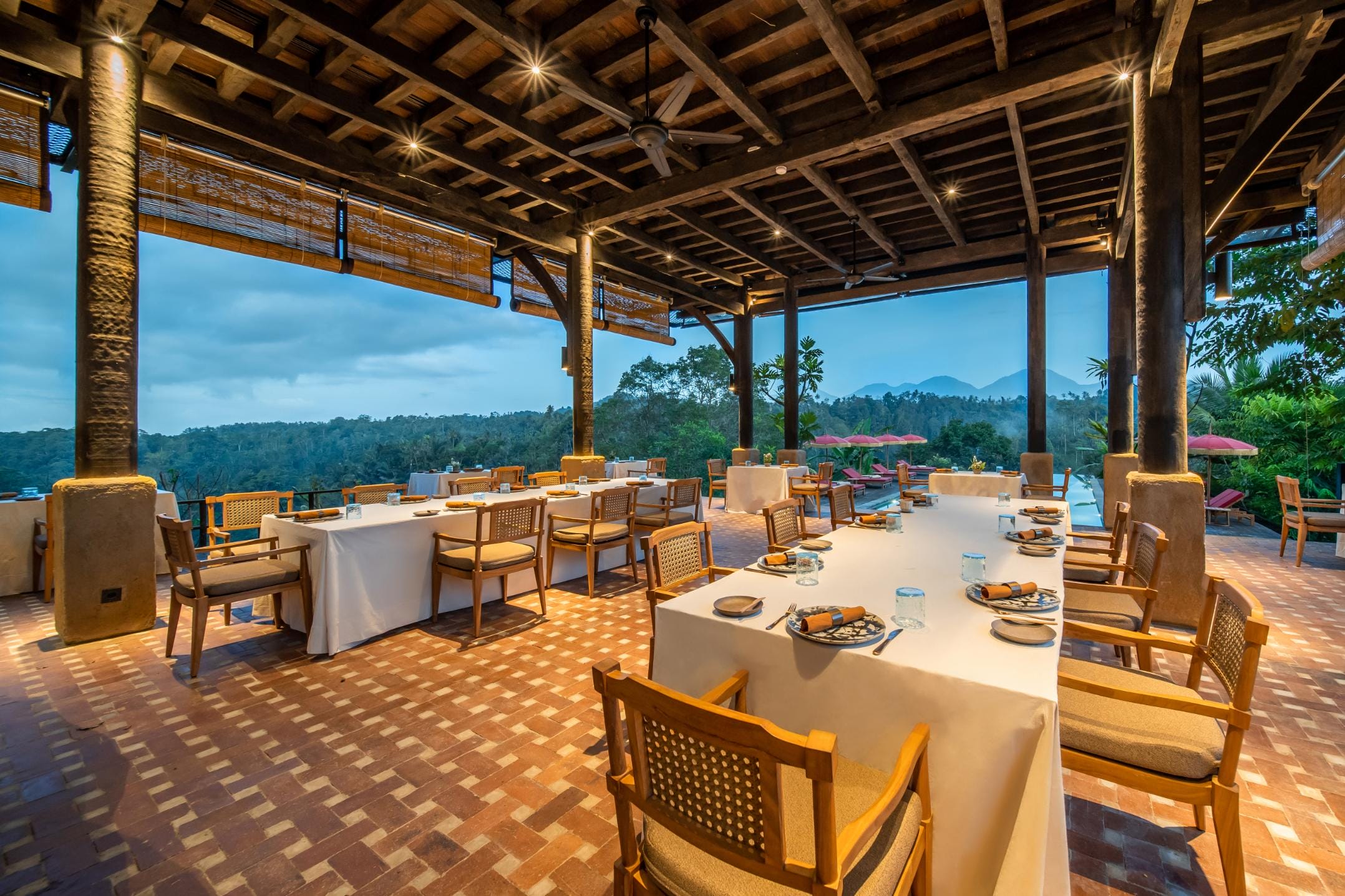
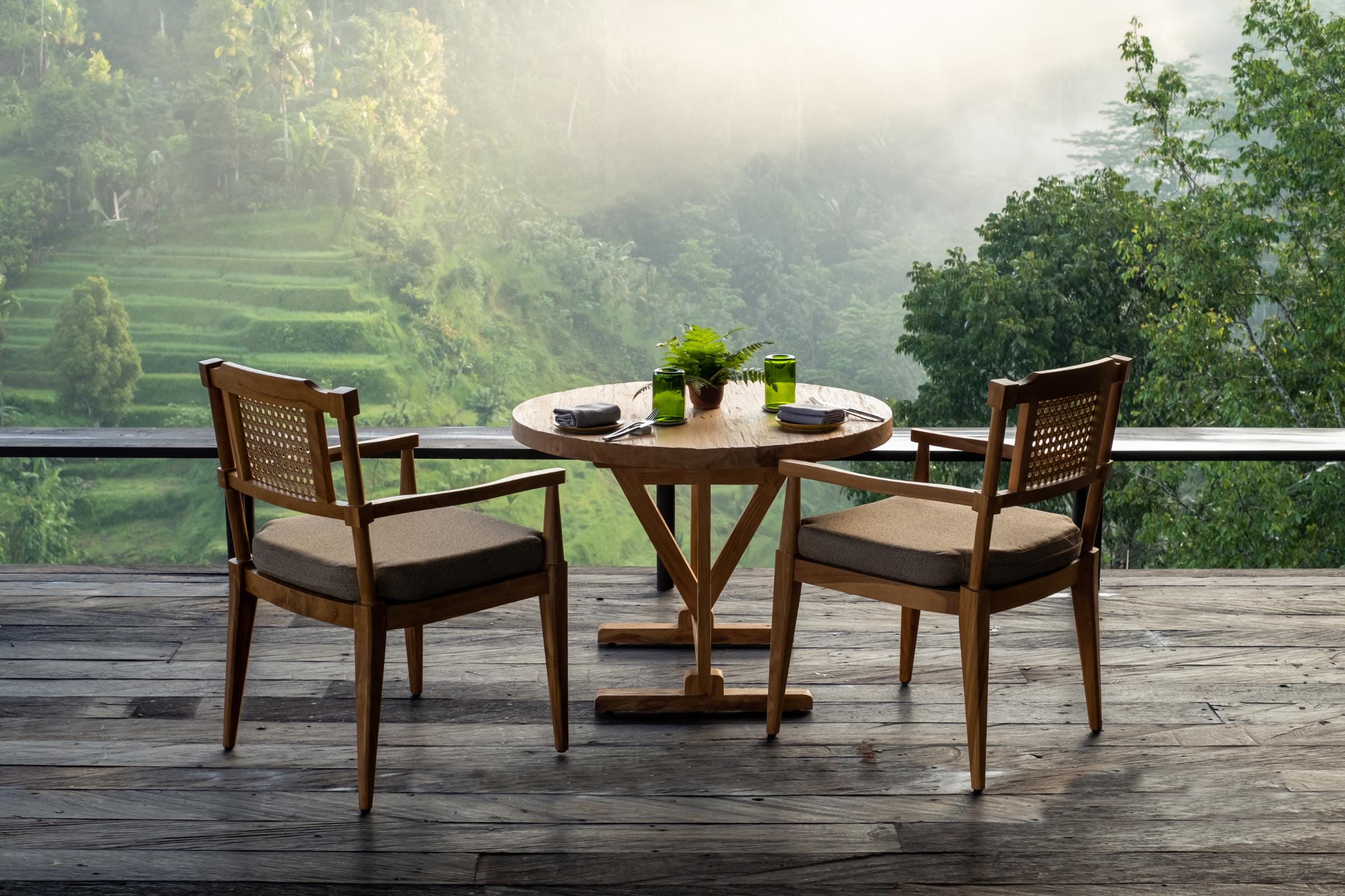
At the heart of the property is a two-story pavilion that houses the Botanist Bar and sole restaurant, Open Kitchen. The cerulean pool on the restaurant level, edged in cherry red loungers and umbrellas, forms the property’s only exclamation point – a modern interruption in an organic blanket of green and recycled wood. But Botanist Bar, which feels suspended in the sky, is the best place to enjoy sunset, the creative botanical-infused cocktails a perfect accompaniment as the trees and mountains take on a blue, otherworldly glow.
Downstairs, Open Kitchen primarily adheres to a noble plant-based, zero-waste philosophy, with a changing five-course tasting menu on offer and included in the nightly rate. I experience it on my first night, but while interesting, I find the dishes extremely rich and lacking in balance, with a surprising lack of raw salads, fresh greens or lightly cooked vegetables to cut through the intensity of flavour and texture. The following two evenings I opt for the a la carte menu instead, which offers both Indonesian and Western options, with and without meat. Craving warming comfort food, I opt for nourishing local dishes like soto ayam and beef rib soup that do not disappoint.
A wellness treatment at Buahan is a bonus, not a necessity. The natural environment – and the temporary home that is my villa – has a profoundly healing effect all on its own
Sustainability at its heart
– 80 per cent of the resort is built from recycled wood
– 80 per cent of Buahan’s staff hail from the village, with the resort offering the local people work opportunities beyond traditional farming
– The resort works with skilled local artisans and farmers
– Buahan works with local conservationists and champions the ‘Bring Back the Light’ campaign promoting organic, chemical-free farming to restore biodiversity and bring back the fireflies that once illuminated the area
Being well
The experiences on offer at Buahan are another way the property distinguishes itself, with every activity designed to showcase the local environment, culture or traditions, and immerse guests in the destination completely. There are cycling adventures through villages and swathes of green farmland, hikes to Mount Batur, sound healing, full-moon ceremonies and ayurvedic cooking classes, among many more. Traditional healing techniques as a pathway to personal growth and inner balance is the core of Toja Spa’s wellness offering, and I get a taste of this in a pranic healing treatment with a local healer. He works on my chakras with mysterious silence and without touching, before giving me a full body massage that leaves me, like the ‘Soul Freedom’ experience, feeling noticeably lighter. The vivid dreams that follow that night along with some unusual physical symptoms the next day lead me to wonder if indeed, something might have shifted within.
But a wellness treatment at Buahan is a bonus, not a necessity. The natural environment – and the temporary home that is my villa – has a profoundly healing effect all on its own. Sleeping in, waking up slowly, making a Balinese coffee and just being in Bali’s jungle heart makes it easier to listen to my own body, and what it’s saying is remarkably simple: do less, and do it more often.
Hotel Notes
Rates at Buahan, a Banyan Tree Escape start from AU$1,125 on a half board basis.
banyantree.com
Latest Articles
Don't miss the latest from Luxury Travel