
The Byron Bay Hinterland: Why the Tweed is the Northern Rivers at its best
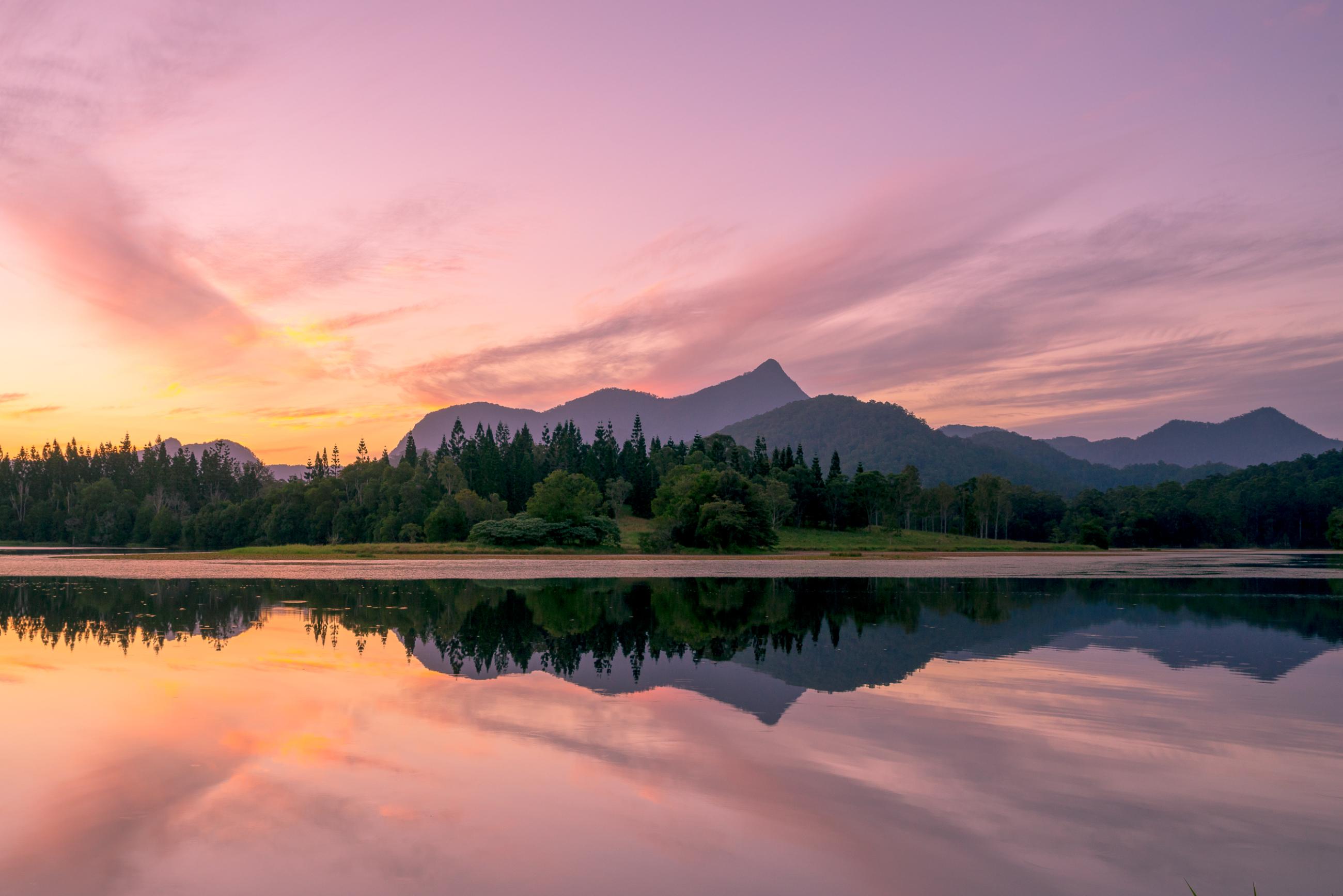
Wollumbin mountain at the centre of The Tweed. Photo credit: Destination NSW
Looking beyond Byron Bay? The Tweed sits just across the border – and for those who know where to look, it offers hatted restaurants, rainforest lodges and award-winning stays that the crowds haven’t found yet
For all its new sophistication, the greatest thing about being in The Tweed is the fact I’m never, ever more than a few kilometres away from a farmer, usually on a slow-moving tractor, stalling my rush.
While the world goes crazy all around it, this portion of New South Wales’ Northern Rivers region remains as grounded as the rows of sugar cane that grow up and down it.
Little matter how many hatted restaurants or lauded hotels open here; it’s the geography that defines it. The Tweed River winds its way right through the caldera of an ancient volcano whose plug is a sacred mountain for the Indigenous people who’ve lived under it for 40,000 years – it’s called Wollumbin (you might know it as Mt Warning).
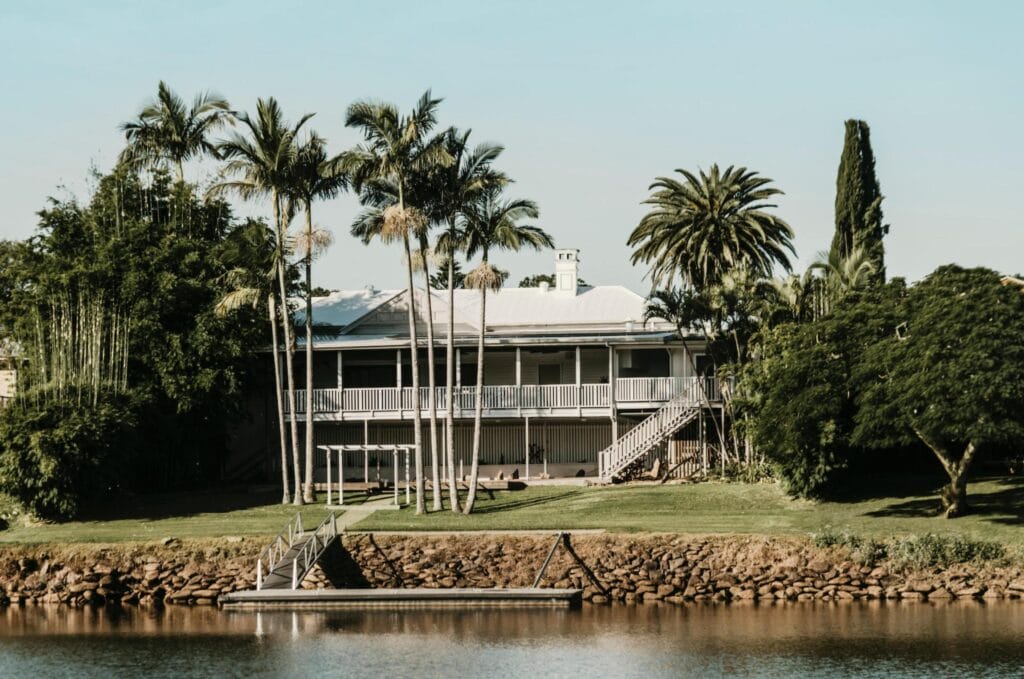
The best place to see it all come together like magic is on the deck of what is arguably the region’s best restaurant, Tweed River House. Perched on wicker chairs on its veranda, under rattan fans spritzing water to keep me cool, this gloriously restored grand river house is more than 100 years old and gives me views across the river below, over cane fields, and across the green valley to Wollumbin. The Border Ranges beyond appear even higher.
If you want to know how great the Northern Rivers can really look, sit here where I am.
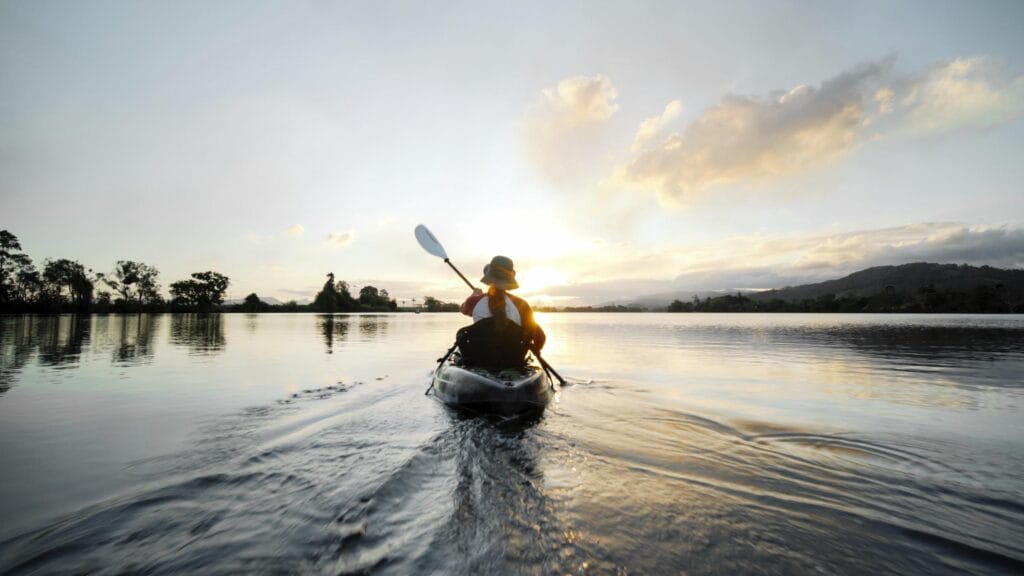
Award-winning restaurants
The Tweed has always been my happy place. Raised in Byron Bay (and Mullumbimby), it was this mountainous wilderness a few kilometres north that awed me most. There’s a timelessness to being here that has something to do, surely, with the tracts of ancient Gondwana rainforest the timber cutters couldn’t clear.
Co-owner Gregory Lording stands beside me on the veranda. “People get really surprised when they come here off the M1 (motorway between Byron Bay and the Gold Coast),” he says. “You don’t get the shock of how beautiful Byron Bay is ‘til you’re on its beaches. But in The Tweed, it hits you as soon as you turn off that motorway.”
Tweed River House recently earned two hats in the prestigious Australian Good Food Guide awards for 2026. With seven hats, it is the most awarded region outside Sydney. Cuban-French executive chef Dayron Perugorria serves up a menu heavy on local produce with a French twist, but it’s the sum of all parts that make my meal special. My favourite dish is the marinated Ballina prawns with vongole, grapefruit, rhubarb and tarragon consommé – and thankfully, there’s no time limit in which to enjoy it. A long lunch here is a looong lunch. “Let them sit,” Landing says. Then there is the setting, of course, but there’s more than that. Landing says no-one in his team has left his kitchen or restaurant in the five years they’ve been open, so there’s a sense of community that you feel even in its fanciest eateries that has long been the Northern Rivers’ greatest asset.
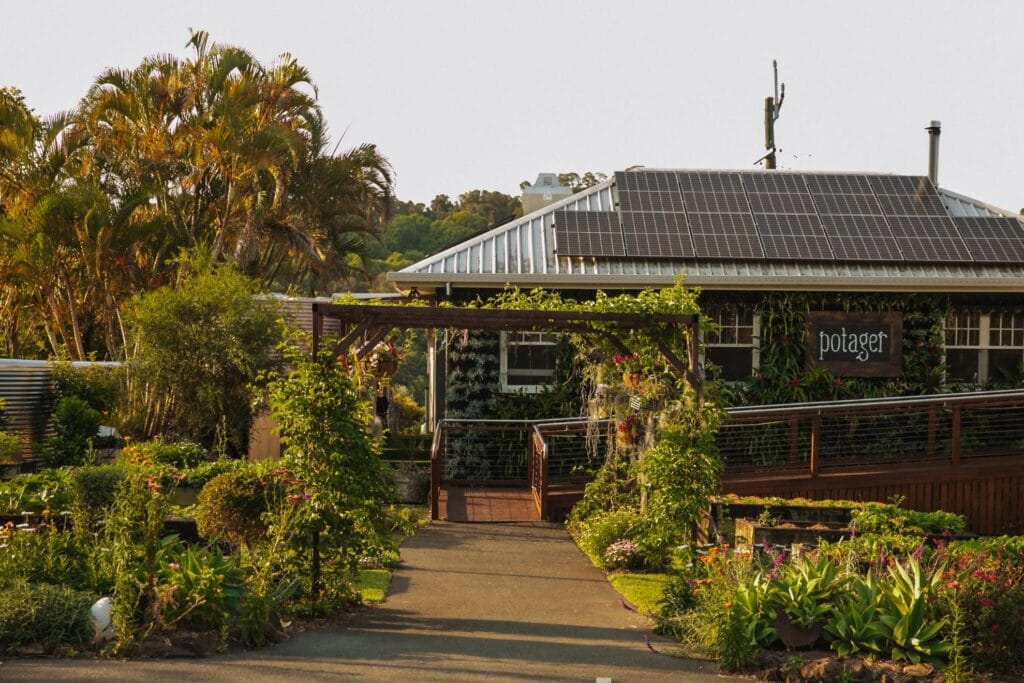
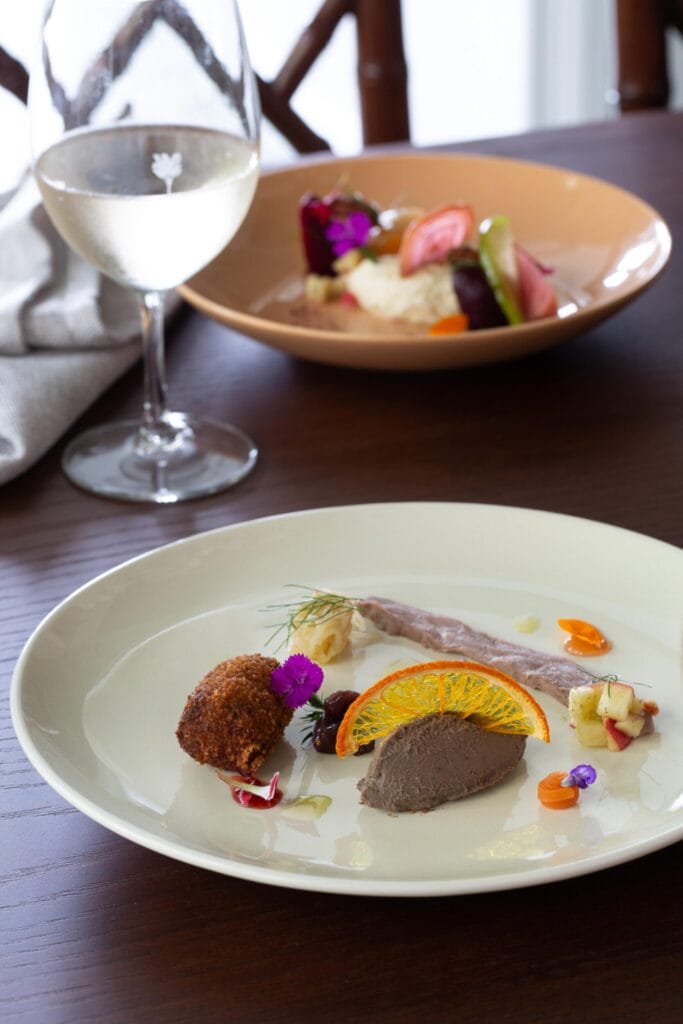
Recently at lunch – at Potager in the steep hills above Tweed Heads – I felt it in spades, too. Potager has won more awards than any other restaurant in the entire Northern Rivers, and Portuguese chef Luis do Carmo has a solid European Michelin-starred restaurant background. His cured confit local sea mullet with burnt carrot puree, pickled daikon, fermented capsicum and fennel (straight out of the garden below the restaurant) is to die for. But it’s the fact waiters Ricky and Sal have served me every time I’ve eaten here for these past six years-or-so, and they hug me on arrival, and I can I stay three or more hours and chat with every table around me, that makes it most memorable. Never mind the menu, these are the things that make the Tweed special.
Stylish stays
The same goes for accommodation. The Tweed is blissfully free of the homogenous, sterile big brand hotels of many Australian coastal regions. Instead the accommodation offering is bespoke, often quirky, and always stylish. I stay just around the corner from Potager, even deeper into the rainforest that’s present all through The Tweed and where the fields of produce aren’t.
At the end of a dirt road, Waterfall Lodge is a fairly new addition to the stable of stays. It boasts its own private waterfall, easily visible from the bed and the comfortable seat on the outside deck of my villa. Run by local couple, Susan and Peter Jones, they’ve restored the property to its original glory by planting over 2,000 tropical plants. At night, there’s no light pollution at all, so I have the luxury of watching a blanket of stars blink down at me. I don’t pull the blinds down on the floor-to-ceiling windows because I prefer to wake up with the kookaburras laughing in the dawn, to the sight of my own waterfall.
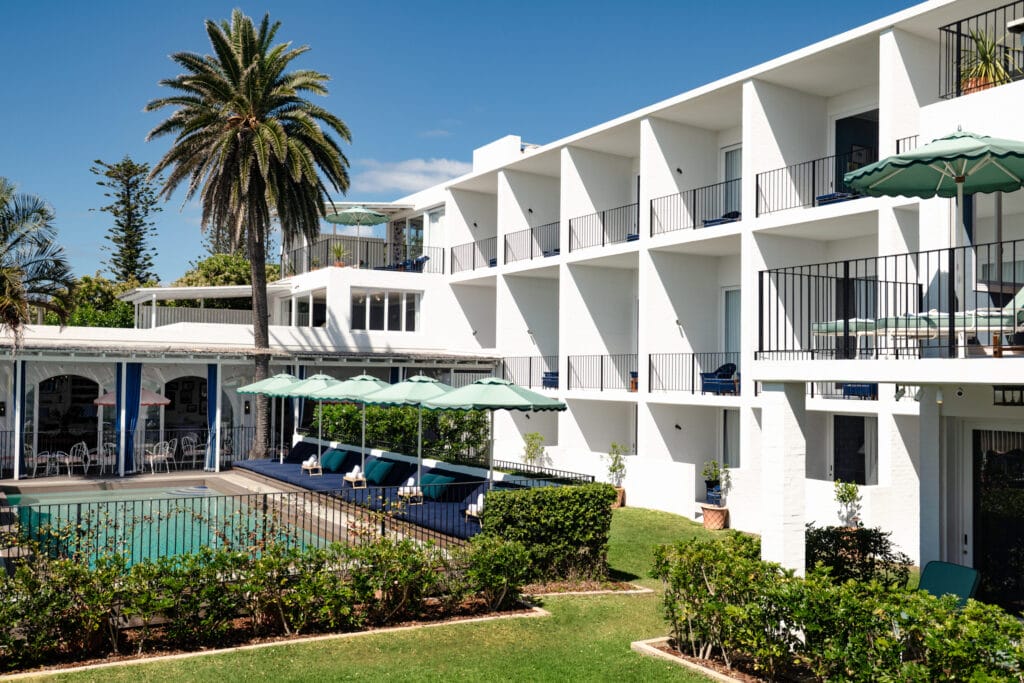
Across the region, by the beach, there are retro-themed motels: one of them has won some of the highest accolades in the world. Halcyon House, now a decade old, has six Conde Nast Traveller Readers’ Choice Award titles, and an award-winning restaurant, Paper Daisy. Architect Virginia Kerridge and interior decorator Anna Spiro combined to turn a decrepit 1960s motel into a Palm Springs-inspired tribute to mid-century minimalism, though this one is miles from any desert, located instead beside the dreamy beach at Cabarita.
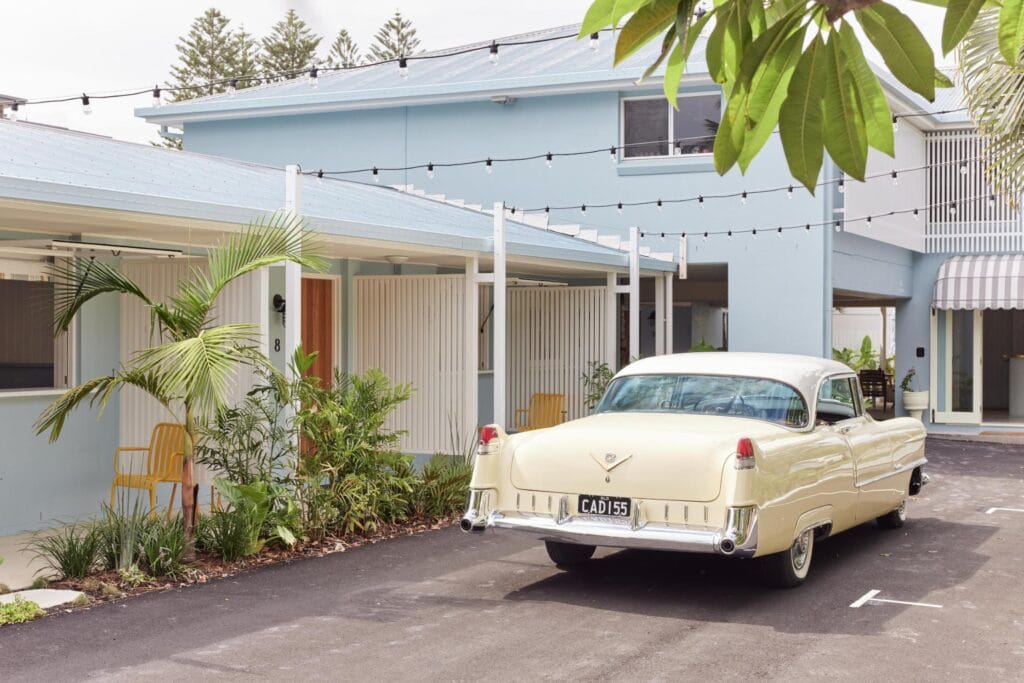
Just up the road in trendy-but-sleepy coastal hamlet, Kingscliff, esteemed former Sydney (now Byron Bay) designer Jason Grant did a similar thing to the tired, old, 1960s-built Blue Water Motel and turned into something special with a coastal palette of soft sea green, baby blue and cream.
A creative community
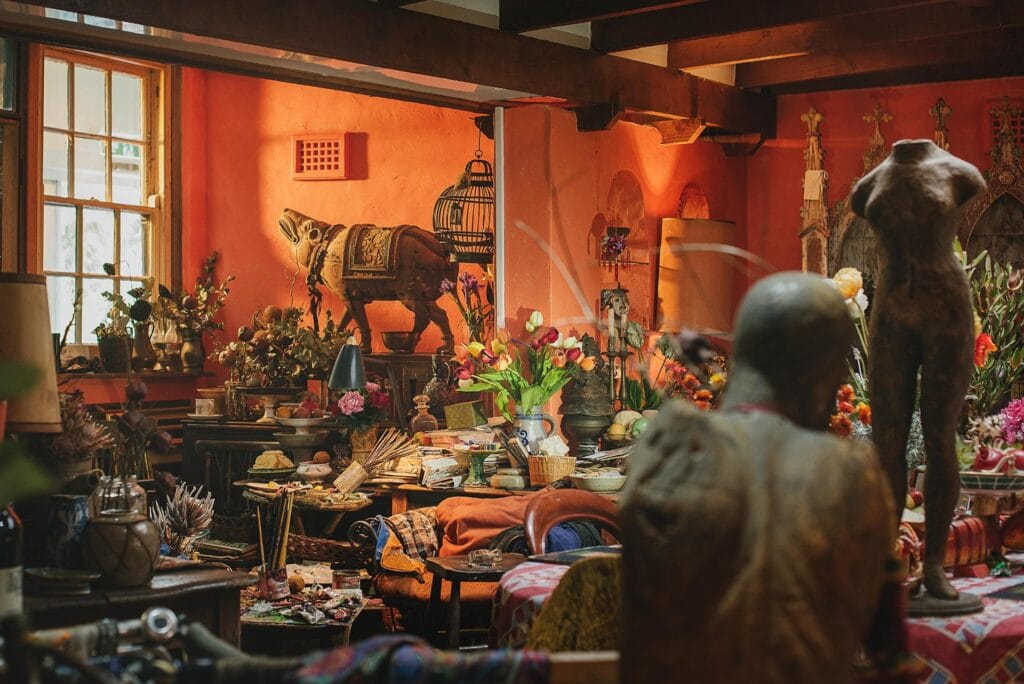
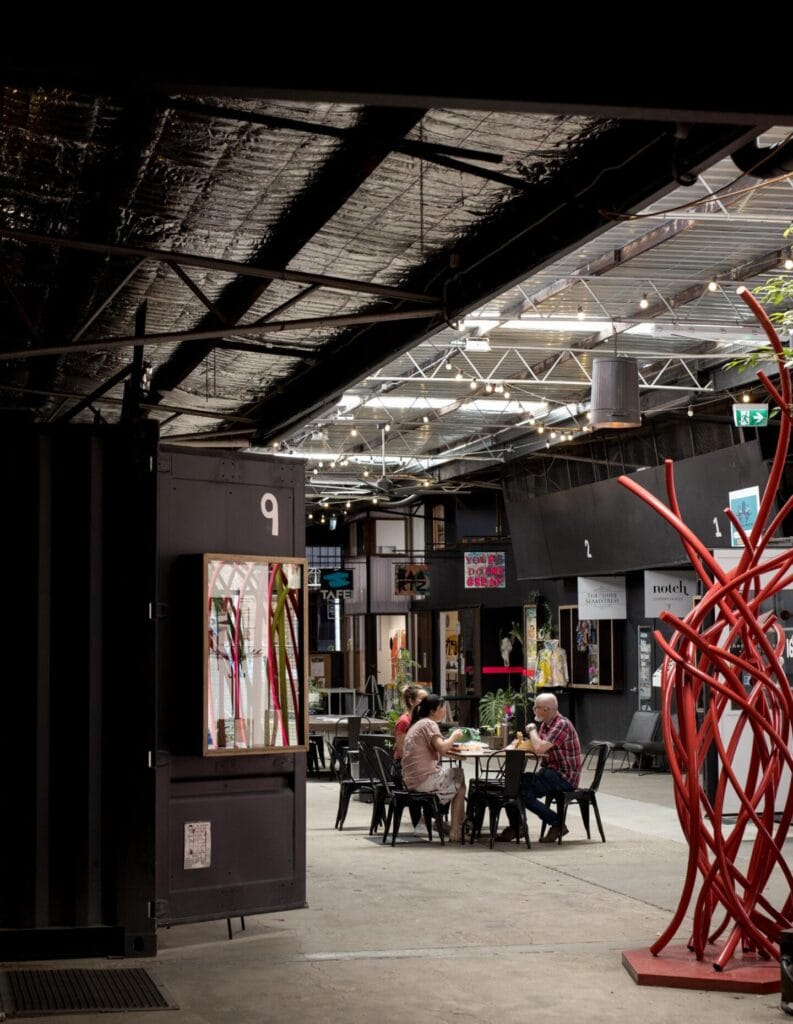
But even beyond the food and hotels, I love that a creative community has turned the Art Deco town of Murwillumbah (it has one of the country’s best preserved art deco streetscapes) from a meat-and-potato town into a Northern Rivers version of Victoria’s Daylesford – with a central arts precinct, one of Australia’s largest regional art galleries and fashion and artisan stores throughout. And I love the refined coastal style of the tiny villages beside the beaches here – towns you probably haven’t heard of. In villages like Pottsville and Cabarita, there’s none of the madness I find in better-known coastal hot spots, and there are hidden pockets of chic cafes and awarded eateries (both have hatted restaurants in their main streets, namely Pipit in Pottsville and No. 35 Kitchen and Bar in Cabarita).
Potager has won more awards than any other restaurant in the entire Northern Rivers, and Portuguese chef Luis do Carmo has a solid European Michelin-starred restaurant background.
All of this is hiding in plain sight. But that’s The Tweed for you: nature’s wonders are here, along with the humans happiest to be habituating them. There are honesty fruit stalls and home-made signs warning you to watch out for their wildlife; there are kids on dirt bikes, farmers on tractors – and Porsche 4WDs and reclusive celebrities like Zac Efron seeking refuge in a world gone slightly mad. I bet there’s no place he’d rather be.
Journey Notes
The Tweed is a year-round destination. Consider winter, when temperatures sit around 20 degrees, with cool evenings and mornings. Summer is usually rainier, and can get humid. The closest airport is Gold Coast Airport, with many daily flights available from Sydney and Melbourne.
Latest Articles
Don't miss the latest from Luxury Travel