
Whistler in winter: The Fairmont Chateau Whistler and a mountain that earns the journey
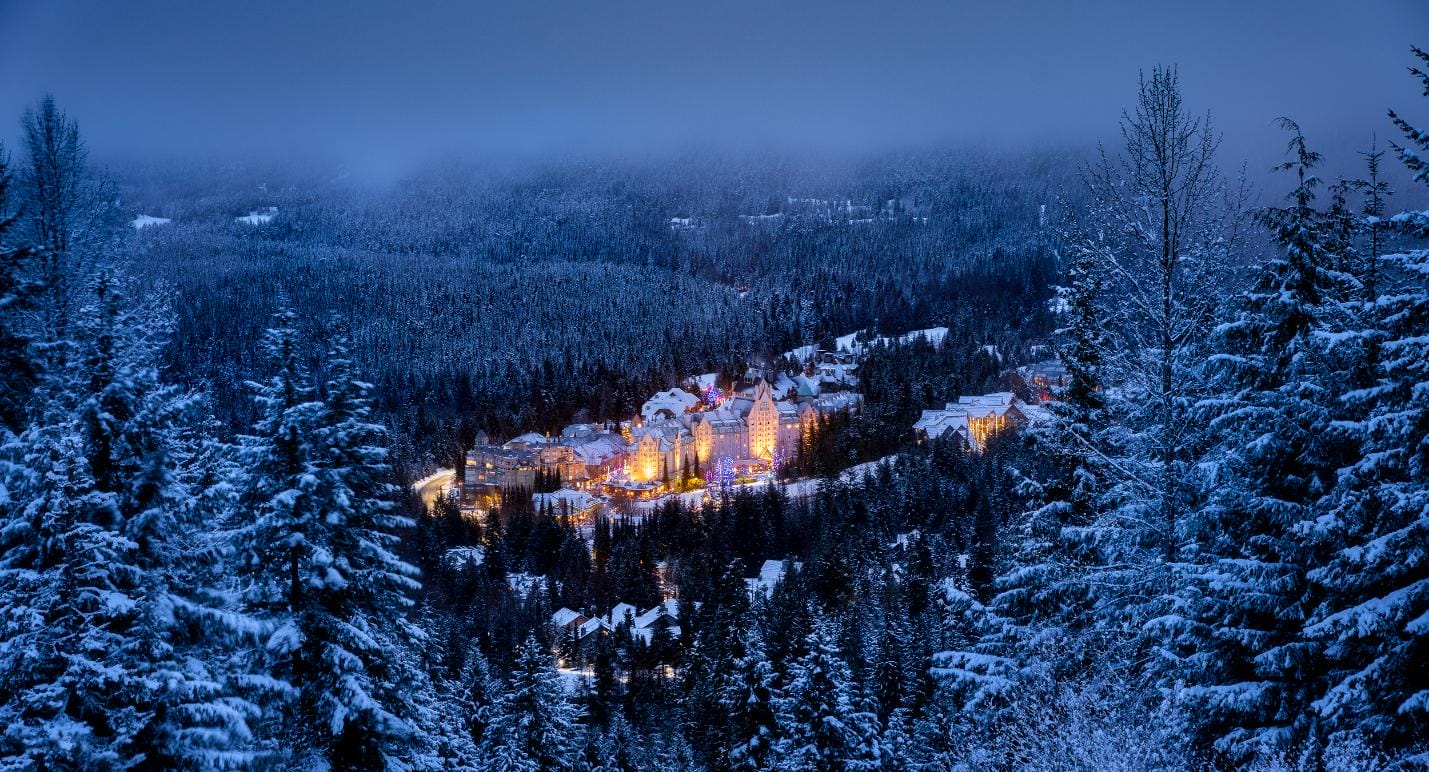
Fairmont Chateau Whistler
Whistler in winter is immediate, uncompromising and, for those willing to stop moving, unexpectedly deep
The flight from Sydney to Vancouver takes the better part of a day, followed by a few hours along the Sea-to-Sky Highway, one of North America’s most dramatic drives with the Pacific pressing in on one side and the Coast Mountains rising on the other. Then you are suddenly in it: the village glowing honeyed against a wall of dark mountain, snow compressing underfoot with that sharp squeak that signals real cold, and air so clean it almost stings. Whistler in winter is immediate. It doesn’t ease you in. Neither, it turns out, does a cold plunge.
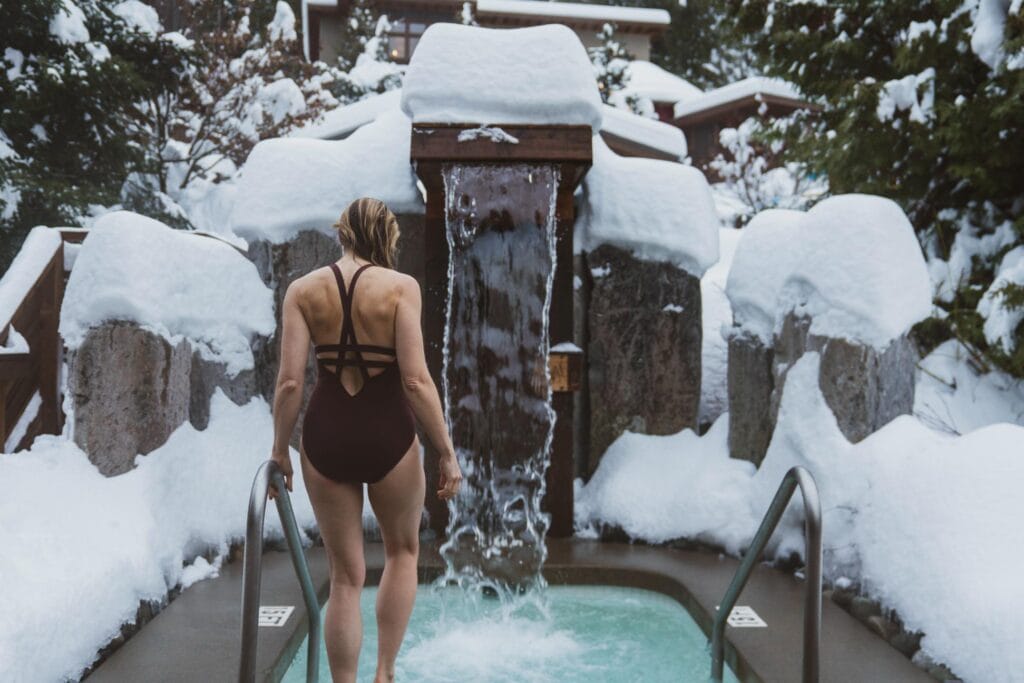
At Scandinave Spa Whistler the next day the shock hits like a door slamming shut. I lower myself into one of the freezing plunge pools uselessly slowly, as if hesitation might soften it, and feel my breath leave my body before I’ve decided to let it go. I’m not built for this kind of bracing ritual.
The spa is all silence and cold air, set within old-growth rainforest and mountain ridgelines. No phones. No talking. You move between heat and cold at your own pace, through saunas and steam and hot pools. I don’t stay in the plunge long. I spend most of my time in warmth, then lie in the sauna until heat settles heavy across my chest. In the solarium, glass opens onto dripping forest and grey sky, and time loosens. In this moment, I’ve not just slowed down, but completely stopped.
And that matters here, because Whistler rarely does. The village hums with movement, gondolas threading between peaks as ravens circle overhead, light spilling from bars and walkways as night settles in. Australians arrive in steady streams, drawn to the scale, the cold, the clarity of it all. But for all its motion, stillness is never far away. You just have to step into it.
Fairmont Chateau Whistler, grand by design
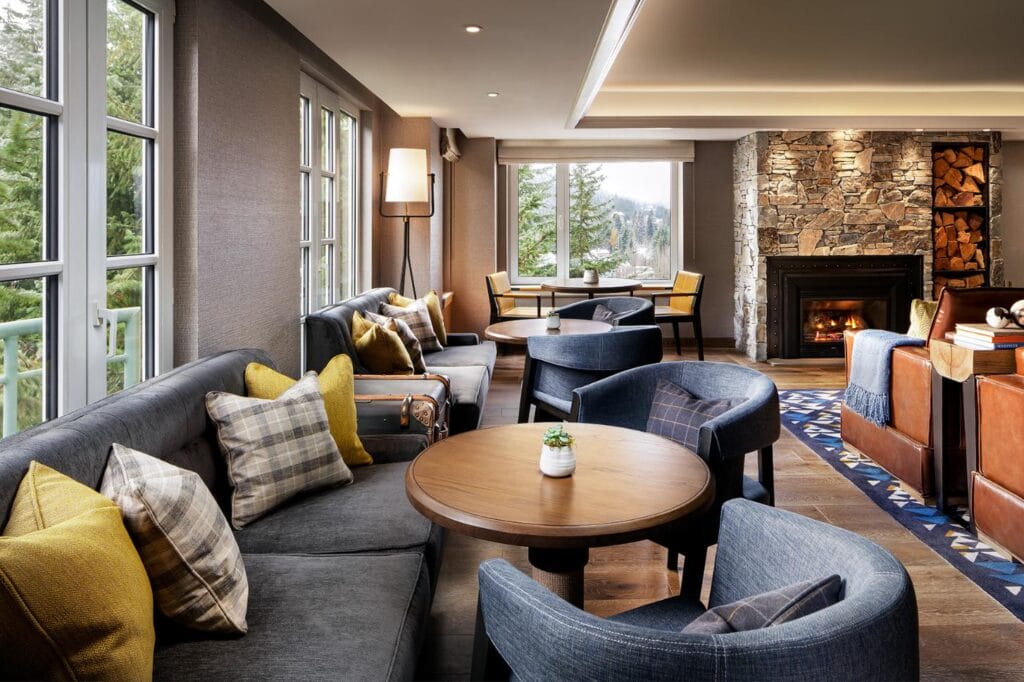
Sitting at the base of Blackcomb Mountain, the Fairmont Chateau Whistler opened its doors in 1989 and has been the resort’s landmark hotel ever since – a classic ski lodge interior complete with soaring, timber-lined ceilings, stone walls and warming fireplaces. Its steeply pitched copper roofline is visible from the gondola as you descend at day’s end, glowing warmly against the darkening mountain – hard to miss and easy to fall for.
The hotel has many nooks and crannies fitted out with lounges made to sink into, and over the few days I spend here I rarely feel the pull of my room until I actually need it. With over 500 rooms and suites ranging from classic guest rooms up through Deluxe Slopeside Views, there’s a tier for every kind of stay.
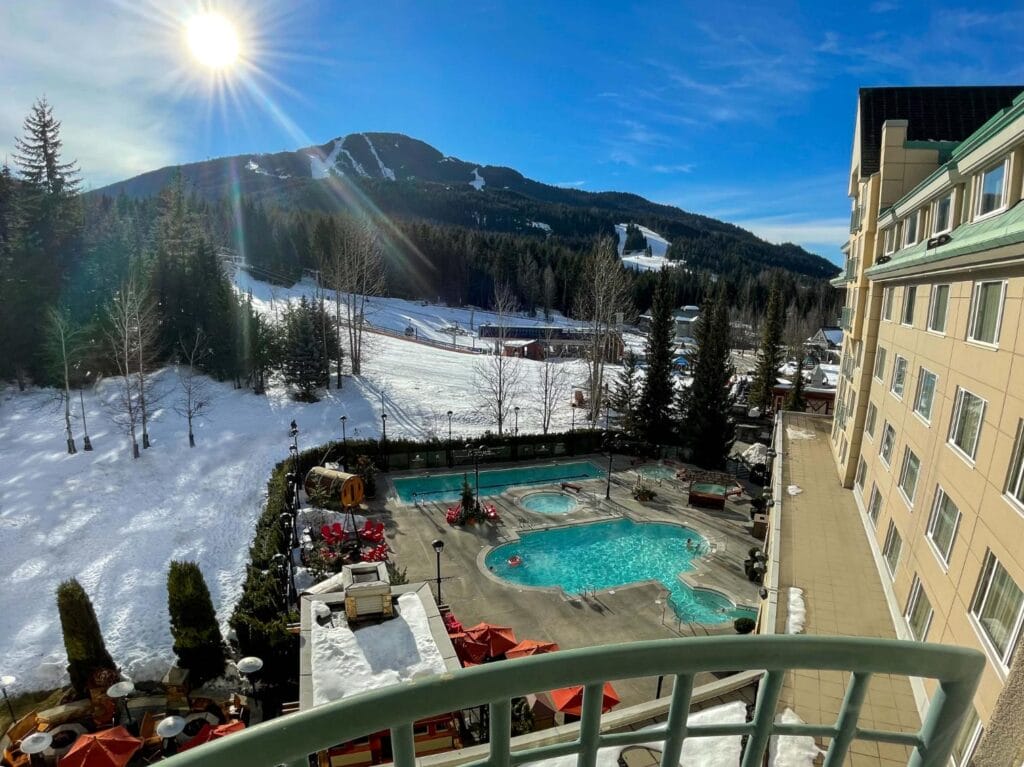
Beyond the setting, what the Fairmont delivers is the luxury of seamlessness. A ski concierge means your skis are fitted, stored and ready at the slope each morning. And after a day on the mountain, the Vida Spa offers treatments that move between deep-tissue restoration and sensory indulgence. I prefer to unwind in the outdoor hot tubs, though – come on a perfect powder day and you’ll have them almost to yourself. And when you need to do nothing at all, the Fairmont Gold lounge offers the rarest of mountain luxuries: genuine quiet in the middle of one of North America’s busiest resorts, with its own concierge, curated food and wine service.
60 winters and seven ways to see them
Whistler Blackcomb marked Whistler Mountain’s 60th anniversary season in 2025/26 alongside Blackcomb’s 45th, with the launch of Wonder Routes, seven self guided colour coded itineraries designed to reveal the mountains in different ways. They return for the 2026/27 season, one of the longest in North America, running from late November 2026 into May 2027. For Australians, it aligns neatly with our summer and early spring.
Out on the mountain, the idea is simple: to slow the blur. A range this vast can easily dissolve into lifts, queues and momentum if you let it. Wonder Routes interrupt that rhythm, drawing you into a more deliberate way of moving through terrain. But not everything here needs a framework – some moments do not need guiding at all.
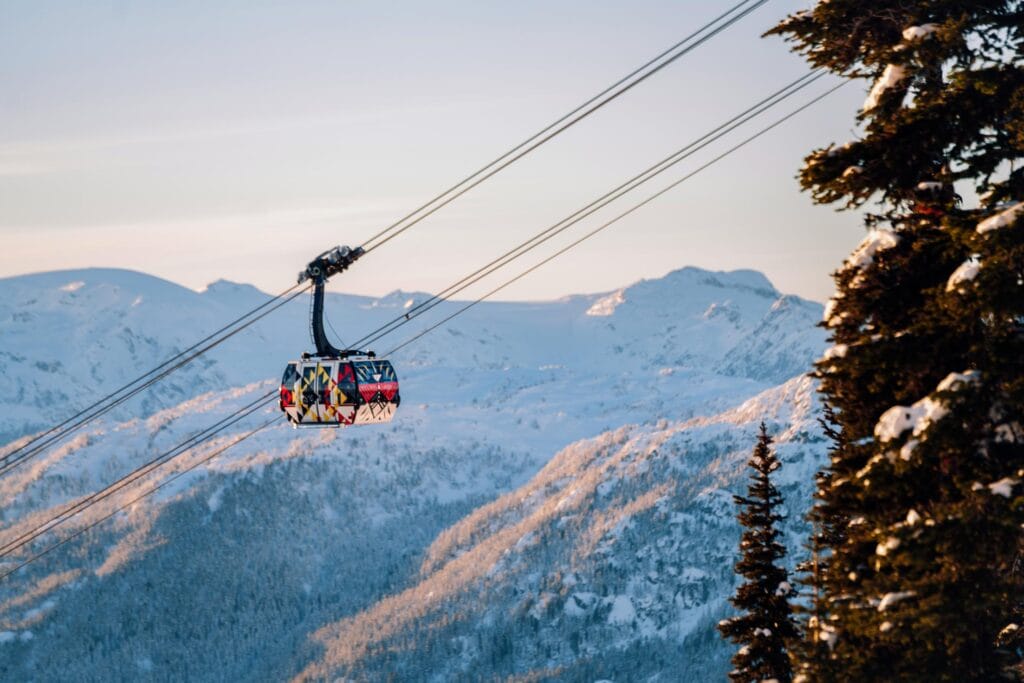
The Peak 2 Peak Gondola spans just over three kilometres between Whistler and Blackcomb, suspended 436 metres above the valley floor, a feat of engineering that feels improbable no matter how many times you ride it. Two cabins carry original artwork by First Nations artists: Levi Nelson of the Lil’wat Nation, and Chief Janice George and Buddy Joseph of the Squamish Nation, on whose shared traditional territories this all sits – the mountains, the village, 60 years of winter. You float above glaciers, old growth forest and lakes glittering far below, and the scale does the rest.
Fire & fondue
My first evening begins with a walk through the village. From December through to the end of March, Whistler strings hundreds of thousands of LED bulbs across thousands of strands of lights. I wander down through the soft warm glow and end up at Provisions in Village Square, a neighbourhood café smelling of roasted chicken and good coffee.
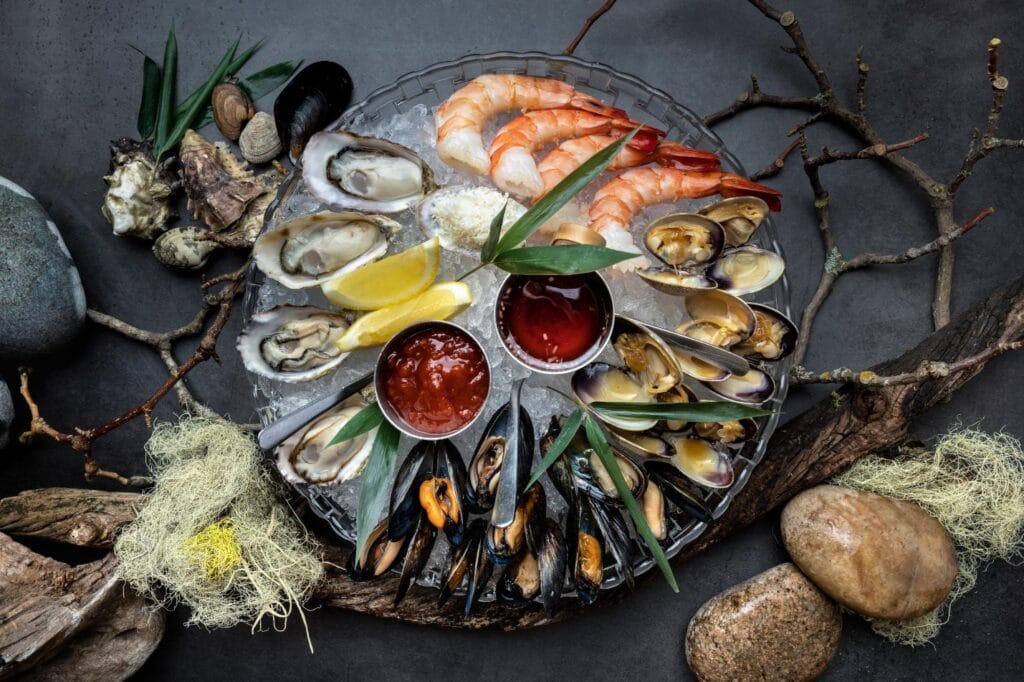
That night, Wild Blue is something else entirely. Chef Alex Chen – celebrated Iron Chef winner and Vancouver Magazine’s Chef of the Year – runs a kitchen devoted to Pacific Northwest cuisine, sustainable seafood and locally sourced ingredients. The results are extraordinary, with every bite reminding you of how close the cold Pacific actually is to these mountains. Wild Blue sits at number 33 on Canada’s 100 Best Restaurants list for 2025, and sitting in that warm, considered room, it’s less of a surprise than a confirmation of something you suspected from the first bite.
The evening I keep coming back to in Whistler, though, is The Chalet at Fairmont Chateau Whistler – the hotel’s golf clubhouse transformed each winter into an intimate dining experience, open daily from December through March. A log fire throws shadows up stone walls. The menu moves through a rich, bubbling cheese fondue with seasonal vegetables, then Fondue Chinoise – a broth-based affair with sliced beef tenderloin, tiger prawns and Atlantic salmon – and finally a dark chocolate fondue to close.
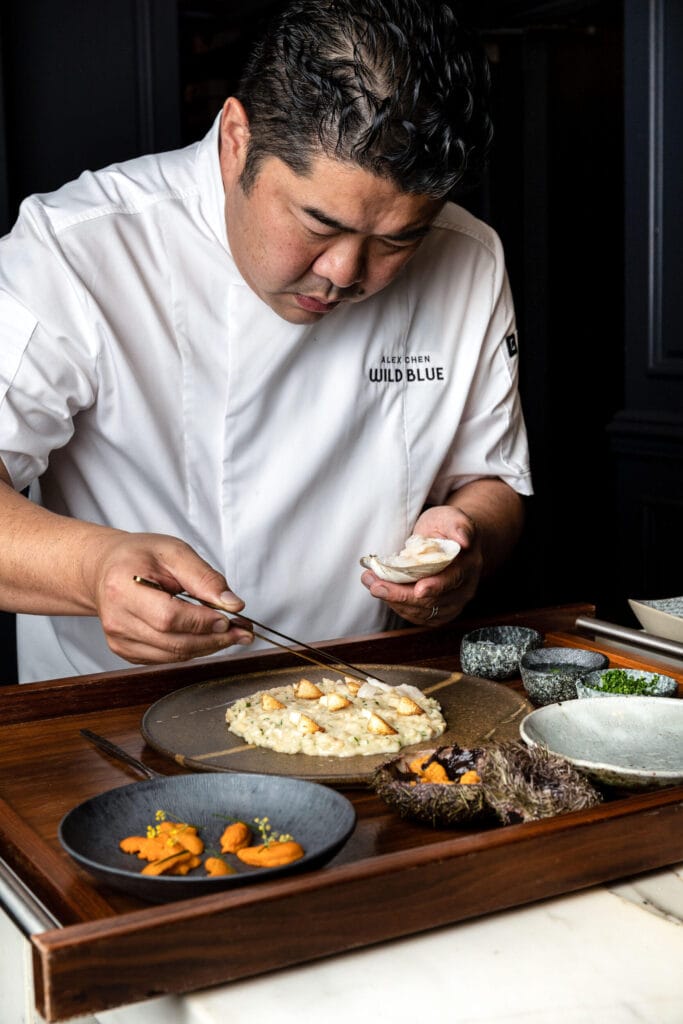
Wild Blue sits at number 33 on Canada’s 100 Best Restaurants list for 2025, and sitting in that warm, considered room, it’s less of a surprise than a confirmation of something you suspected from the first bite.
Deeper ground
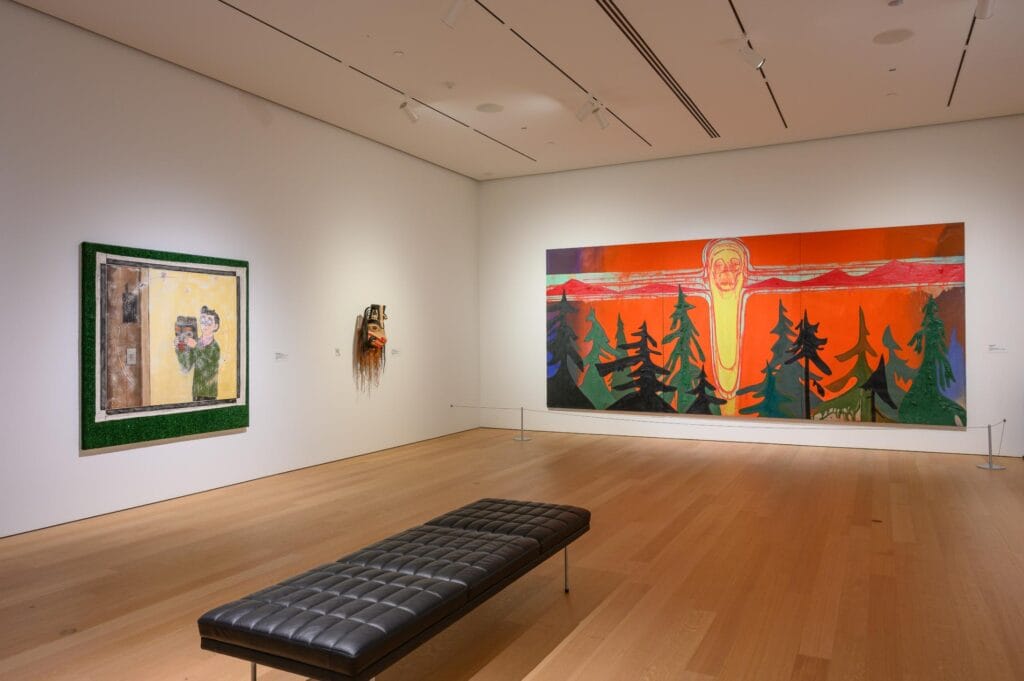
A mountain this famous can make it easy to forget what was here before the lifts. The Audain Art Museum – a 56,000-square-foot structure opened in 2016 – is cantilevered above a forest wetland, designed by Patkau Architects to integrate into its surroundings. It’s a stunning piece of architecture, worth stepping back from just to take it in.
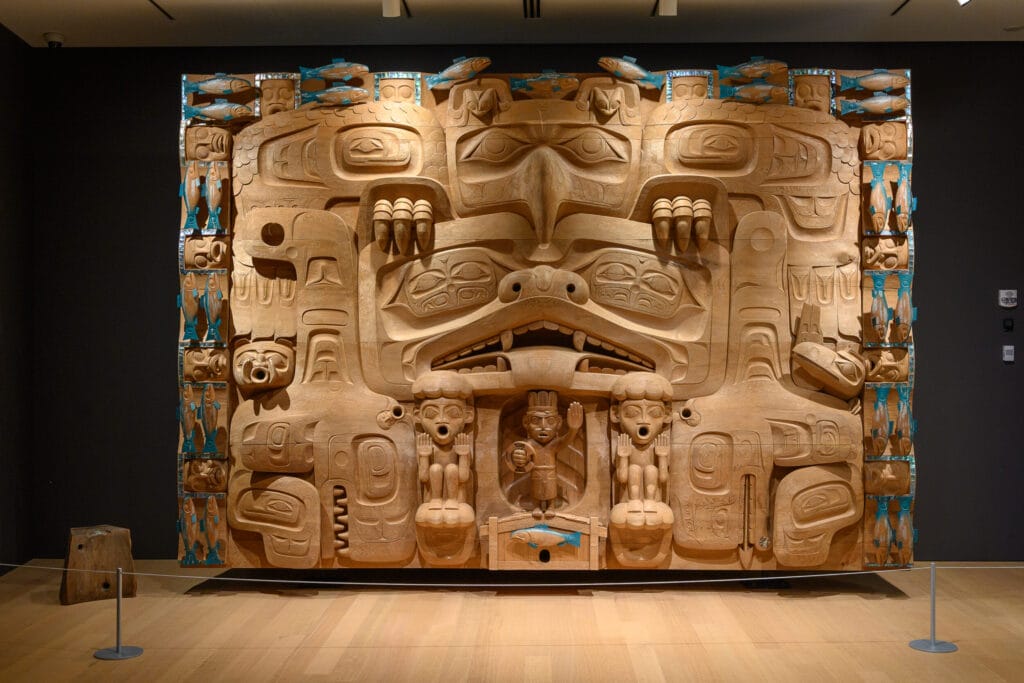
Inside, one of Canada’s finest collections of British Columbia art: Emily Carr’s dense and visionary paintings of cedar and coastal mist stop me where I stand. Hereditary Haida Chief James Hart’s The Dance Screen (The Scream Too) is the most significant contemporary carved cedar dance screen in the world, commanding its room with an authority that feels ancient and uncompromising. A museum of this calibre inside a ski resort is one of Whistler’s quietest surprises, best experienced slowly.
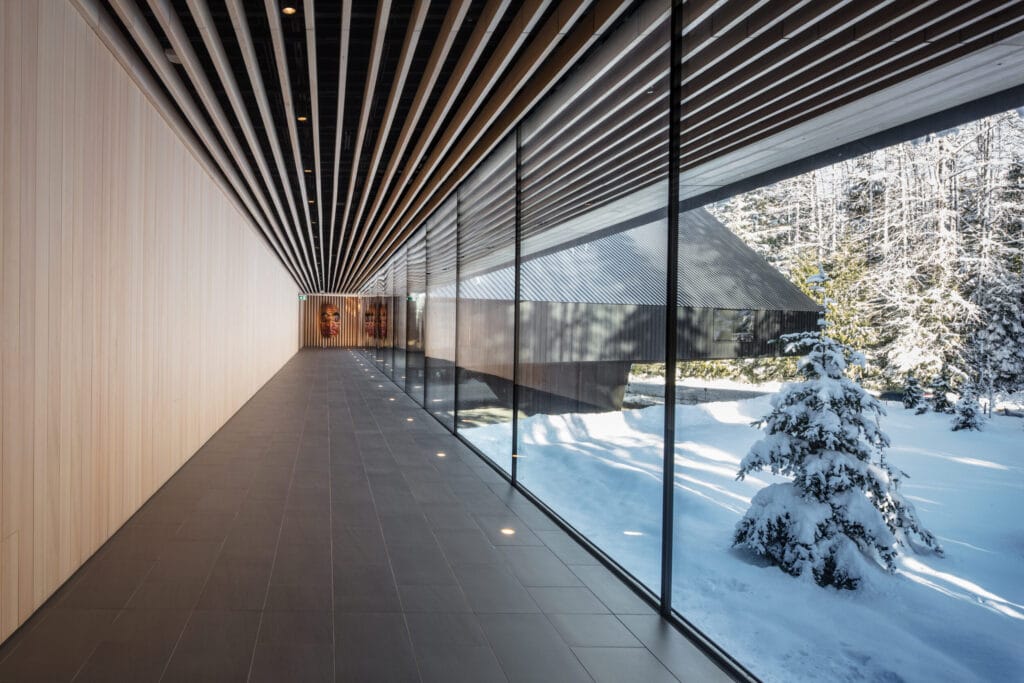
Two nations built something different, and more necessary, just nearby. The Squamish Lil’wat Cultural Centre is the first centre of its kind in Canada, located on the shared traditional territories of the Squamish Nation and Lil’wat Nation. The building blends the architecture of a traditional Squamish Longhouse with the Lil’wat Istken, and walking through its exhibits – from carved masks to beadwork – offers a profound sense of the lives, stories, and traditions that shaped this land long before skiers arrived.
On my last evening at the Fairmont, as twilight drapes the pines in shadow, Whistler slows. Cedar saunas, icy pools, Emily Carr’s misted forests, and carved cedar screens all feel connected – threads of a mountain that holds its history as carefully as its snow.Amid the slopes and village bustle, Whistler has a quieter side, and this is where the Fairmont finds its beauty.
Journey Notes
Stay at fairmont.com
Ski at whistlerblackcomb.com
Spa at scandinave.com
Dine at wildbluerestaurant.com
Township information at whistler.com
Province information at SuperNaturalBC.com
Latest Articles
Don't miss the latest from Luxury Travel