
A journey through the wild and little-known Faroe Islands
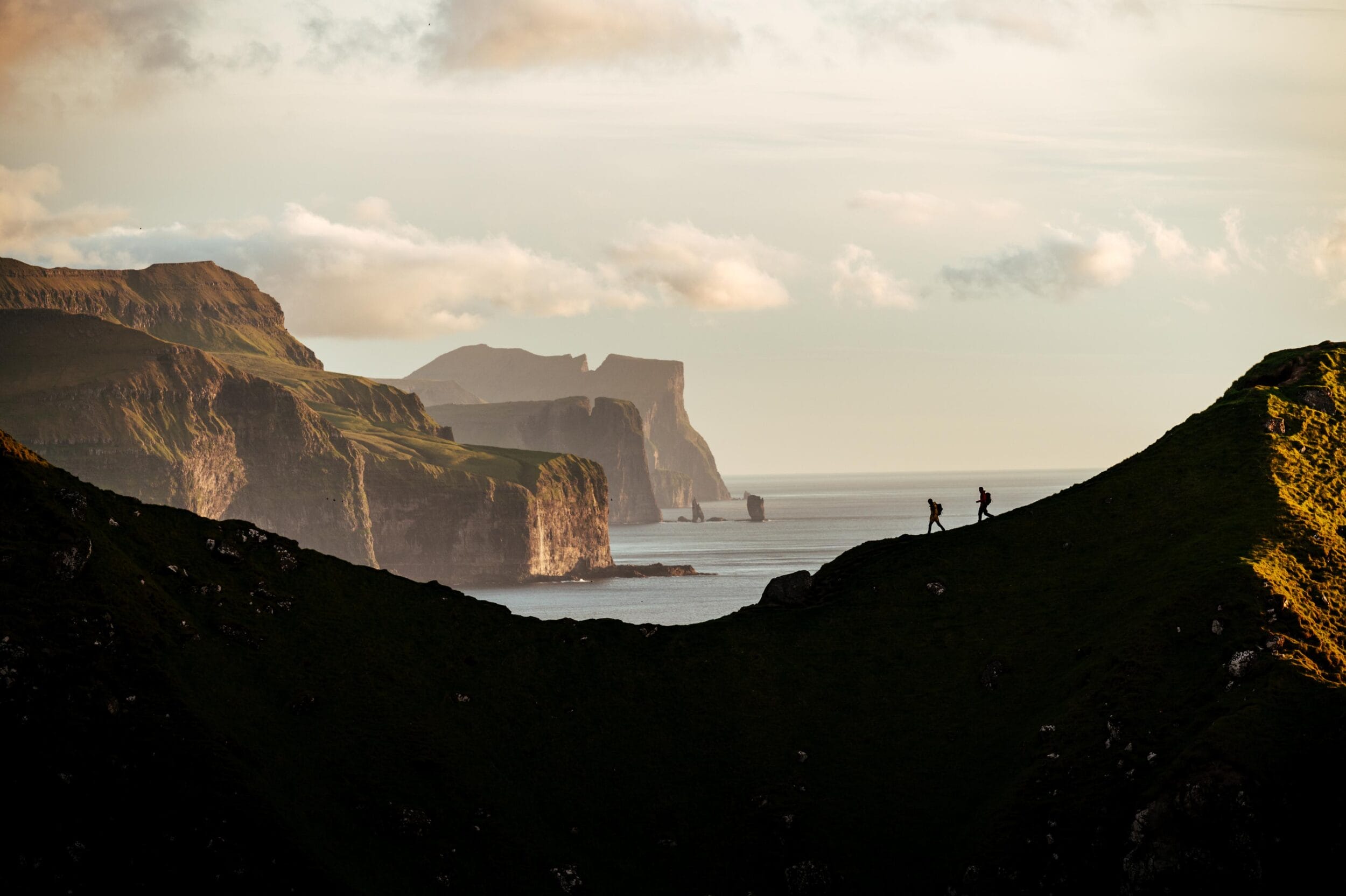
Hikers traversing a lush ridge with steep sea cliffs in the Faroe Islands. Image credit: Chris Riefenberg
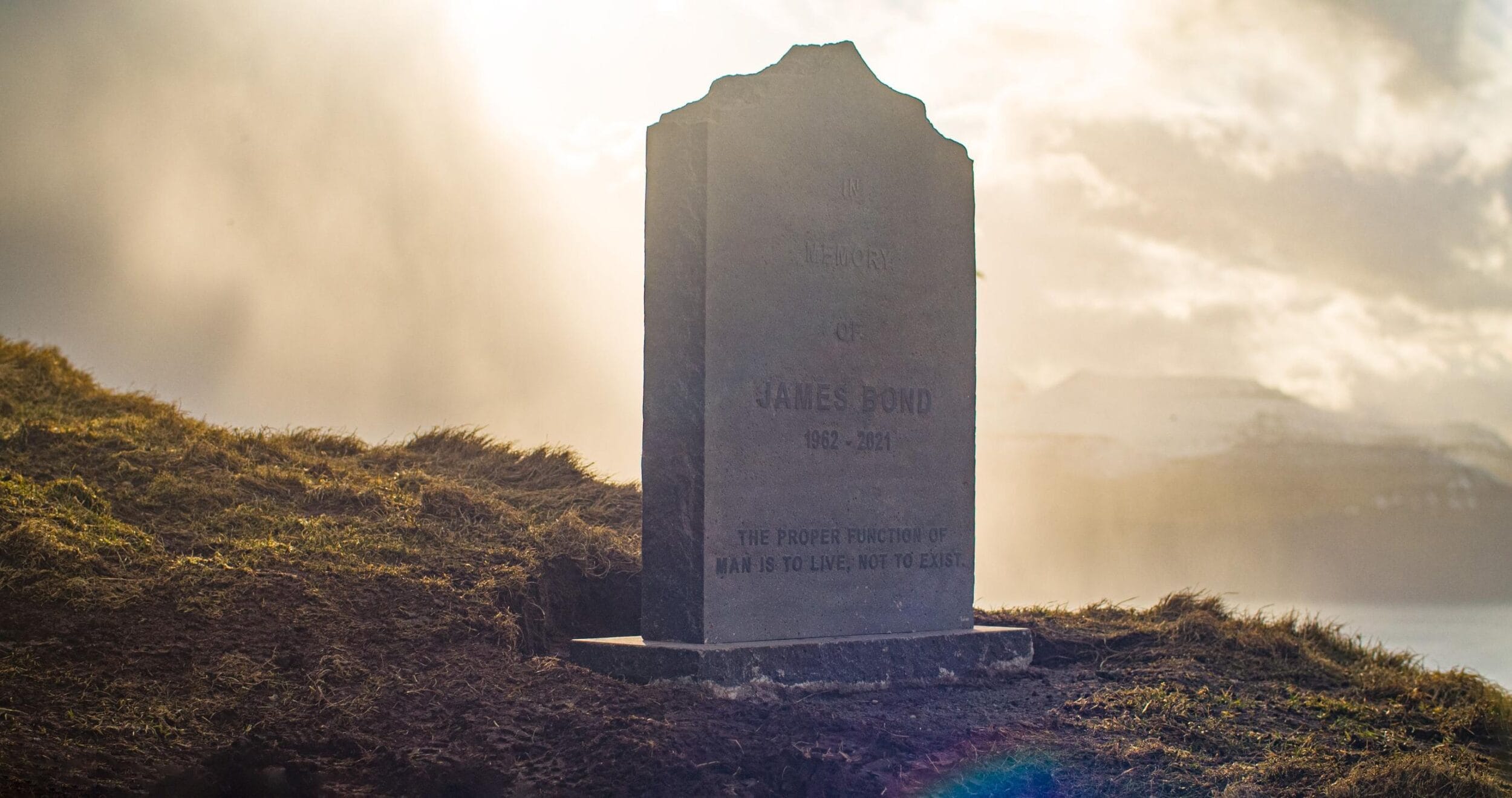
On the island of Kalsoy, a Faroese basalt headstone marks the spot where James Bond met his end in ‘No Time to Die’. That lure is just the latest reason to visit the Faroe Islands – an archipelago of 18 windswept islands located midway between Iceland and Norway
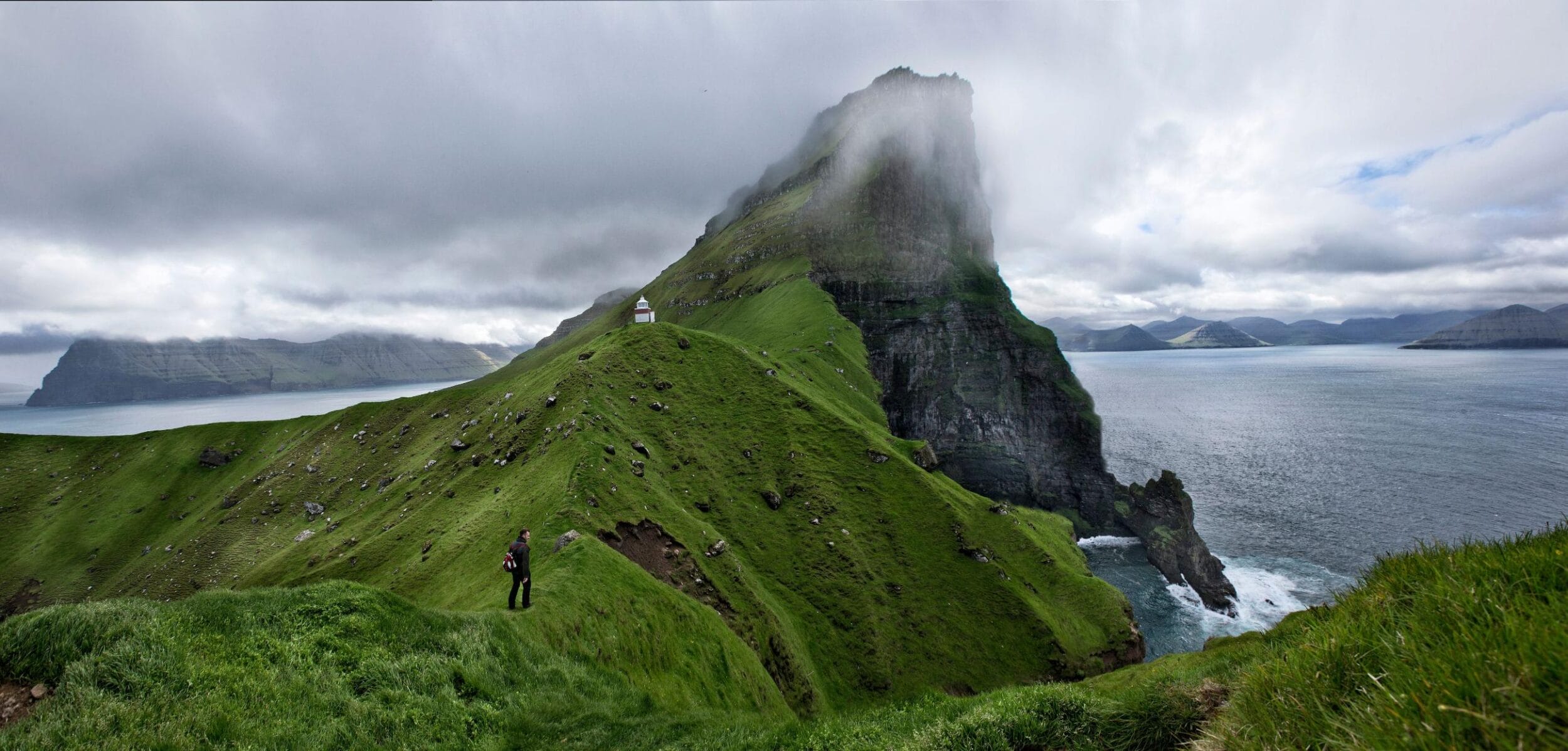
I first came to this flute-shaped island, this wild, rugged place, six years ago. I drove through its ageing single-lane mountain tunnels and its towering, sculpted valleys and trudged northwards over its treeless terrain beneath gargantuan promontories until I could go no further. It profoundly touched me then, and now I was back, dwarfed again by the same stupendous landforms so joyously familiar. I was by myself then, and now, too – no locals out tending to wandering sheep, no visitors.
This place, the Faroe Islands, conflicts me. On the one hand, I’d be happy if no other tourist knew about its untouched, rugged landscapes. Why burden this vulnerable island with more people? On the other hand, it’s a place too special to keep to myself. Indeed, more people are coming to these 18 windswept islands in the middle of the North Atlantic, and particularly here to Kalsoy, ‘my’ flute-shaped island.
They come for the mind-bending hike to Kallur Lighthouse, sure. But there’s an added lure now, as if more were needed: a headstone. It marks the final resting place of the most famous fictional spy in the history of film and literature: James Bond, who was killed at this very spot at the end of Daniel Craig’s final outing as 007 in the 2021 film No Time To Die. The headstone, made of Faroese basalt, lies beneath the 788 metre-high cliff of Nestindar and was cut by a local stonemason in the village of Skopun on the Faroese island of Sandoy. It reads: “In Memory of James Bond 1962 – 2021. The proper function of man is to live, not to exist.”
The pull of Kalsoy
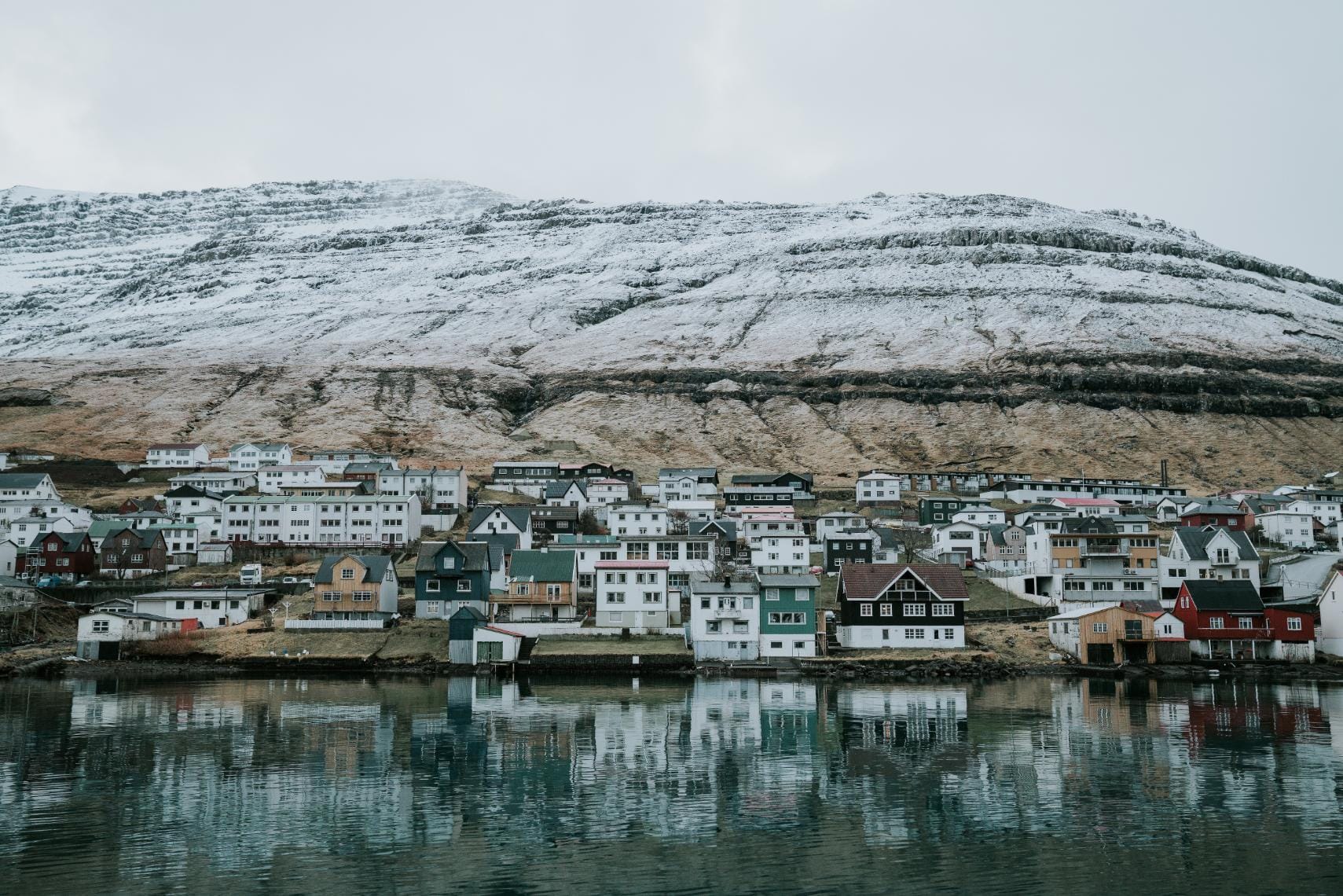
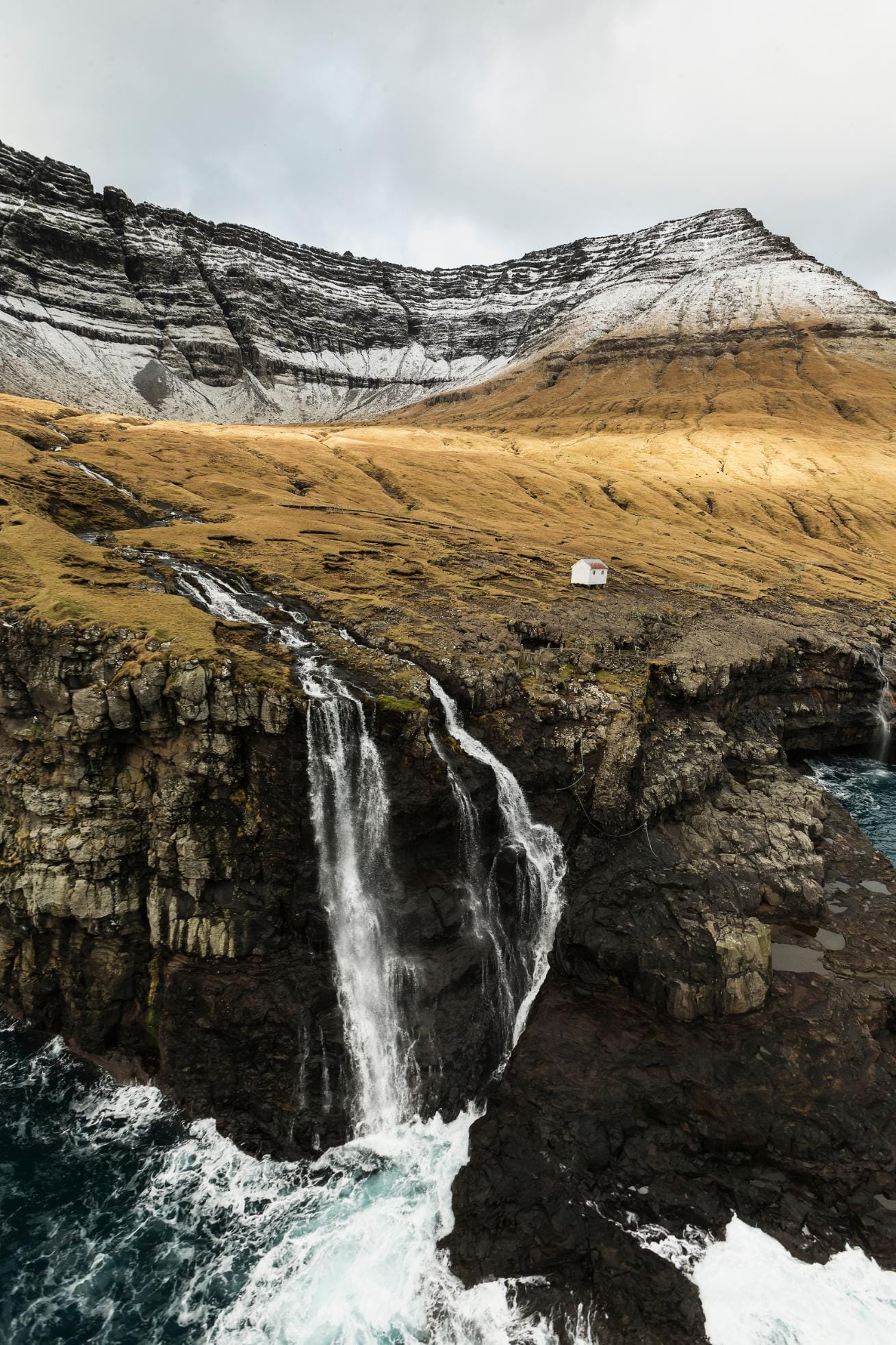
The remote Faroes, and their almost 800 assorted islets and skerries, lie roughly midway between Iceland and Norway, 320 kilometres north-northwest of the Scottish mainland, but politically are a self-governing territory within the Kingdom of Denmark. These volcanic islands and islets are outrageously dramatic – a visible manifestation of the Greenland-Scotland Ridge, an ancient uplift of basaltic lava. It’s as though Norway and Scotland – my two favourite landscapes – got together and had a baby, making something even more beautiful than mum and dad.
The tunnels came later.
The first undersea tunnel opened in 2002, invisibly connecting the islands of Streymoy and Vagar, and another followed in 2006 linking Eysturoy and Bordoy. There are now four undersea tunnels with a total length of 33.3 kilometres. Add another 17 mountain tunnels dating back to the 1960s and together they unite over 90 per cent of the archipelago’s 56,000 inhabitants – and have transformed the Faroes into a single connected place.
Mykines, with its population of just a dozen or so – a number that guarantees it’ll never get a tunnel – is on my must-see list this time because of its famous puffin colony. My local guide, however, wants to show me something else first, some decaying relics of the Faroe Islands’ human past: its peat huts.
An archipelago stitched together
Peat – soil composed of decayed vegetable and organic matter – is not only an effective carbon sink, but can also be used as fuel when cut into segments and dried. Until just a few generations ago this land, with no trees for firewood, used peat for cooking and heating. Reminders of this time are now hard to find, but a series of peat huts – stone storehouses where the peat was stacked for drying – are still dotted around Mykines, if you know where to find them.
The weather in the Faroes is, to put it bluntly, psychotic. Locals joke that seasick Vikings were left behind here, too ill to continue on their voyages of conquest. Fog, rain and wind can come from everywhere and all at once. “If you want to see the Faroes,” goes the saying, “stand still. It’ll blow right past you.” And yet, the Faroes’ climate is surprisingly mild, with temperatures moderated by the North Atlantic and the Gulf Stream, rarely dropping below -2°C in the winter or exceeding 20°C in the summer.
Low-lying flora abound in the Faroes. Purple marsh thistles are common, as are yellow buttercups, the creeping ever-present Arctic willow, juniper, blankets of heath, fungi, lichens, and over 30 species of mosses – over 400 types of plants in all, a forest in miniature. But strong winds and salt-laden air make it difficult for trees to get a foothold.
Purple marsh thistles are common, as are yellow buttercups, the creeping ever-present Arctic willow, juniper, blankets of heath, fungi, lichens, and over 30 species of mosses – over 400 types of plants in all, a forest in miniature.
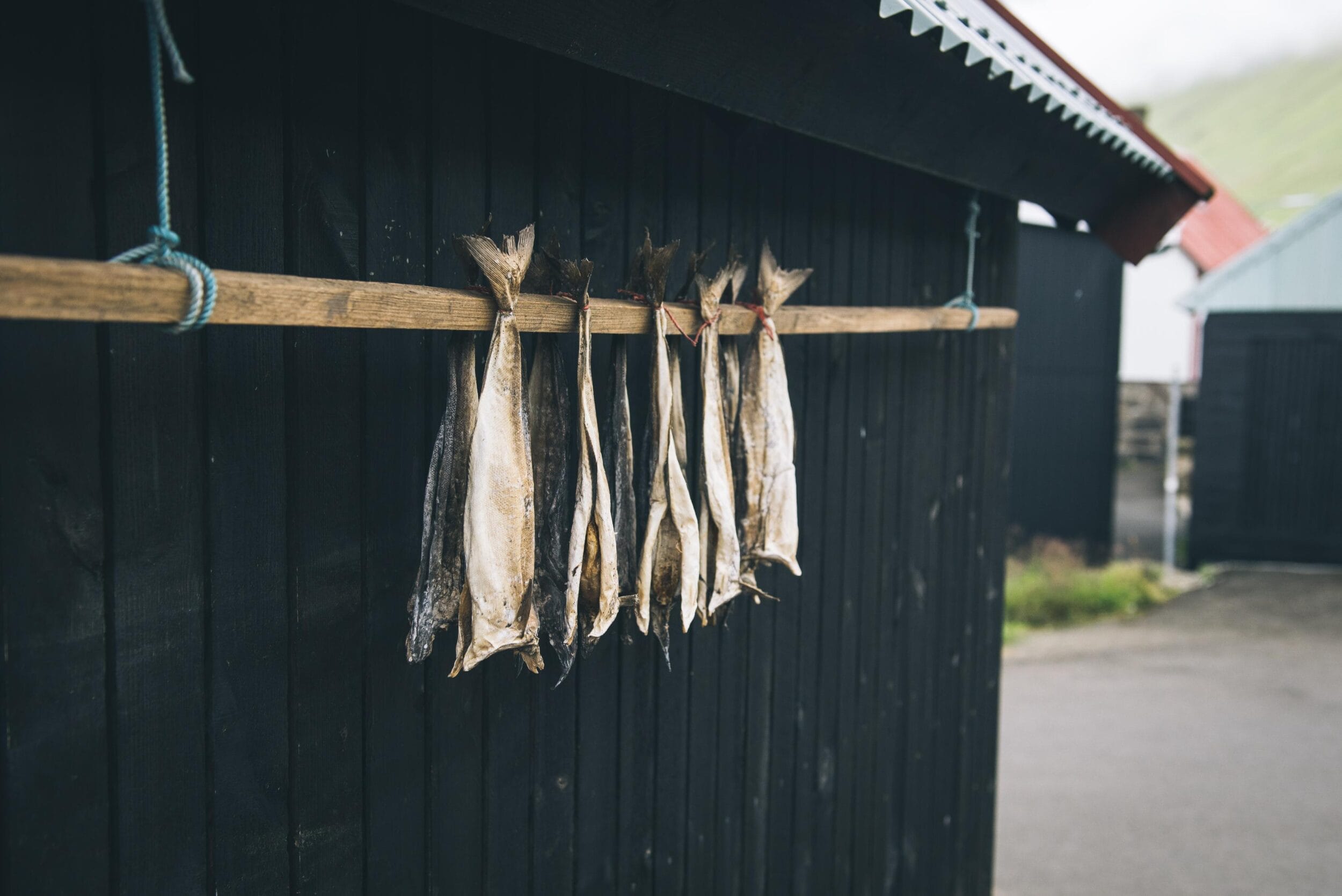
The lack of trees means there isn’t wood available for smoking fish, an otherwise common Scandinavian culinary practice. Instead, in the Faroes the catch is hung beneath the eaves of cabins and air-dried, leaving nature to do the rest. This ancient art of Faroese fermentation is on show in all its glory at a restaurant in the capital Tórshavn, on the island of Streymoy, where I enjoy one of the most memorable meals of my life. Ræst, which loosely translates as “half rotten”, tells the story of fermentation – one of the least understood aspects of Faroese culture – in a dining room housed within a turf-roofed building in the city’s Old Town. Here, I experience a three-hour marathon of sea urchin, scallops in local seaweeds, cod terrine, langoustine, sea cucumber and traditional Faroese fermented lamb.
Shellfish, mussels and clams are bountiful in the Faroes, but were once thought of as pauper’s food or relegated to use as bait when fishing for cod. These entrenched attitudes to seafood help explain the challenges faced by an emerging and increasingly sophisticated Faroese food scene.
Never finished
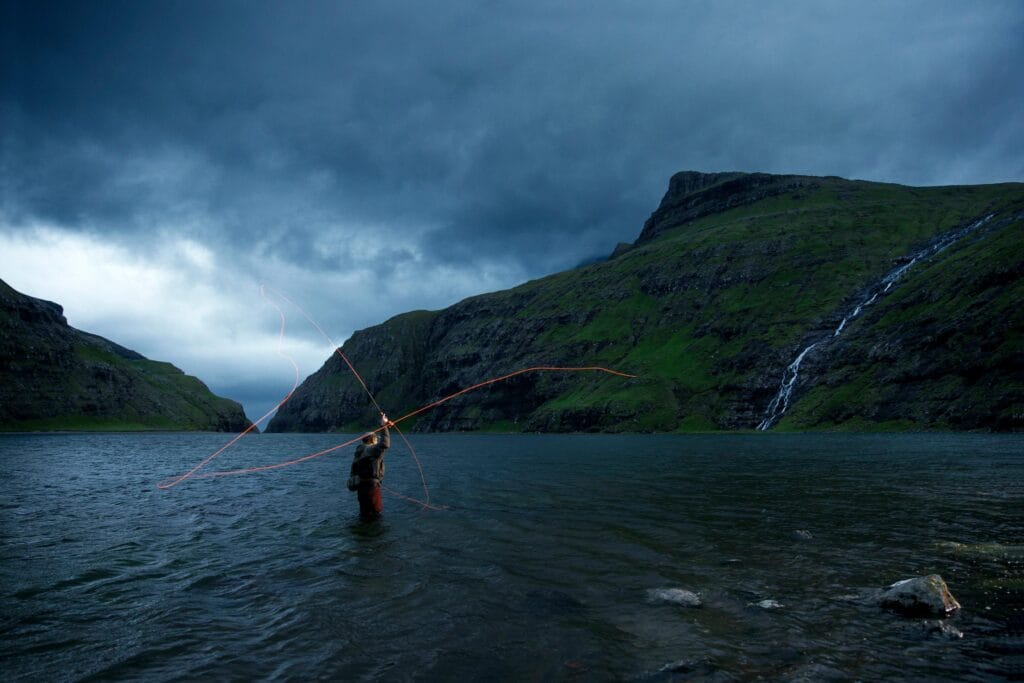
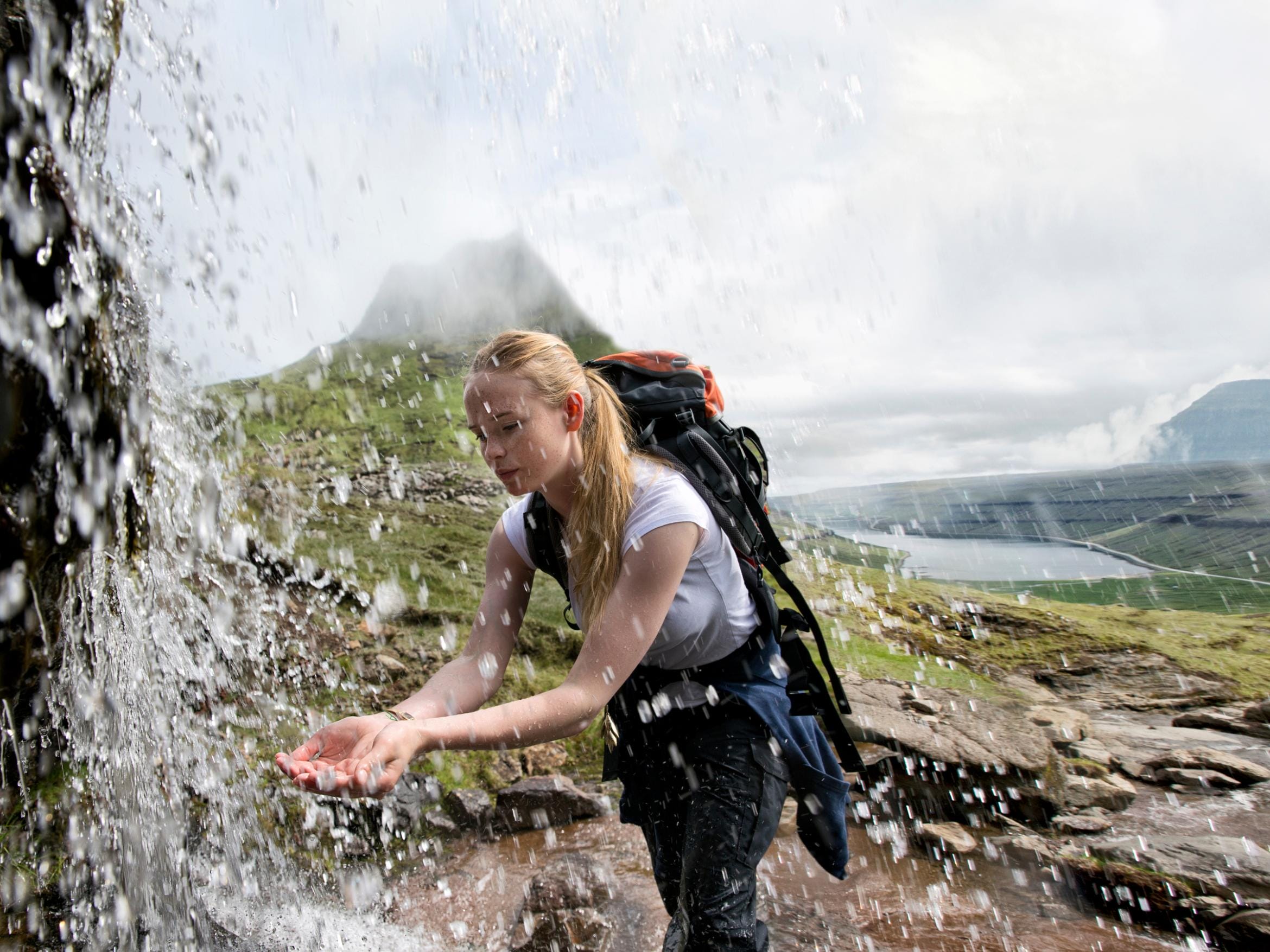
Back out in the wild, I witness the ‘floating’ lake of Leitisvatn on the island of Vágar and hike to the black sand beach at Fossá Waterfall on Streymoy. I cross the rickety, makeshift wooden bridge over the 300-metre deep Rituskor gorge on Suðuroy with Lillian, a local guide-turned-friend from Klaksvik on the island of Borðoy. Hiking together along Suðuroy’s gloriously windswept hillsides and over the bridge and back has become an enduring and treasured memory, and, already, I yearn to return.
I now know that the Faroes are never ‘finished’. I’m still to take a helicopter to lonely Fugloy, the Faroes’ easternmost island, and still to see the 25,000 pairs of European storm petrels on Svinoy. In Old Norse ‘Svinoy’ means ‘Swine Island’. It was likely named by Vikings who came here a thousand years ago, were seduced by its endless bounties, and chose to stay.
I know how they felt.
Journey Notes
Australian-based tour company 50 Degrees North specialises in creating bespoke tours to the Faroe Islands and throughout the Arctic. fiftydegreesnorth.com
FINNAIR offers daily flights from Singapore direct to Helsinki, Finland. From there, connect with Atlantic Airways through Copenhagen to the Faroe Islands. finnair.com, atlanticairways.com
Latest Articles
Don't miss the latest from Luxury Travel