
Japan in bloom: 10 breathtaking gardens to visit
Japanese gardens
Across Japan, gardens are carefully composed landscapes where nature, design and the seasons exist in quiet harmony. From Kyoto’s Zen temples to Kanazawa’s famed Kenroku-en, these 10 remarkable spaces reveal the country at its most serene
One of the world’s most populated cities, Tokyo is a consistent flurry of crowds, noise and neon. Yet, no matter where you find yourself in this sprawling metropolis, you are never far from a peaceful green space, such is the Japanese commitment to nature.
This devotion is spread across the country, where parks and gardens can be found in high concentration. Not only are Japanese gardens plentiful, they are also famously beautiful, combining meticulous design with natural elements to create harmonious environments.
Here, as the cherry blossoms begin to bloom across the country, 10 of our favourite Japanese gardens in which to unwind, reflect and experience the timeless splendour of nature’s changing seasons.
Kenroku-en, Kanazawa
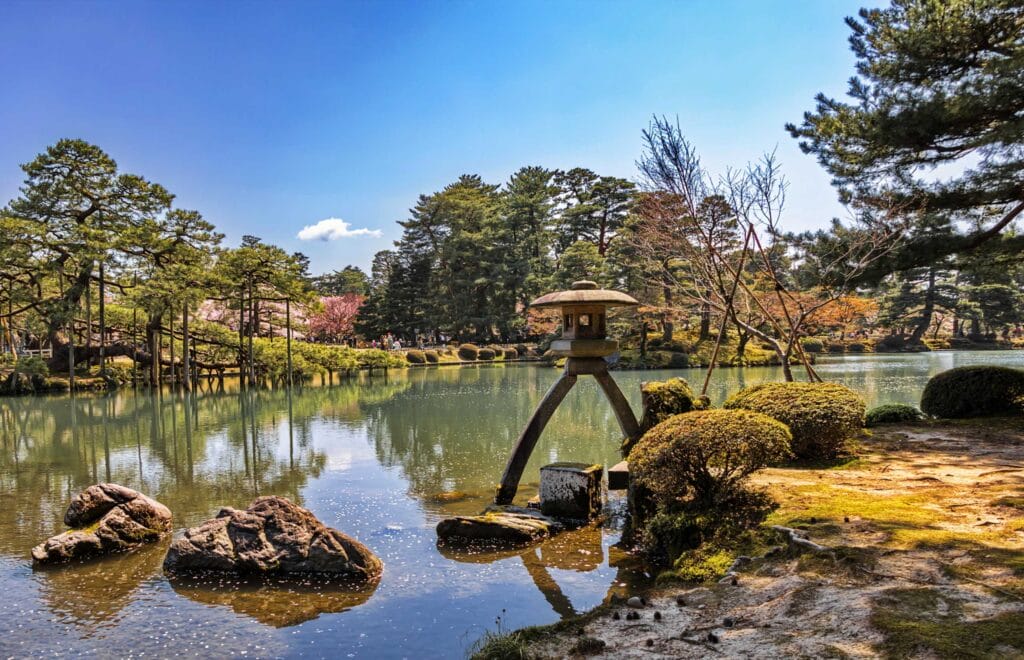
The Three Great Gardens of Japan seems an apt place to start. First up, Kenroku-en in Kanazawa, Ishikawa Prefecture, a 17th-century park renowned for its towering pines and the protective yukitsuri ropes that support them. Kenroku-en means ‘Garden of the Six Sublimities’, referring to spaciousness, seclusion, artifice, antiquity, water features and panoramic views. All boxes ticked.
Korakuen, Okayama
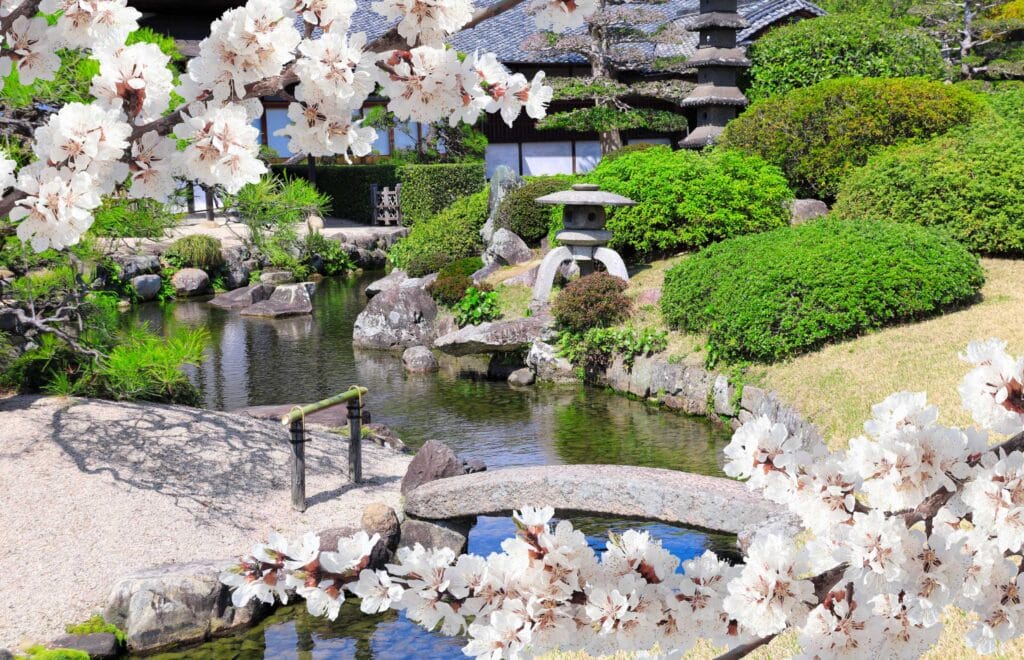
Another of the three greats, Korakuen was originally designed as a place of relaxation for the second lord of the Okayama domain, Ikeda Tsunamasa. Today, it plays the same role for locals and visitors, offering a peaceful retreat from everyday life. The garden is designed in the strolling style typical of the Edo period, with a long winding path inviting meandering strolls by wide lawns, koi-filled ponds, streams and tea houses. Nearby Okayama Castle is always part of the scenery.
Kairakuen, Mito
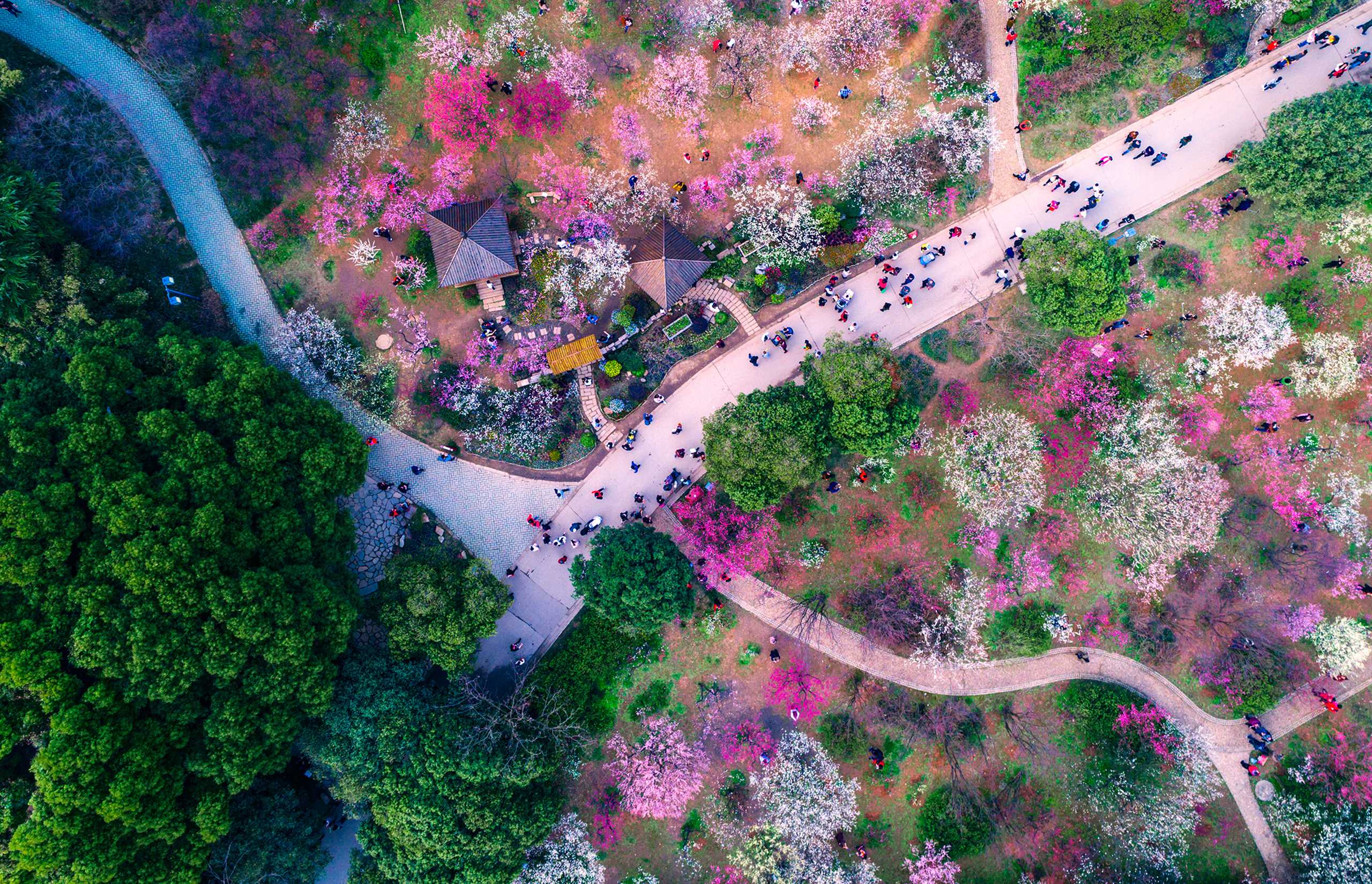
Three from three: Kairakuen, located in Mito, the capital of Ibaraki Prefecture, is considered one of Japan’s most spectacular landscapes, thanks to the 3000-plus plum trees that bloom in a glorious burst of red, pink and white come wintertime. Even out of season, the garden is a gem. Walking paths lead visitors through wooded areas, bamboo groves and open viewpoints overlooking nearby Lake Senba.
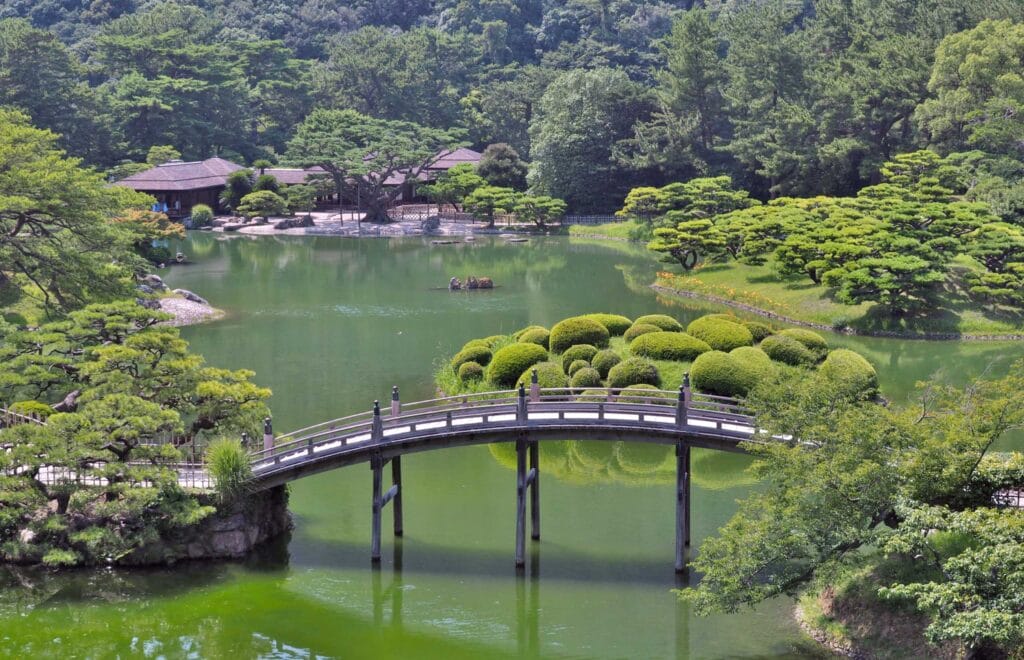
Ritsurin Koen, Takamatsu City
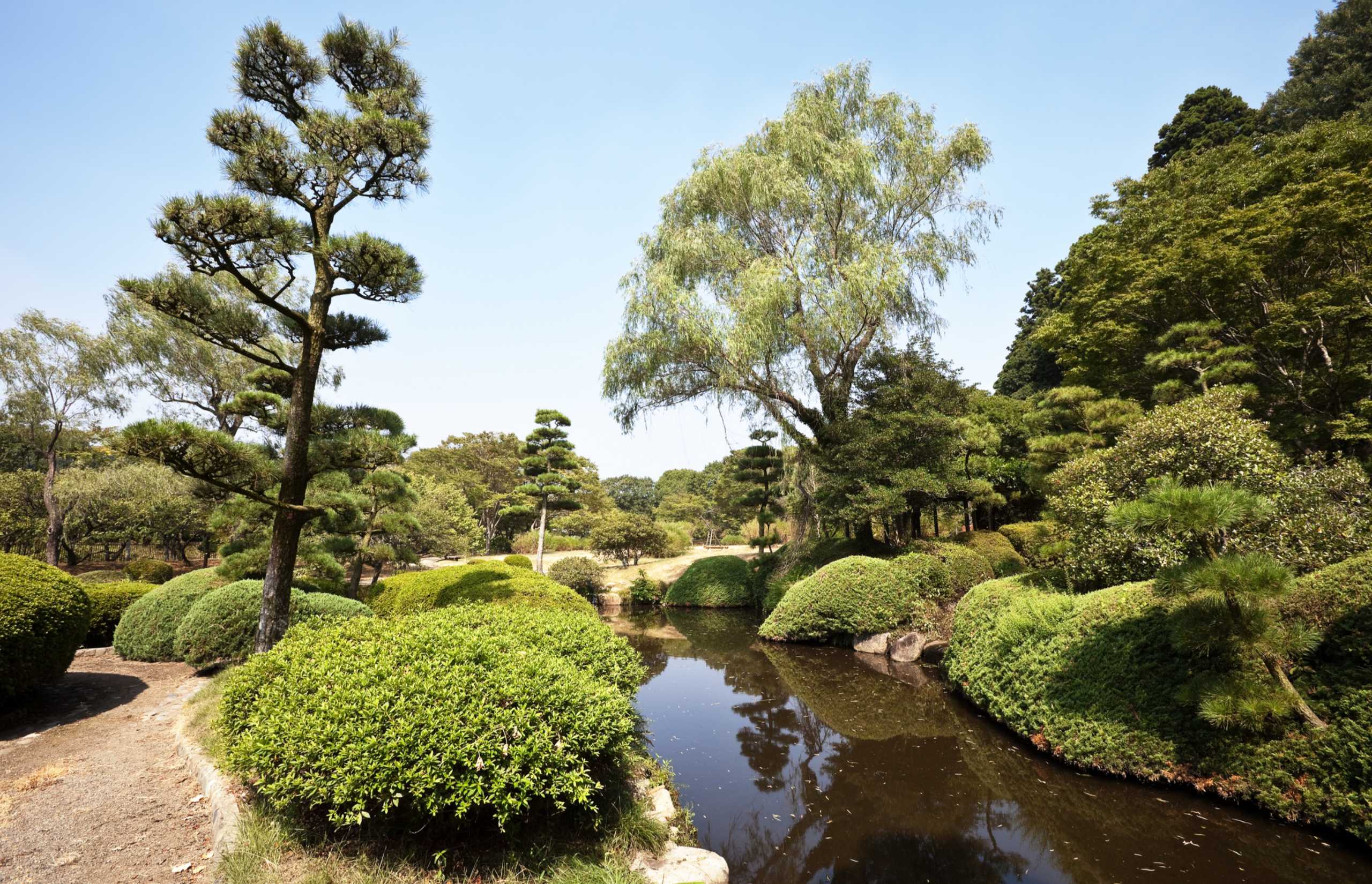
The largest Cultural Property Garden in Japan, Ritsurin is a year-round beauty with seasonal blooms (plum and camellia in winter, azaleas in spring, irises in early summer and fiery maples in autumn) bringing constant change and colour. Winding paths lead past meticulously trimmed trees, reflective ponds and ornate bridges, while traditional teahouses offer quiet vantage points to pause and admire the scenery.
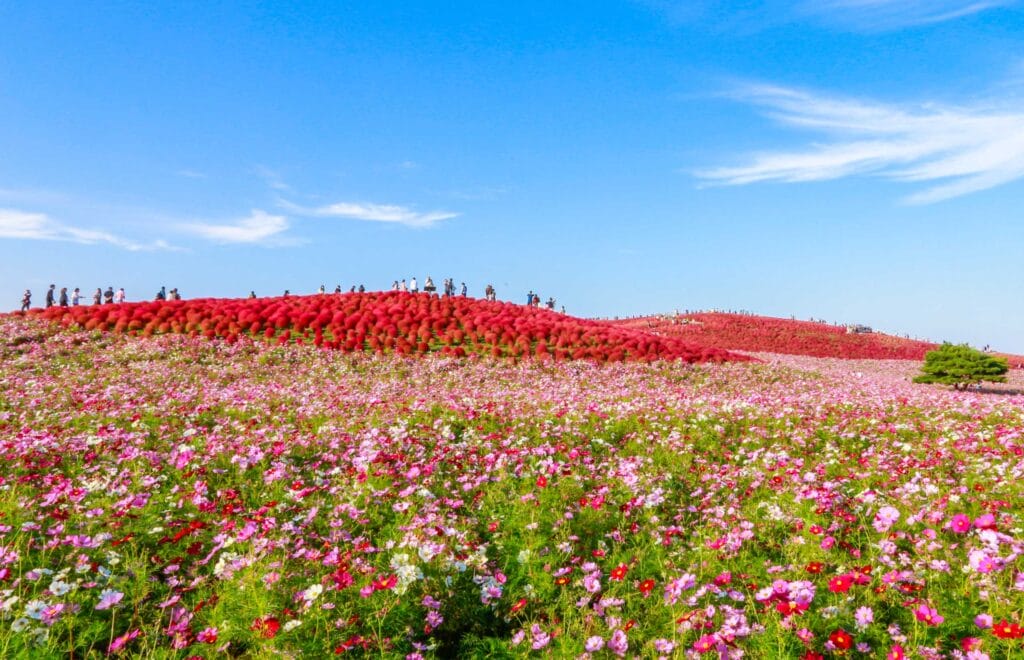
Hitachi Seaside Park, Hitachinaka City
Hitachi Seaside Park comes to life with the colour and perfume of breathtaking flower displays, each a vivid example of Mother Nature’s seasonal magic. The expansive public garden, which stretches along the coast of Ibaraki Prefecture, transitions between delicate blue nemophila in spring, vibrant fields of cosmos and poppies in summer, and an autumnal blanket of bright red kochia and golden sunflowers. Walking trails, bike paths and viewing platforms offer various garden and oceanfront vantage points.
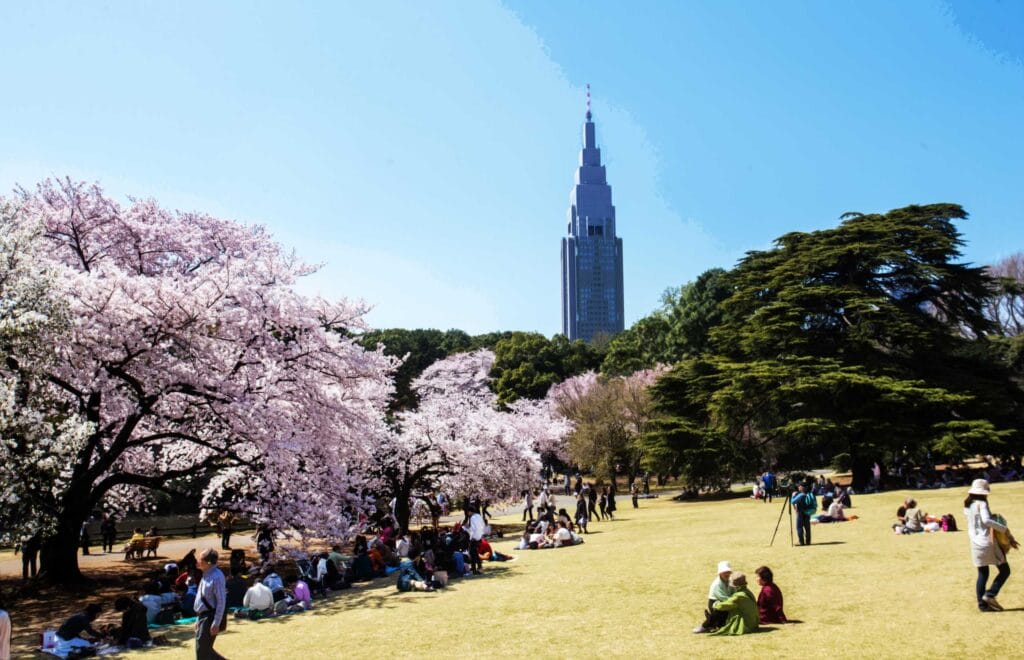
Shinjuku Gyoen National Garden, Tokyo
Japan is synonymous with the cherry blossom and Shinjuku Gyoen National Garden is where to admire them in the nation’s capital. Located just a short stroll from the chaos of Shinjuku station, the space comprises a Japanese landscape garden, a formal French layout and an English-style landscape garden, plus a greenhouse featuring various tropical and subtropical flowers. The cherry trees blossom from late March to early April and a chrysanthemum exhibit is held during the first two weeks of November.
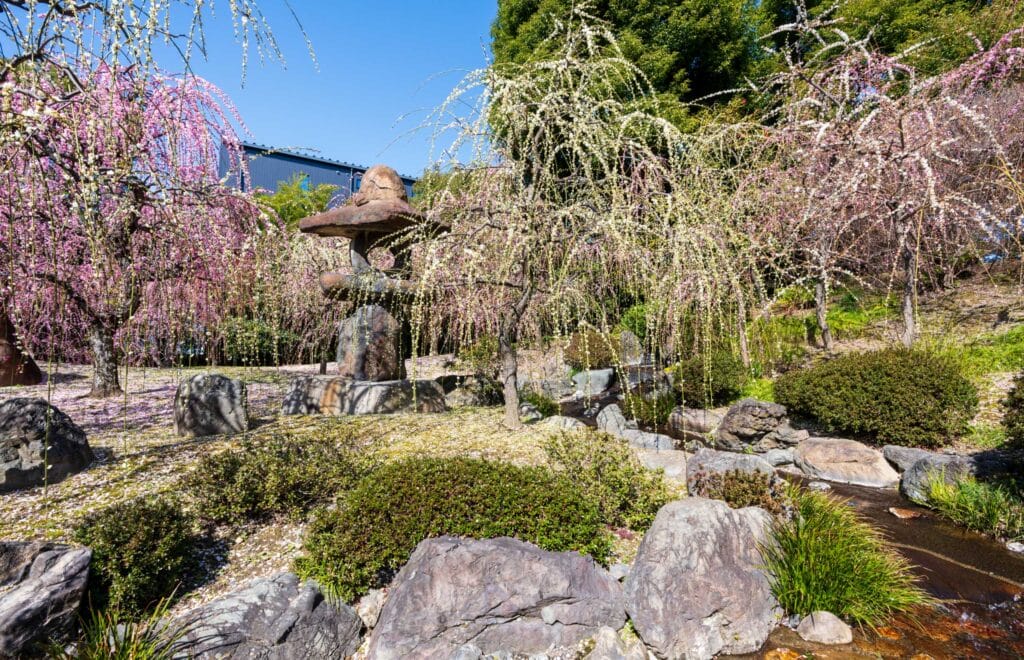
Jonangu Shrine, Kyoto
There are five separate gardens surrounding the main shrine at Jonangu, all serene spaces where visitors can appreciate nature in harmony. Blooming in late winter and early spring, the weeping plum blossoms are the garden’s star attraction. Camellia trees, wisteria, azaleas and cherry blossoms also surround the sacred grounds, creating a vivid and fragrant tapestry.
Ryoan-ji Temple, Kyoto
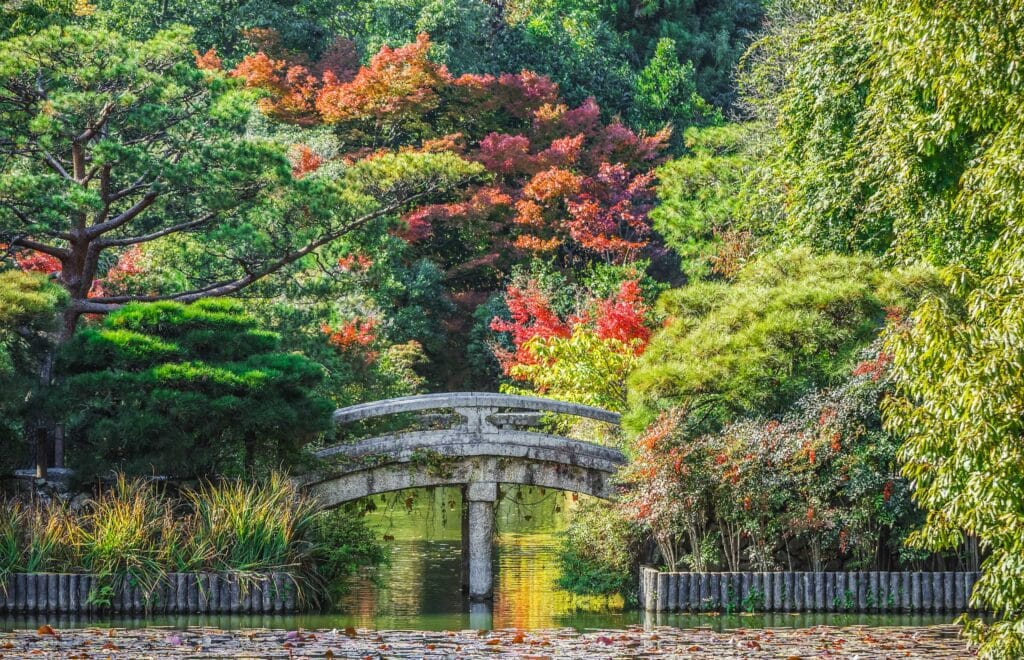
Still in the old capital, Ryoan-ji Temple is home to one of the country’s most famous hiraniwa, a traditional Japanese flat garden that represents the minimalist principles of Zen Buddhism. Here, 15 carefully arranged rocks sit within a rectangle of precisely raked white gravel, its simplicity gifting visitors the space to reflect.
Ashikaga Flower Park, Ashikaga City
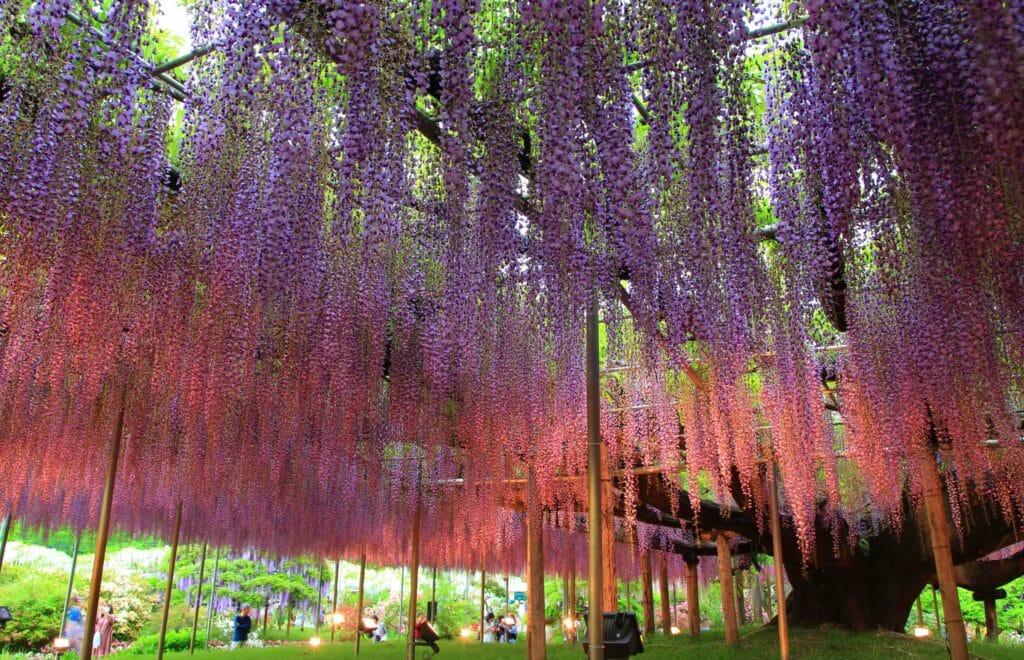
Ashikaga Flower Park dazzles with its extraordinary floral displays, including the most celebrated attraction, the Great Wisteria. From mid-April, hundreds of cascading wisteria vines create a fairytale scene in shades of purple, pink, white and yellow. Seasonal gardens shift with the year – cherry blossoms in spring, hydrangeas in summer, autumn leaves in fall – while meandering pathways, ponds and tranquil resting spots invite guests to immerse themselves in nature’s beauty.
Tadasu no Mori, Kyoto
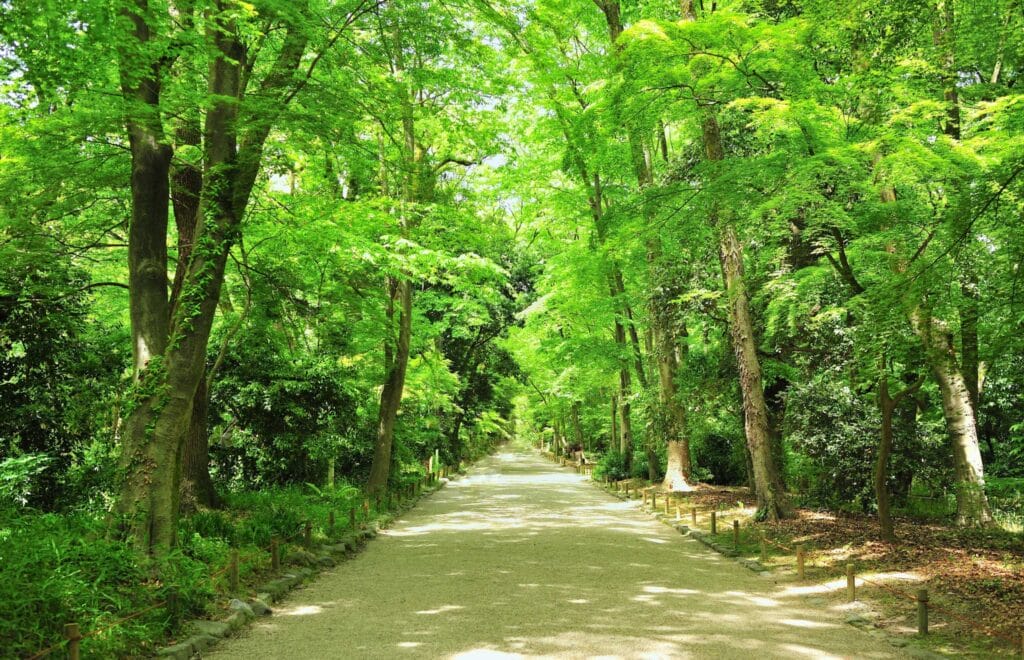
Hidden beside the ancient Shimogamo Shrine, Tadasu-no-Mori feels completely removed from the surrounding city. The sacred woodland, which spans more than 12 hectares, preserves centuries-old trees, mossy undergrowth and snaking trails, inviting slow strolls beneath its cool canopy. From fresh spring shoots to fiery autumnal foliage to stark winter branches, the forest is in constant transformation, a reminder of our own capacity for renewal.
Latest Articles
Don't miss the latest from Luxury Travel