
From the Top of Europe to Dragon Mountain: A Swiss Alpine journey in the summer
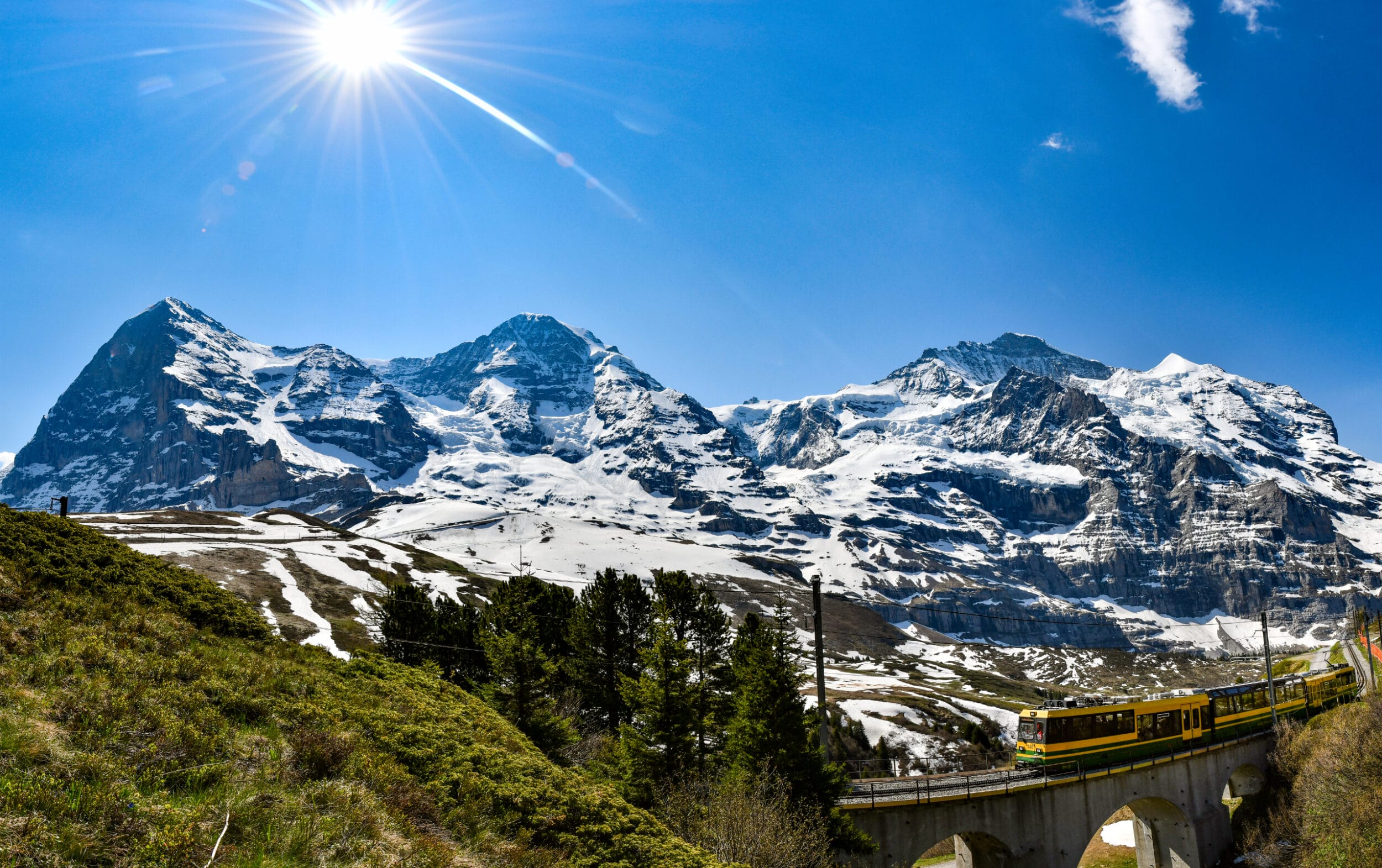
The Wengernalp Railway beneath the Eiger, Mönch and Jungfrau. Photography courtesy of Jungfrau Railways
In Switzerland’s Bernese Alps, the Jungfraujoch sits at 3,454 metres – where the Aletsch Glacier coils past bars carved from block ice and the wind hits 40km/h even in summer. From there, the journey continues by cogwheel railway down Mount Pilatus and along the five mountain lakes of the Luzern-Interlaken Express, one of Switzerland’s great scenic rail routes
Summer in Switzerland brings to mind pure Alpine air, green valleys, mooching cows with ding-dong bells, dew cast like silver droplets across grassy fields, cruise boats gliding on freshwater lakes, and warm sunshine that hails lazy, alfresco afternoons with glasses of crisp white wine. You’d imagine, too, that mountain peaks layered in radiant snow are memories from distant winter, but the white summits are still there, glinting in the summer sun.
On paper it makes sense, of course, as almost a quarter of the country’s area rises to 2,000m and the permanent, eternal snow line in the Swiss Alps is a soaring 2,500 metres but somehow it startles as you pull on tees, sandals, suncream and sunglasses. In the Bernese Alps, there is one place that suggests summer is a notional concept.
The Top of Europe: Jungfraujoch and the Aletsch Glacier
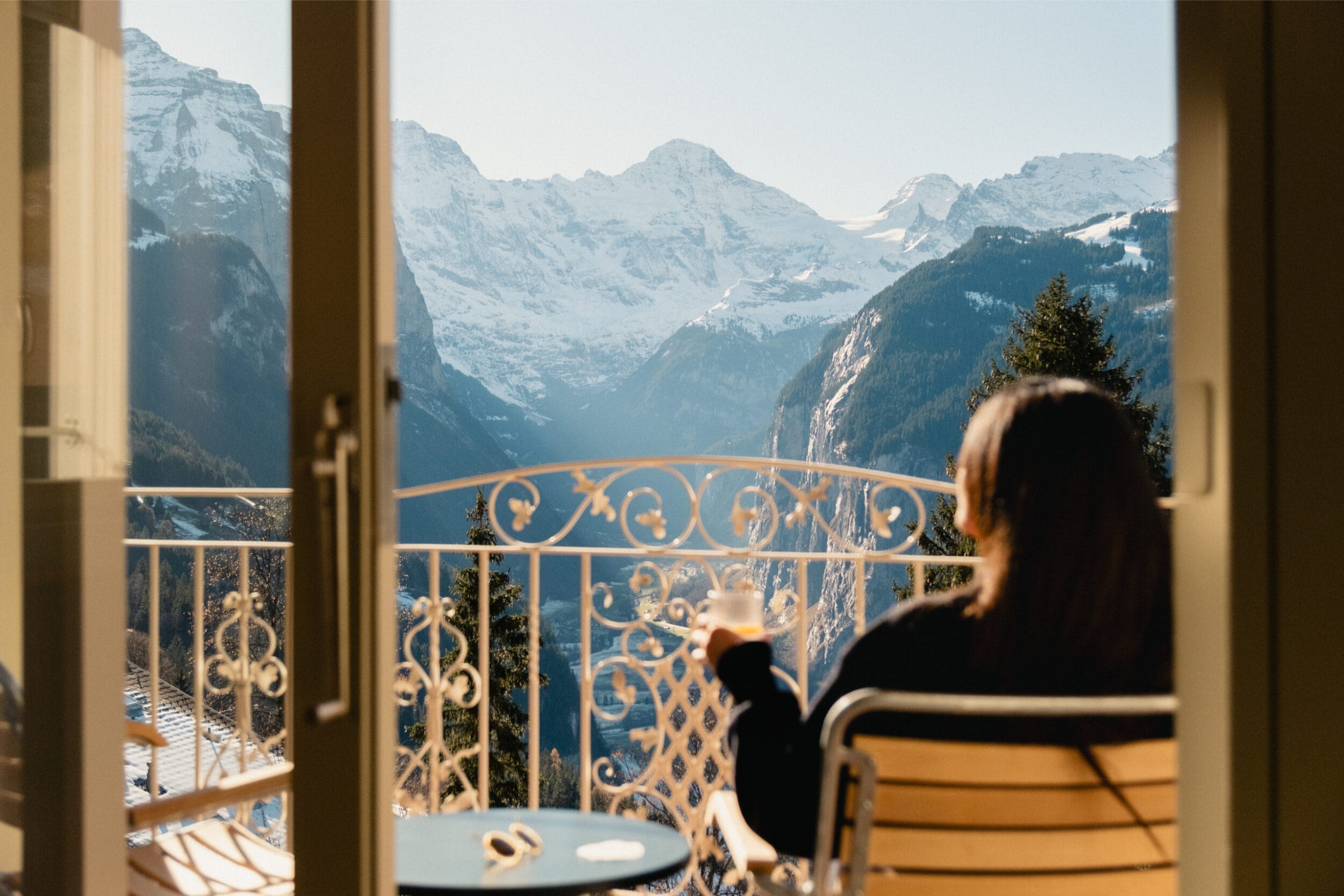
I tiptoed at dawn on to the wraparound terrace of my room at the Grand Hotel Belvedere in Wengen, a small village perched on an Alpine ledge. The moon had yet to set behind the fang-shaped Lobhömer peak when the sun woke the scene. Sheets of hard snow fixed on the Jungfrau Mountain glistened in the growing light. I breathed in the silence; the birds still slept.
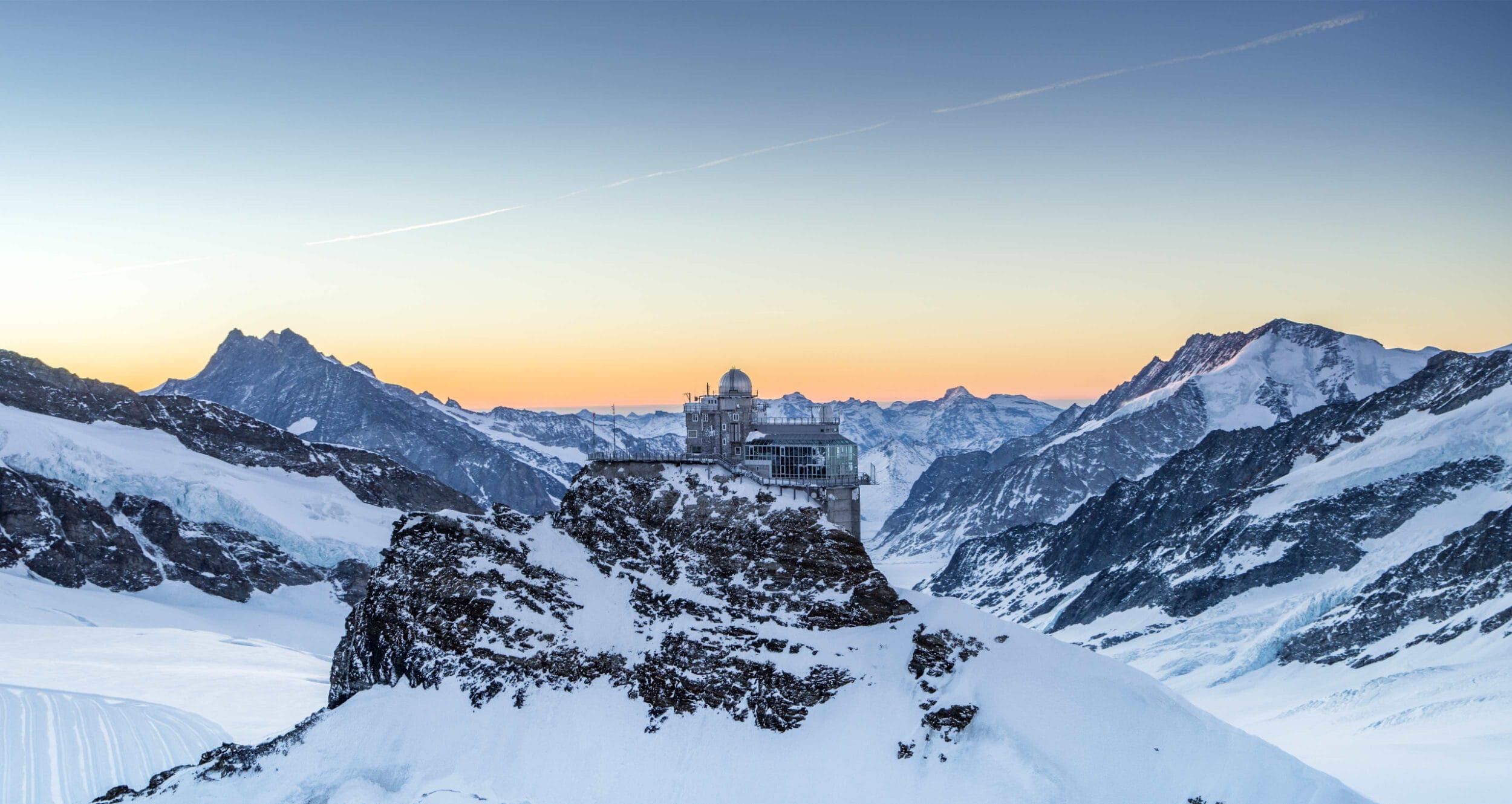
Less than three hours later my hair blew up into wild coils, like Medusa. I’d clocked the weather but not the wind speed: 40 kilometres an hour. The Sphinx Observatory is an open-air platform hitched to the sci-fi, silvery Jungfraujoch ‘Top of Europe’ building at 3,454 metres in the Bernese Alps. We pushed open the door and were engulfed in the gusts and a 3-degree air.
Clouds rolled in but while we joked about frozen-in-summer moments, the clouds slipped away for us to catch glimpses of the Aletsch Glacier, the highest in the Alps: hard ice sheet, Jurassic limestone ridges, turquoise tinged ripples of ice, deep, dark crevasses of inky black, rolling moss plains; nature’s cold heart.
We retreated to the inner sanctum – passages carved from block ice to a secret, exclusive bar where we sipped Swiss Mountain Single Malt Whisky and champagne. It was fuel for heading outside again on to the ice stream for a closer look at the Unesco-protected tongue of glacier ice, coiling in curves of bright white, charcoal, silver and grey: a racetrack slaloming around its rock basin.
We know glaciers are receding worldwide. Question, though, at 22 kilometres long, 900 metres deep at its lowest point, and packed with 10 billion tonnes of ice, what fate the Aletsch? In the 17th-century locals tried to deter the glacier from advancing by planting spell crosses and praying. For the last 150 years the glacier has started to shrink.
Lunch of Swiss pork belly, veal jus and oven mash plus Swiss salmon with juniper, goat’s cheese and trout roe at the Crystal Restaurant with glacier views was welcome after the full Top of Europe experience, a journey which had taken us through the subterranean ice palace walk and a multimedia experience featuring history and culture, too.
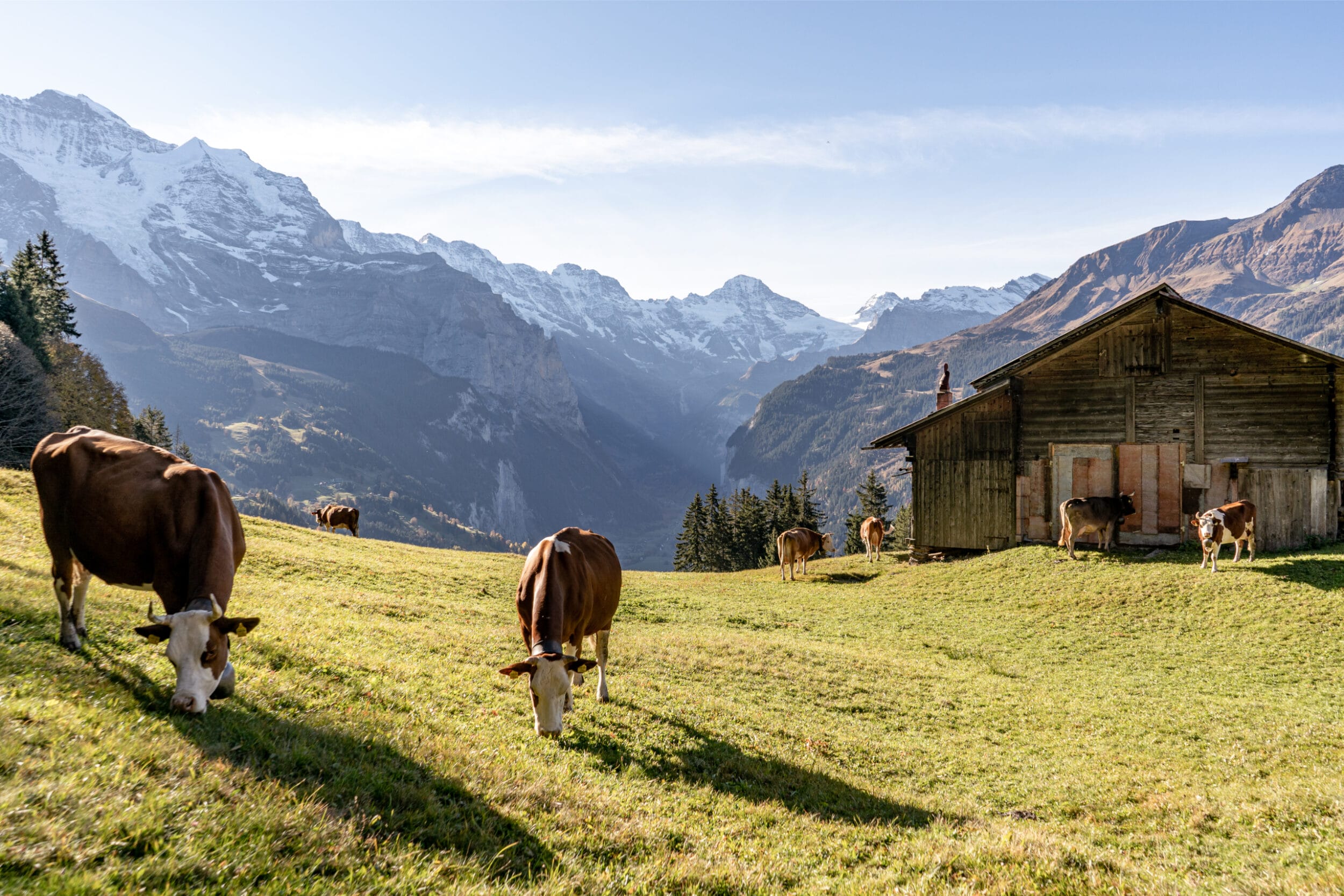
Our journey up to the Jungfraujoch had been thrilling. Our train from Wengen on the Wengernalp Railway, the world’s longest cogwheel railway at 19.1 kms, carried us up to Kleine Schiedegg station at 2,061 metres passing wooden huts, grassy slopes, cows the colour of latte, and thickets of pine. At Kleine Scheidegg, we changed to the Jungfrau Railway which glides up past the glacier climbing 1,400 m towards the sky along nine kilometres of rack and pinion track. Seven kilometres of that journey slices deep through the Eiger and Mönch mountains. The railway with the highest station in Europe, the Jungfraujoch, opened in 1912 having taken 16 years to build.
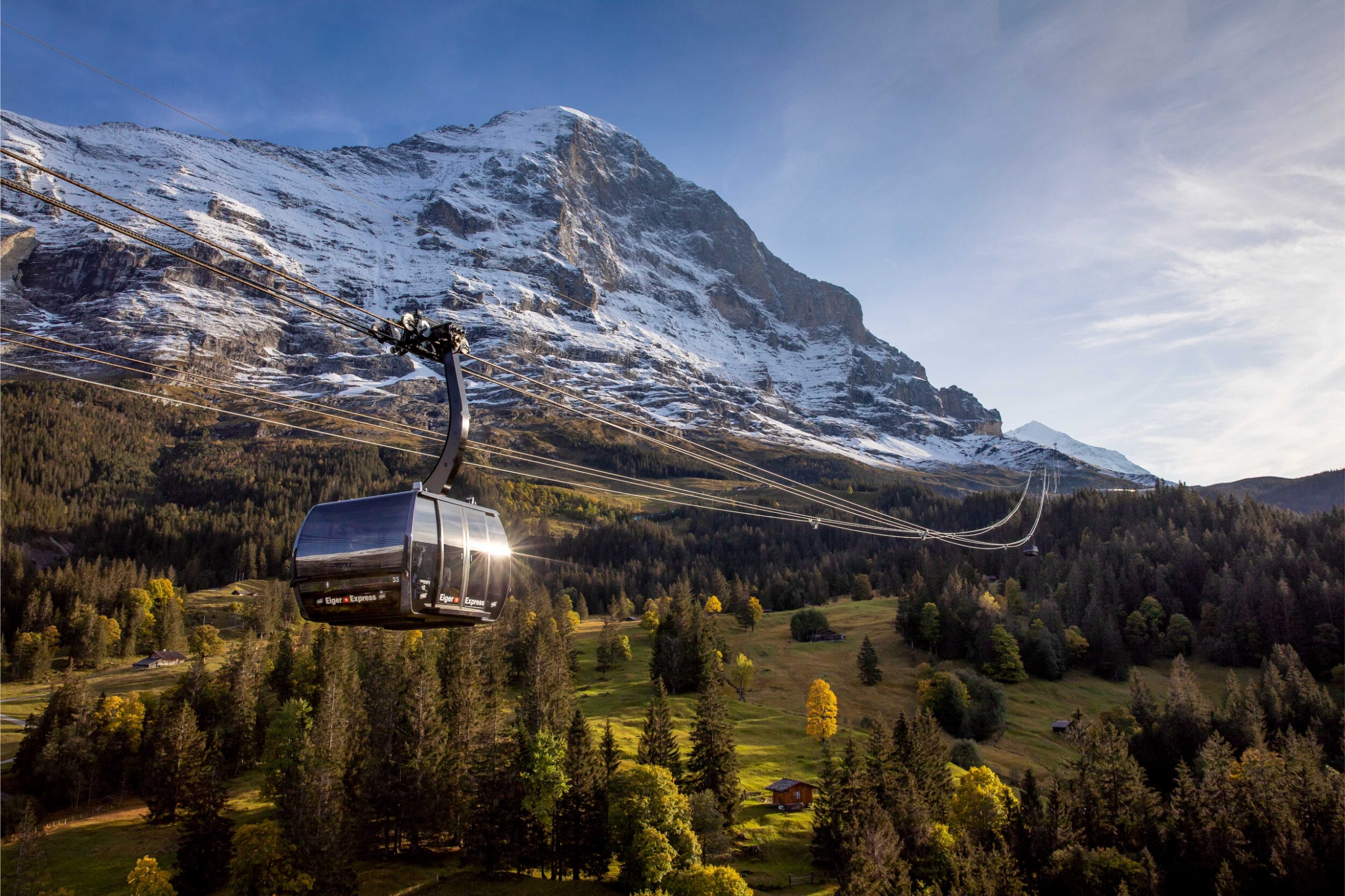
The Swiss, never a nation to miss an engineering trick,launched a new access route six years ago. Our sleek, black Eiger Express gondola descended through the clouds some 6,483 metres drifting slowly over deep green sloping meadows. In one glance, we saw the pretty town of Grindelwald in the valley, tiny houses with wide eave roofs like scattered Lego radiating along roads and witnessed up close the sheer north face of the Eiger, a vertical mile of limestone and black ice, the largest north-facing wall in the Alps, standing sentinel.
Grindelwald, Wengen and Lauterbrunnen
Grindelwald enjoys a fairy-tale position beneath the colossal Eiger. The opening of the cable car has brought the village closer to the mountain and the Jungfrau range, and it’s geared up for a lot of visitors. In winter it’s at the heart of ski country, in summer, petals bloom from flower boxes, and sightseers and walkers descend. Wengen makes for a good base but if a hotel night appeals, stay at the Bergwelt Grindelwald with its Fire & Ice spa, wine tastings and cooking classes.
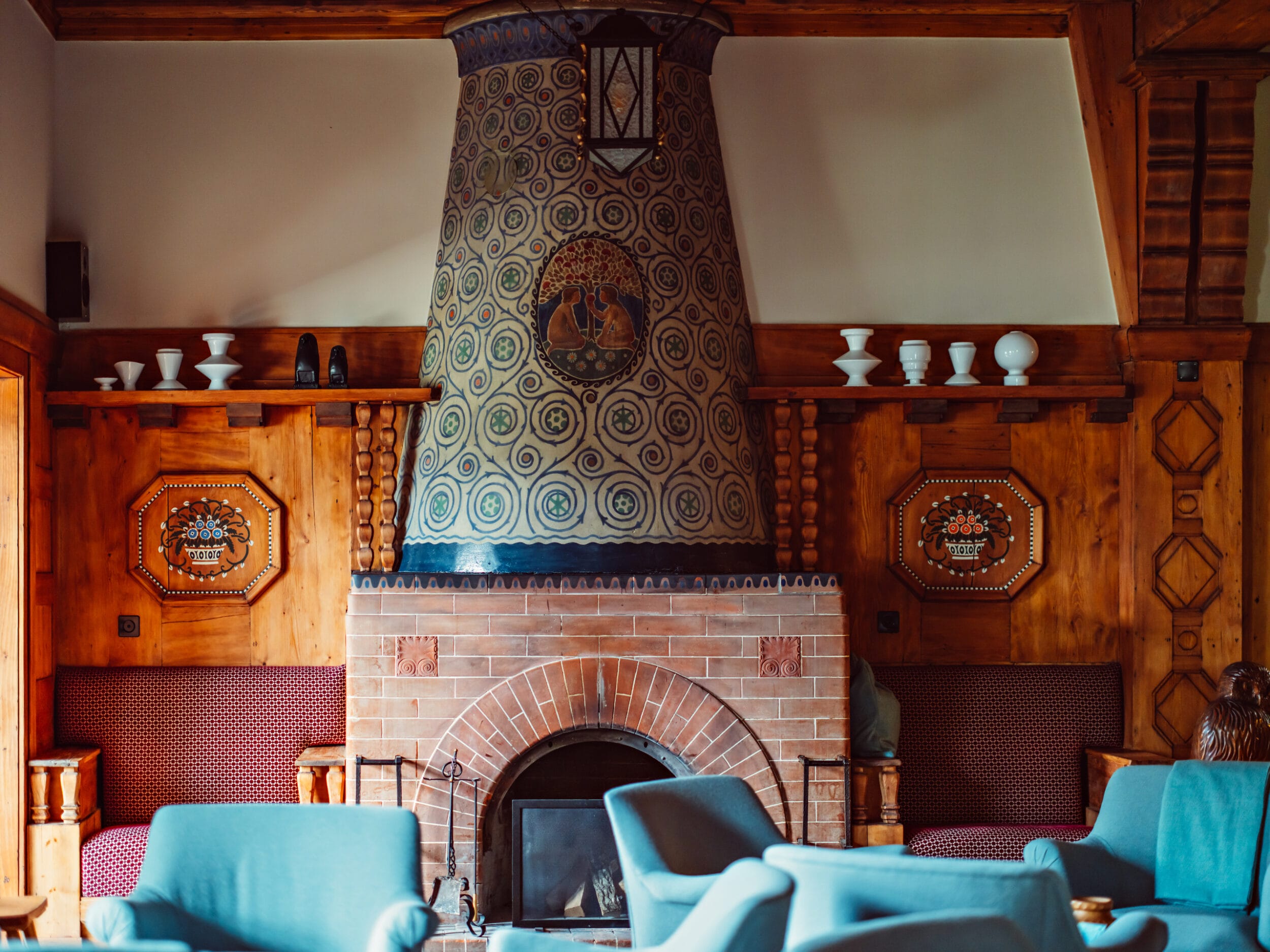
Car-free Wengen is found beneath a monumental range of the Bernese Alps. The enchanting Wes Anderson-esque Grand Hotel Belvedere split across two properties with an inviting spa is the right address. The views from the Belvedere are mesmerising.
While in Wengen we dined on raclette in a circular hut, the fire heating our fingers as well as our food, and enjoyed an exceptional dinner of BBQ watermelon with tahini, lime and mint, and braised beef cheek plus an intriguing coconut sorbet fortified with seaweed powder and gelatine that gave it a moreish creamy texture. All thanks to Will Gordon, the Belvedere’s British executive chef.
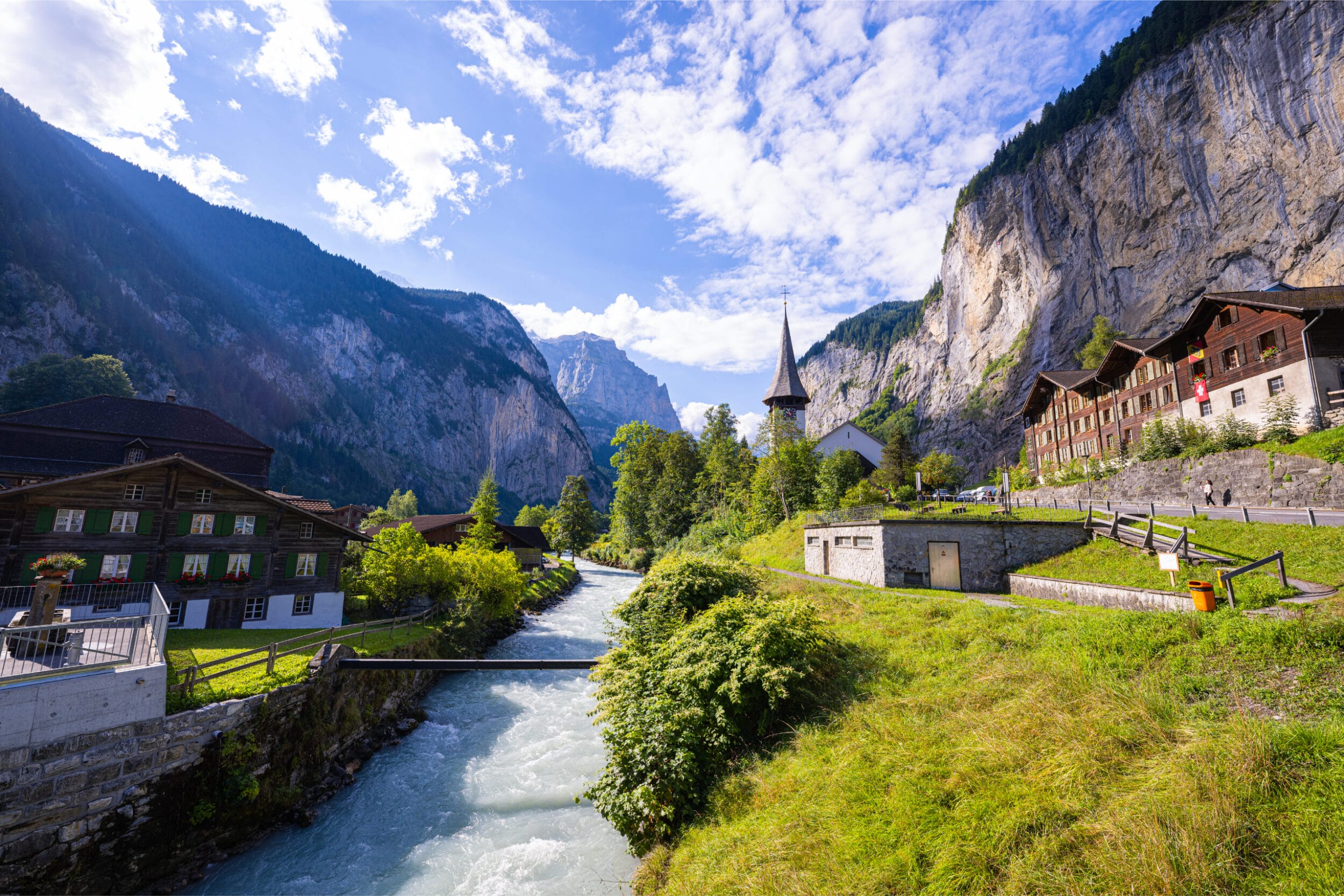
Just below Wengen’s white church with its slender, tiled spire is a gap in a hedge. I wandered through. Unfolding beneath me was the glorious, glacial-shaped Lauterbrunnen Valley. Gentle Alpine meadows, fringed by trees, were pinned to the valley floor by huge white-grey escarpments, backdropped by distant peaks and snow-bound mountain saddles.
Shortly afterwards we walked straight into the scooped-out valley thanks to the Wengen to Lauterbrunnenrailway which descends to the valley floor. Above us were cotton ball clouds and paragliders; below, churches, low-pitched roofs, vivid green Alpine grass as lush as cashmere carpets, and wooden huts.
Leaving behind Lauterbrunnen main street with its chalets dressed in lace curtains and louvred shutters in colours of scarlet, merlot and mint green, we wandered through the valley between towering vertical walls. Known as the valley of the 72 waterfalls, we beelined for the Stubbach Falls which cascades 297 metres off the valley wall. It’s J.R.R Tolkien, of course, who makes sure the valley remains a popular spot to visit. He visited the mountains in 1911 on a hiking adventure with friends. It’s these peaks and valleys, some say, that inspired the mythical lands of Middle Earth. The grandeur overwhelms but it’s the smaller details that captured my attention: the exceptionally well-kept cemetery festooned with pink and yellow flowers, the cows, neckdown in low-hanging mist-dressed grass, and the handsome, wooden, shelter, cloaked in plants, disguising a rubbish bin!
Interlaken to Lucerne by rail
Switzerland’s trains run like clockwork and the short trip from Lauterbrunnen to Interlaken Ost delivered us in time for the late morning scenic Luzern-Interlaken Express. The modern train tilted around lake shores to deliver us to elegant, lakeside Lucerne in just under two hours.
Almost immediately, after leaving Interlaken, the train glides past the chalky turquoise of the Brienzersee, a colour so vivid, it seems unreal. The pastel blue shade is thanks to rock flour, powdered rock ground down by glaciers. Gardens, stone churches, lakeside homes and pleasure boats came into view. As we dipped into a bend that brought us to the southern end of Lungernerse, our view was dominated by the neo-Gothic tower of the large Sacred Heart Catholic Church of Lungern village. The striking blue palette coloured the lake, Alpine meadows rose gently up to the base of sheer mountain walls, snow dusted peaks framed the view, and clouds dithered along in clear blue skies. A second church tower rose above the lakeside community. Once belonging to the original church, it now serves as a lookout.
Sit on the right-hand side of carriages for the best panoramic views of the five mountain lakes the train skirts. Note, though, that the train heads into Meiringen and out again (a cul de sac, if you like) and thus the carriages change direction. The Bistro carriage with tablecloth service offers light meals and drinks.

Mount Pilatus and the world’s steepest cogwheel railway
The cable car swung gently, rising high above the sparkling fingers of Lake Lucerne. But the short ride was daunting. The car reached a rock face and then hiked steeply over a ragged peak to the summit, Mount Pilatus. A looming grey cloud then swallowed the car and left us suspended, disorientated, in a soup of grey. Moments later, to relieved giggles, the cable car station appeared,sucking our cabin in.
This five-minute ride is known as the Dragon Ride for good reason. It feels like you’re in a winged craft dangling 2,132 metres above ground, everything in miniature below, the cloud smothering the cable car. The ride’s name derives from the alternative moniker for Mount Pilatus, ‘Dragon Mountain’. Legend relates that local farmers spied winged dragons circling Pilatus in the 15th century. Those in the know think too many mushrooms or booze fuelled the flapping creature sightings.
Regardless, the dragon’s eye view from Mount Pilatus is breathtaking. From the chalet-style Hotel Pilatus-Kulm at the summit, valleys of scattered rock, scree, grass and trees thrust downwards criss-crossed by slim, zig zagging paths. A light dusting of cloud hovered. Beneath us, walkers climbed. Yellow-billed chough, a crow of the mountains, settled on the terrace rail to survey its domain. From the summit, a couple of trails lead around the mountain. We strolled along the flat Tomlishornroute, aka ‘the flower route’, for the Alpine flowers you’d find in May and June. Names such as fairy foxglove and mountain marguerite inspired me to return.
Dinner was a highlight in the fancy dining room named after Queen Victoria. Britain’s queen had visited Mount Pilatus in 1868 on muleback, seeking solace after the death of Prince Albert. We dined on dishes fit for royalty: Swiss Alpine salmon confit, white wine and cress soup, and double entrecôte. Just before dessert, we walked up to the scenic Oberhaupt Viewpoint, to watch the sun going down behind Lake Lucerne. Rose pink and orange crème clouds scudded across a panoramic view of the water below and the villages that cluster at its shore. Distant, serrated peaks, dusted in snow, were the backdrop to this extraordinary view.
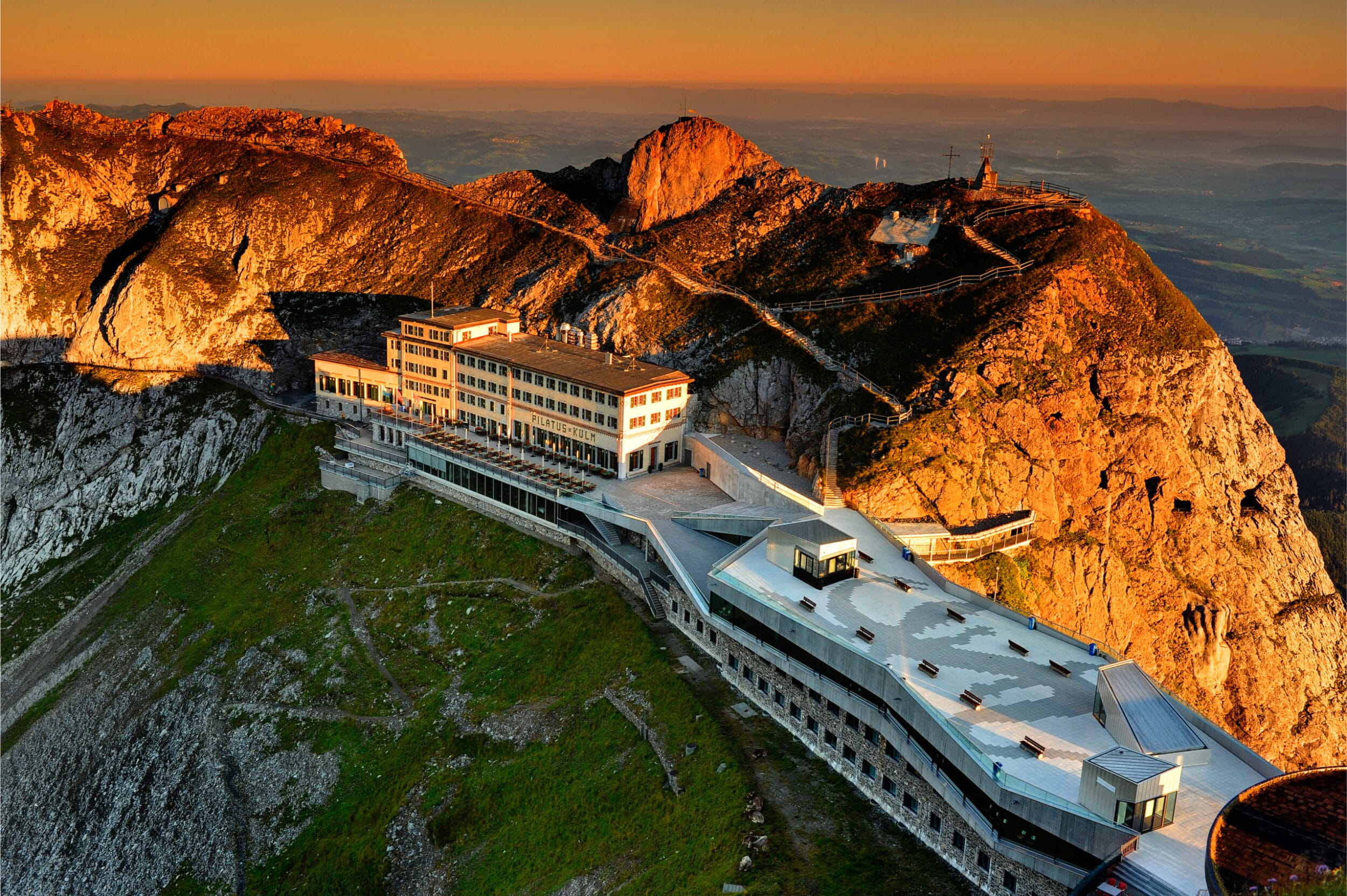
After a night at 2,128 metres, I threw open my sound-insulating windows. The loud and deep tone of a hundred swinging cow bells flooded my room. I spied walkers already ascending and ibex grazing next to the paths. Golden light lit valley ridges and revealed scenes I’d not seen the day before. I wanted to stay, watching the light, the snow-capped peaks, the walkers, all to the soundtrack of bronze alloy bells.
But my cog wheel train journey descent beckoned even though the moon was still shining. The cog wheel railway, the steepest in the world, has been in operation on Mount Pilatus since 1889. It was electrified in 1937 and new rolling stock launched in 2023. Its steepest gradient is 48 per cent. I imagined passengers tumbling down to the bottom of the train on our slow, 30 minute-journey down the more than 4,500 metres. But, of course, with Swiss precision and expertise, the seats are racked at an angle in individual slots ensuring poise and no sense of falling or, indeed, the ability to move up or down the train.
As it slips carefully down through temperature drops, at nine kilometres an hour, there’s plenty of time to gawp at the rugged landscape through the see-through roof and windows: rock and grass and nosy brown cows with big cow bells. As the cogwheel lowered to the lake, beneath the pine tree line, we emerged to views of the water and shimmering, grassy meadows until finally, the train came to a gentle stop at Alpnachstad on the southern end of one of Lake Lucerne’s spurs.
Details
May to early July brings Alpine flowers; July is the hottest month with the warm weather lasting until mid to late September. The indispensable Swiss Travel Pass(1st and 2nd class) covers trains, buses and boats across Switzerland and includes free entry to more than 500 museums and up to 50 per cent off some mountain excursions. The mountain excursions of Mount Rigi, Stanserhorn and Stoos are included. Luggage transfer options (additional cost) to move bags between hotels offers a seamless experience. The Jungfraujoch railways and cable car are covered by a separate pass; Mount Pilatus offers two ticket types for access routes to the summit. Download the free SBB transport app for live, nationwide timetable information. Entire Travel offers the Swiss Travel Pass and a range of itineraries in Switzerland. entiretravel.com.au
Latest Articles
Don't miss the latest from Luxury Travel