
Partner Story
Cambodia in All Its Colours
From the temples of Angkor to Phnom Penh’s creative energy and the pleasures of the southern coast, discover the culture, flavours and landscapes that make Cambodia a destination worth taking your time over
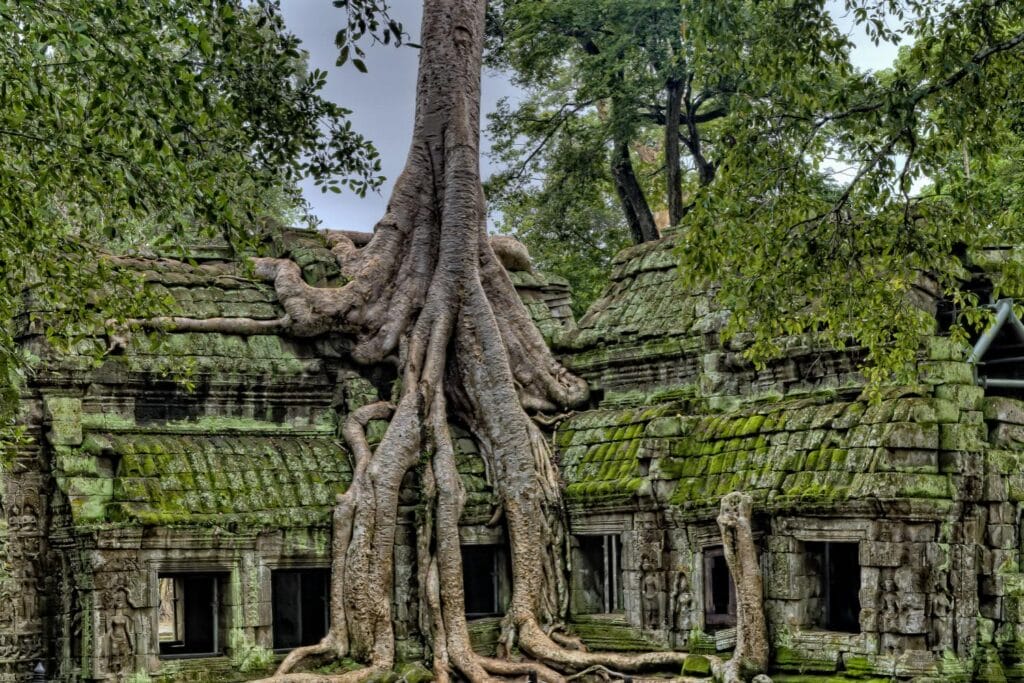
There’s a moment at Angkor when you stop looking at the temples and start imagining the lives once lived among them. Perhaps it’s the worn stone of a doorway, polished by centuries of passing hands, or the immense roots of a strangler fig curling around a wall at Ta Prohm. The scale of the Khmer Empire is astonishing, but it’s these smaller details that linger in the imagination.
And Cambodia has a way of filling your imagination long after you’ve left the temples behind. In Phnom Penh, you can lose an afternoon among the capital’s art galleries and modernist architecture before settling into a rooftop bar overlooking the city. On the southern coast, the pleasures are simpler but no less memorable: crab cooked with freshly picked Kampot pepper, the warmth of the sea and the luxury of an afternoon with nothing demanding your attention. Allow a fortnight to explore, and you’ll begin to appreciate just how much lies beyond Angkor.
Siem Reap: Stories in Stone
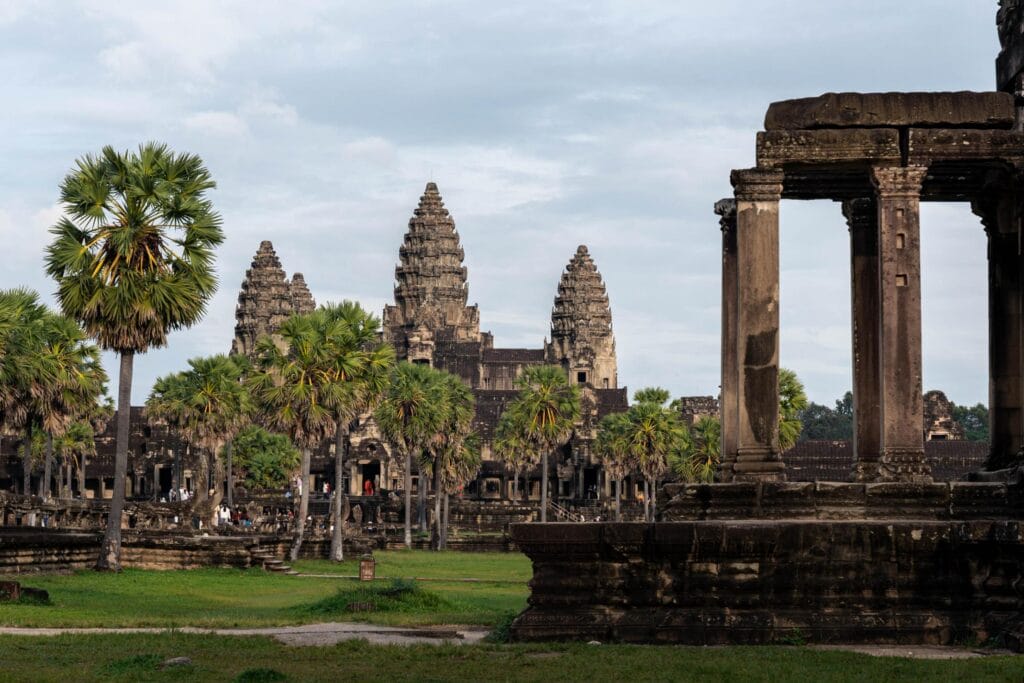
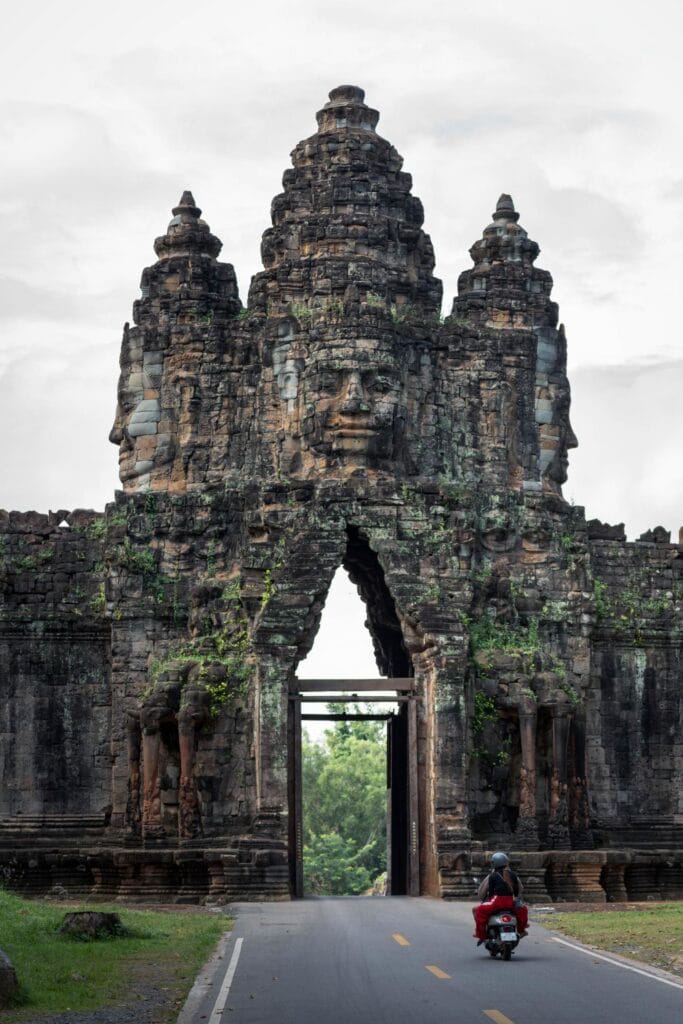
The UNESCO World Heritage-listed Angkor Archaeological Park, in Cambodia’s northwest, is best explored with a private Khmer guide who can bring the mythology, symbolism and human stories of its monuments to life. Beyond Angkor Wat, the enigmatic faces of Bayon and the tree-entangled corridors of Ta Prohm offer glimpses into a civilisation whose artistic achievements still inspire awe.
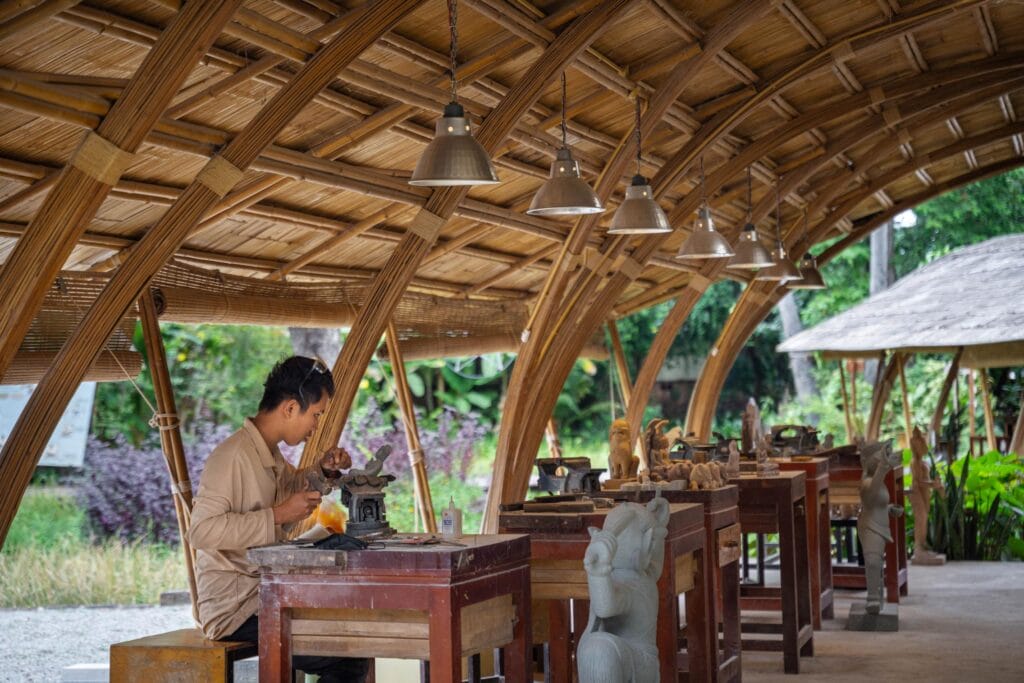
That fascination with craftsmanship continues in Siem Reap itself. At Satcha, artisans transform wood, lacquer, ceramics and textiles into pieces that honour traditional techniques while embracing new ideas. Watching a maker work reveals the patience behind each intricate detail, a connection to the artistry encountered among Angkor’s carvings.
Water has shaped this region just as profoundly as stone. Tonle Sap Lake expands dramatically with the rains, flooding forests and transforming the surrounding countryside. A boat journey into the Prek Toal Bird Sanctuary offers a glimpse of this shifting ecosystem, where storks and pelicans gather among the trees and communities have adapted their lives to the changing water levels.
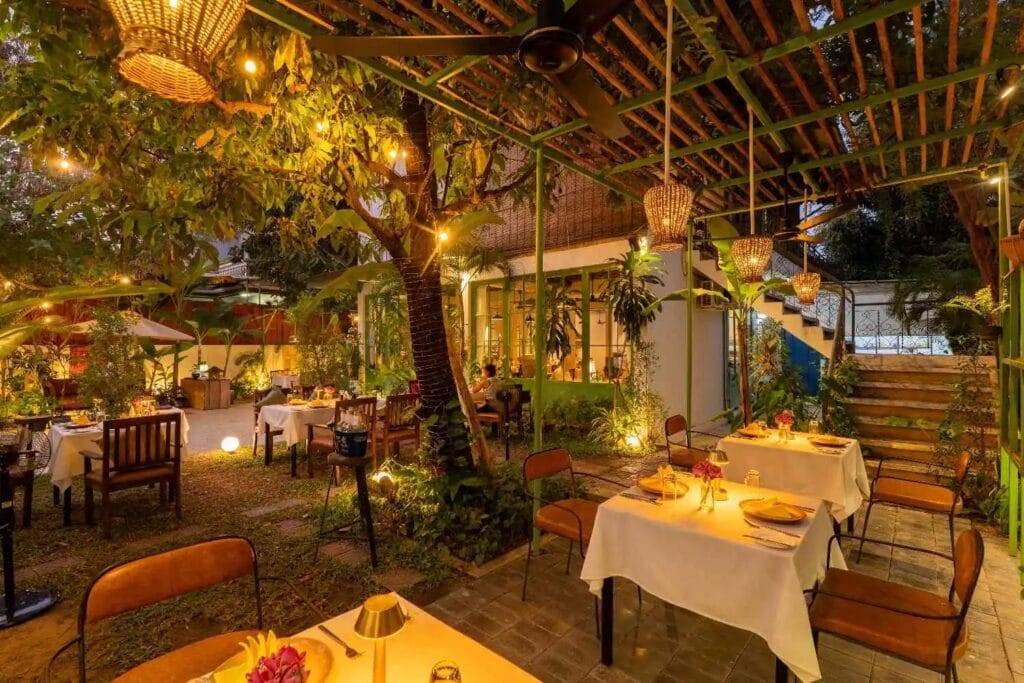
At Shinta Mani Angkor, Bill Bensley’s exuberant design brings a playful counterpoint to the solemnity of the temples. The Bensley Collection villas are filled with bold patterns, sculptural details and antiques, with rooftop lounges made for evenings beneath the stars and butlers who seem to anticipate every whim. Siem Reap’s culinary scene is equally inventive. At Lum Orng, chef Sothea Seng turns produce from his organic gardens and local farms into imaginative New Mekong cuisine, with an intimate Chef’s Table offering the chance to watch him at work. For another interpretation of Khmer flavours, Jomno Modern Khmer Cuisine pairs traditional ingredients with contemporary techniques, demonstrating just how confidently a new generation of Cambodian chefs is finding its voice.
Phnom Penh: A City Reimagined
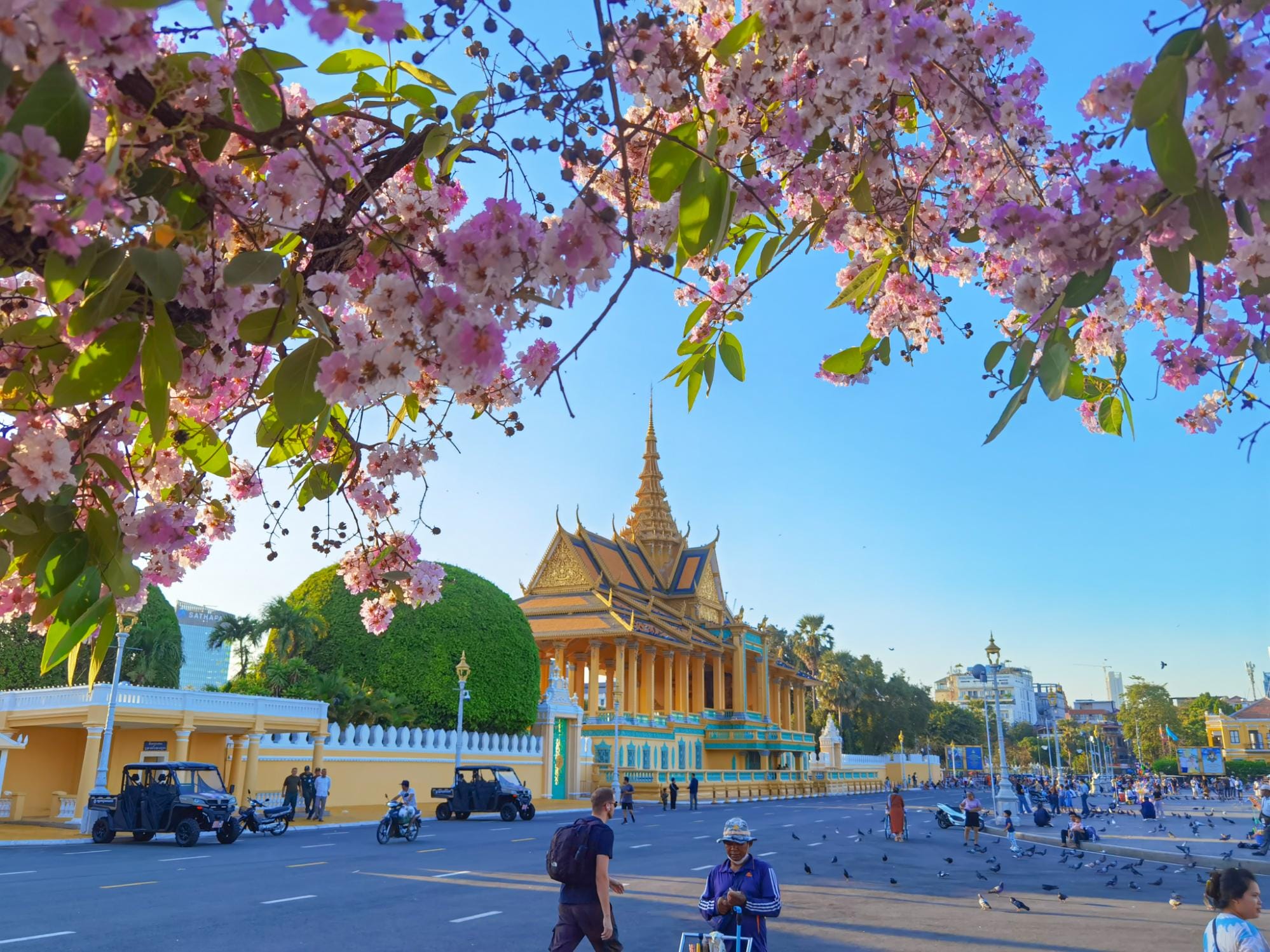
The ingenuity that shaped Angkor finds a different expression in Phnom Penh, Cambodia’s capital, southeast of Siem Reap. Here, gilded palace roofs rise above broad boulevards, while ambitious new buildings speak to a city continually finding ways to reinvent itself.
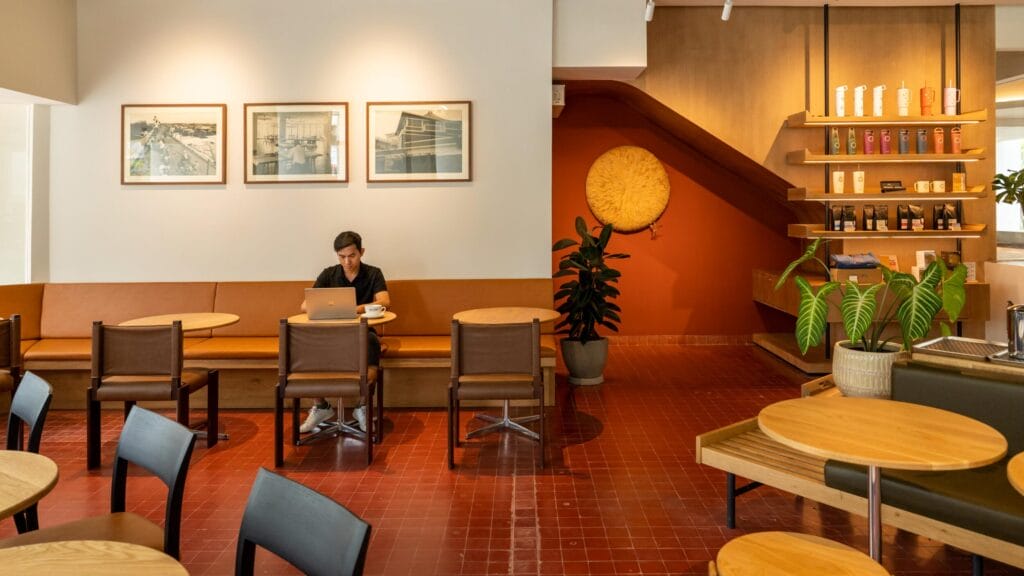
Among its most compelling stories is New Khmer Architecture. Following independence in 1953, architects including Vann Molyvann developed a distinctive form of modernism that responded to the tropical climate and Khmer traditions. Exploring these buildings with a specialist guide reveals the optimism of an era, while visits to contemporary art spaces introduce a generation of artists interpreting the country’s identity in their own ways.
The Mekong offers a gentler rhythm. On Koh Dach, or Silk Island, the clatter of wooden looms carries from beneath traditional houses, where artisans weave silk and cotton using skills passed through generations. Cycling between villages, with gardens and fruit trees bordering the lanes, feels far removed from the capital’s traffic.
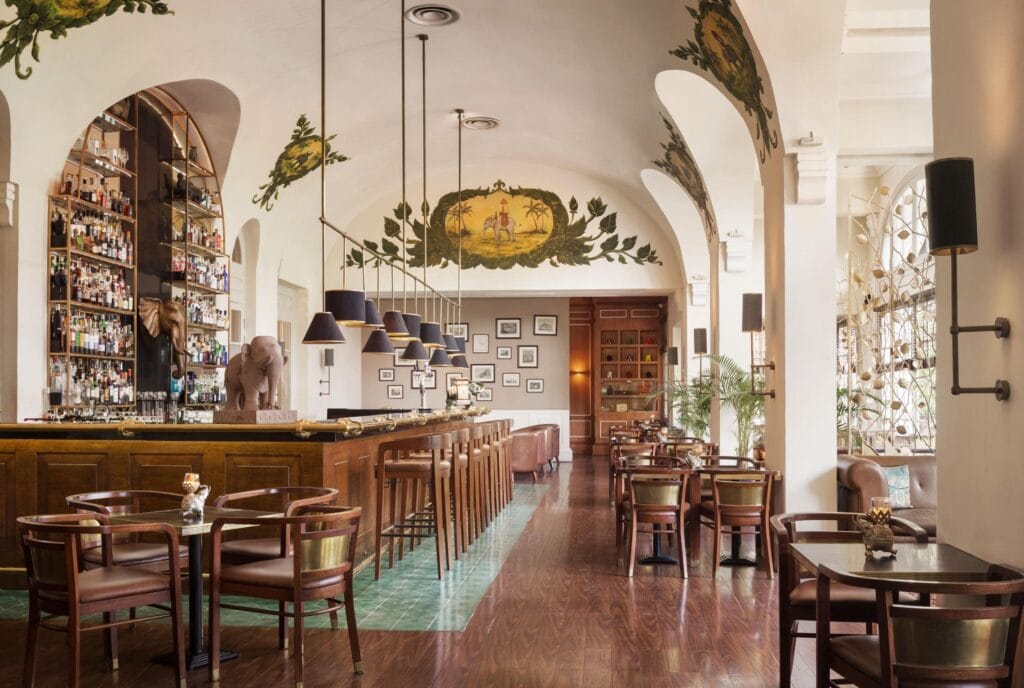
Yet Phnom Penh’s energy is part of its appeal. At Raffles Hotel Le Royal, whose history stretches back to 1929, the Elephant Bar serves the Femme Fatale cocktail created for Jacqueline Kennedy’s 1967 visit. For a different perspective, Sora at Rosewood Phnom Penh has a terrace suspended high above the streets. As evening settles over the rivers, the city spreads out in a tapestry of lights.
The Southern Coast: A Taste of Paradise
Follow the flavours south and the landscape changes again. In Kampot, weathered shophouses overlook the river, while the surrounding countryside produces one of Cambodia’s most prized ingredients.
At La Plantation, pepper vines climb wooden supports, their clusters of green berries destined for kitchens around the world. A guided tasting reveals the difference between the fresh, herbal heat of green pepper and the sweeter complexity of red. It’s an education that becomes deliciously practical in nearby Kep, where crab arrives at waterside tables coated in fragrant green peppercorns.
Kep’s faded modernist villas recall its years as a fashionable seaside retreat. Knai Bang Chatt, with restored buildings and gardens overlooking the water, captures some of that earlier elegance. Here, the pleasure lies in allowing lunch to stretch into the afternoon, watching fishing boats cross the bay.
Beyond Kep, the coast gives way to islands where the forest reaches almost to the water’s edge. Mornings at Song Saa Private Island, in the Koh Rong Archipelago, might begin with a swim from an overwater villa before heading out with a guide to discover the marine life beneath the surface. The resort’s conservation work reveals how closely the fortunes of surrounding communities are tied to the health of the sea.
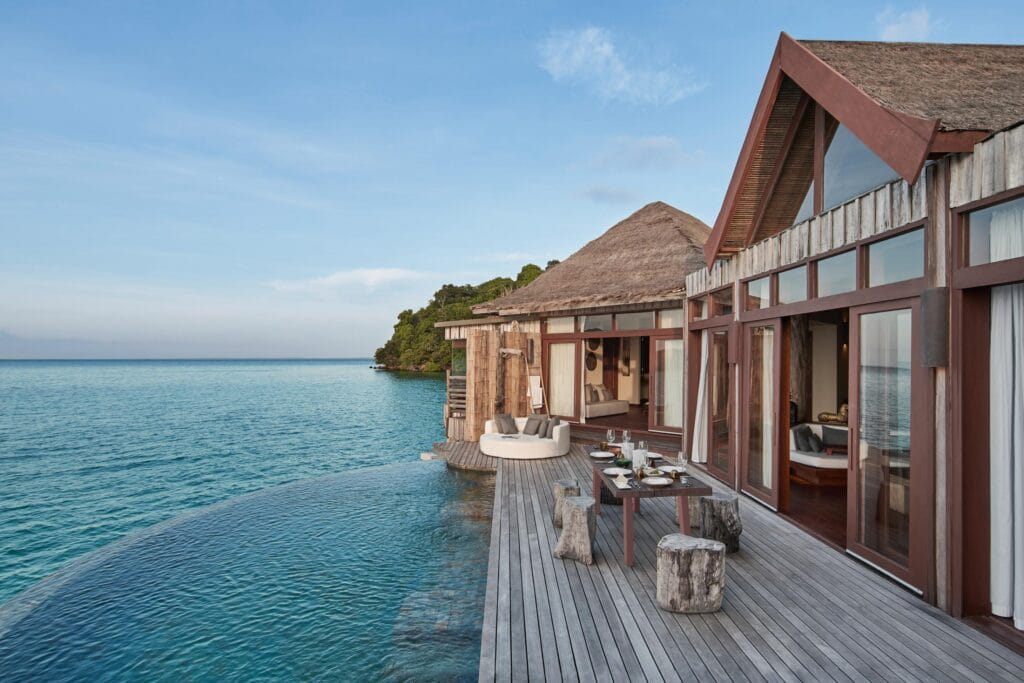
On Koh Rong itself, The Royal Sands occupies a 550-metre sweep of white sand, its villas incorporating locally sourced teak, bamboo and limestone. Some have private pools just steps from the beach, where outdoor daybeds invite long afternoons watching the sea change colour.
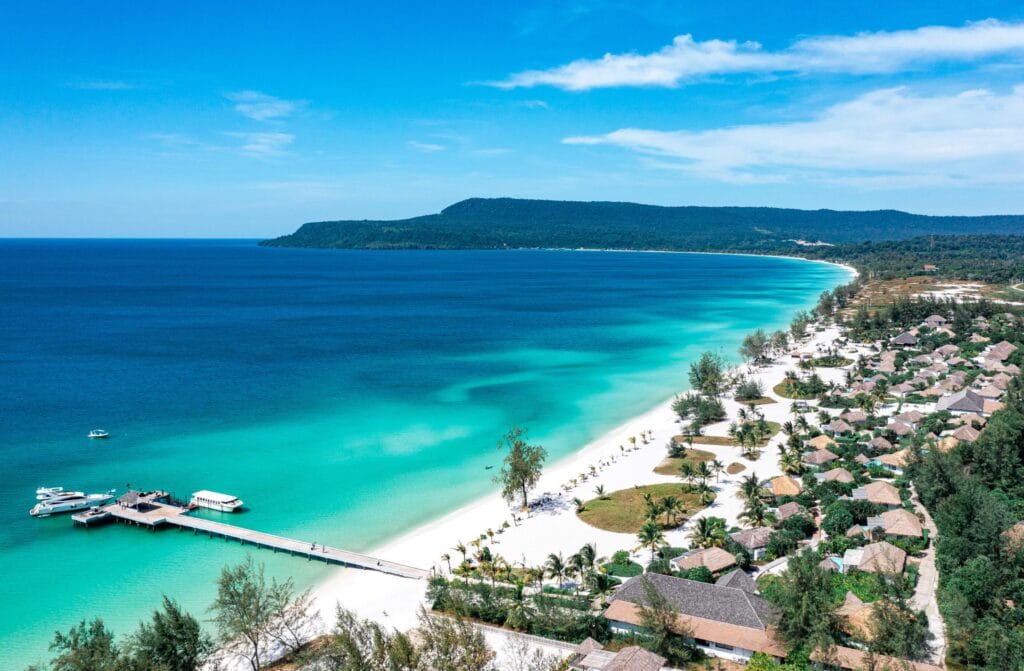
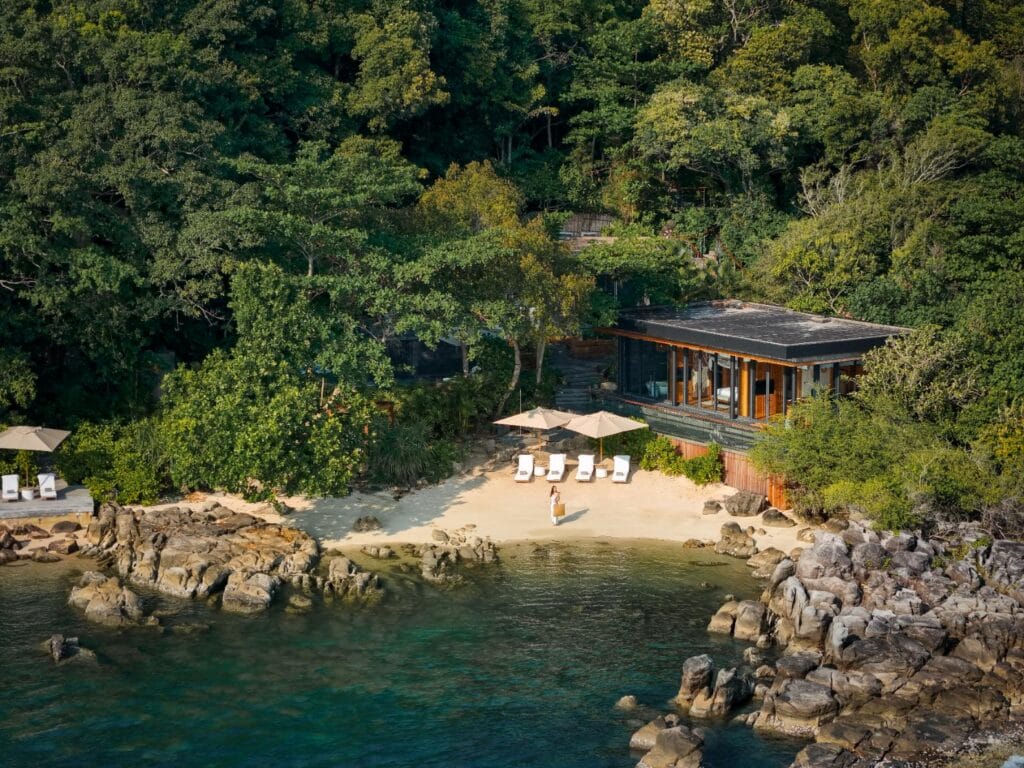
On nearby Koh Russey, also known as Bamboo Island, JATI Koh Russey is set among 46 hectares of tropical forest, just a 10-minute speedboat ride from the mainland. Its 82 villas include beachfront retreats with private pools, while a bar beneath an ancient banyan tree provides an atmospheric setting for sundowners.
Further along the coast, Six Senses Krabey Island takes a more restorative approach, with spa rituals inspired by traditional healing practices, shaded forest paths and long, delicious stretches of time in which the only decision is whether to return to the water.
And there’s no need to wait for a particular season to discover these pleasures. The rains bring lush greenery to the countryside and fill the waterways around Tonle Sap, while the drier months favour long afternoons exploring temples and towns. Island excursions are shaped by the weather, but the changing landscape is part of the experience, rather than a reason to stay away.
Perhaps that’s what stays with you most about Cambodia. You arrive imagining Angkor’s magnificent temples, but leave remembering things you hadn’t anticipated: the sound of a loom beneath a village house, the sharp warmth of freshly picked pepper, or the quiet of an island morning when, for once, there’s nowhere else you’d rather be.
Discover more about visiting Cambodia now.
Originally published
Latest Articles
Don't miss the latest from Luxury Travel