
The expedition destination that still sets its own terms
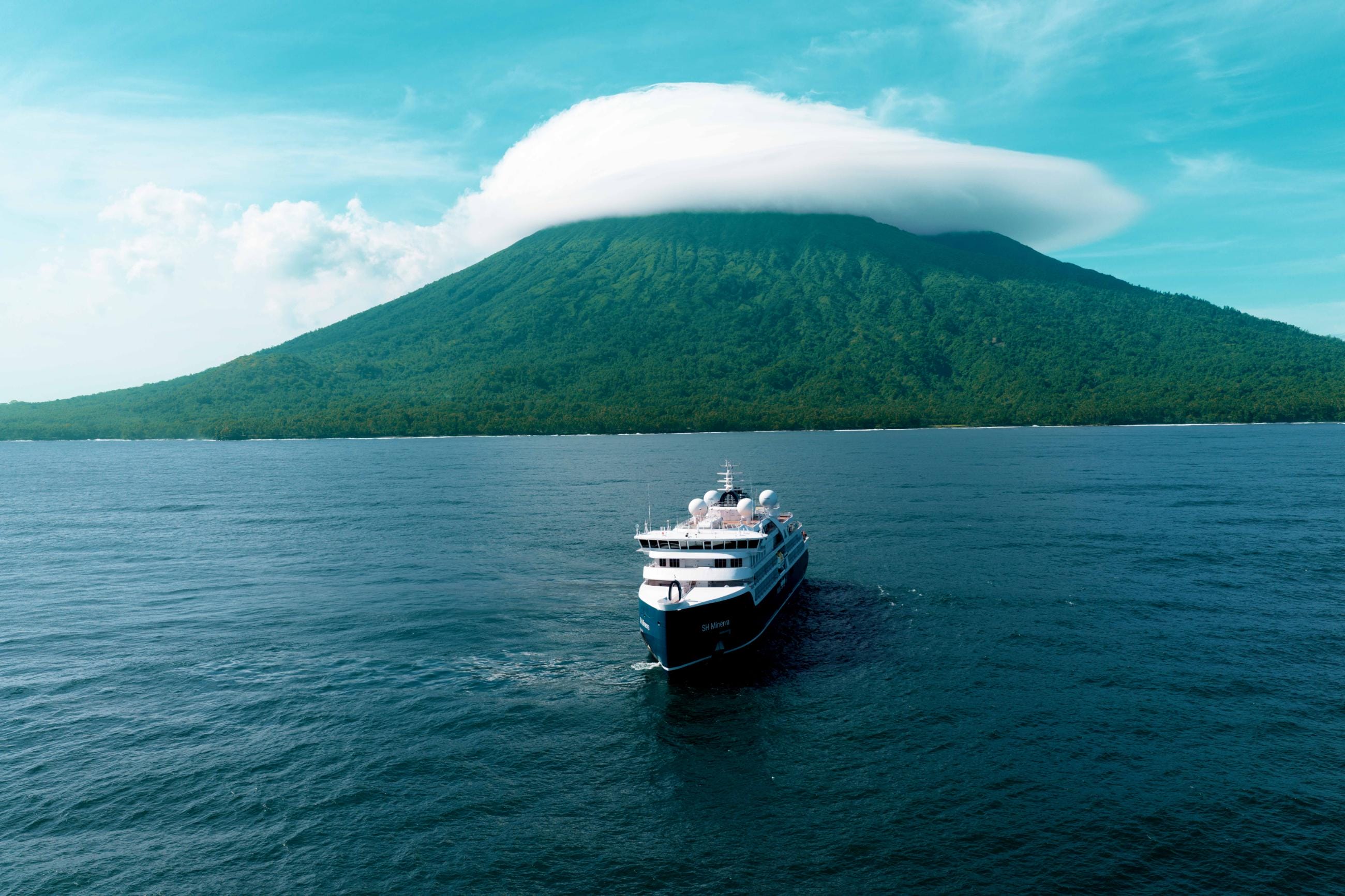
SH Minerva, a luxury expedition vessel operated by Swan Hellenic
In an age when expedition cruising has grown polished and predictable, a Papua New Guinea cruise offers something increasingly rare: genuine uncertainty and the promise of a true adventure
On the bridge of SH Minerva, the captain and his officers are intent on radar screens, electronic charts and depth sounders as we thread through reef-strewn waters off Papua New Guinea. Satellite navigation may have transformed modern seamanship, but in this part of the world, technology is only part of the equation. Local knowledge, visual navigation and a finely tuned sense of caution still count for plenty.
Watching the crew work, I am struck by how rare genuine uncertainty has become in modern travel. So much of the world has been packaged, mapped and rendered predictable that even the word “expedition” is sometimes applied to voyages where little is left to chance.
Papua New Guinea and the wider Melanesian region remain different. They are untidy, complex, occasionally uncomfortable and utterly fascinating. More importantly, they still have the capacity to set their own terms.
Paradoxically, it took the collapse of the Soviet Union to accelerate the growth of modern commercial expedition cruising. The fall of the Berlin Wall and the political upheaval that followed released a fleet of robust, ice-strengthened Soviet research vessels for use in commercial tourism.
Before then, the field had been largely confined to a handful of specialist operators. Lars-Eric Lindblad had pioneered small-group travel to remote regions and commissioned Lindblad Explorer, one of the first purpose-built expedition vessels, in 1969.
In 1991, Quark Expeditions, co-founded by Australian geophysicist and polar explorer Mike McDowell and Lars Wikander, helped usher in the next phase of polar tourism by chartering those Russian-flagged ice-class vessels for adventurous travellers.
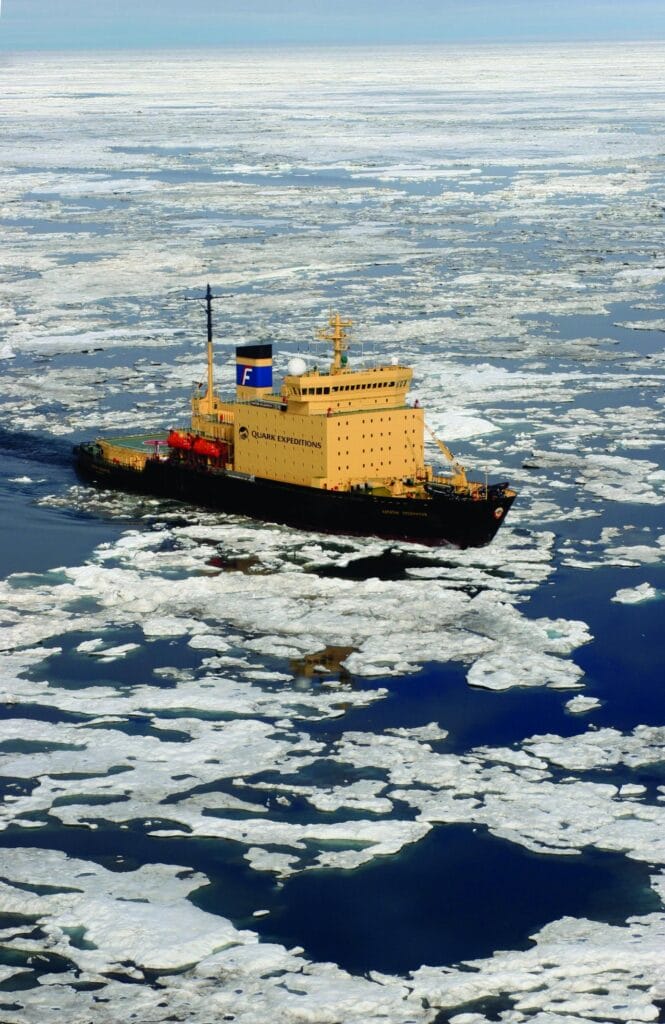
Into the white
These early voyages naturally centred on the polar regions. Some reached the geographic North Pole aboard nuclear-powered icebreakers. Others retraced the Northwest Passage or ventured to East Antarctica, where Scott, Shackleton and Mawson created history more than a century earlier.
Susan Adie, the current president of the American Polar Society and an expedition leader with an extensive resume dating back to 1990, recalls those heady days.
“At the drop of a hat, we might make a landing nobody had ever visited before, sometimes after dinner, continuing until midnight or beyond. Today, with so many people and so many ships, there is less exploration and certainly less serendipity and back then, serendipity was the rule of the day. Common sense and serendipity. I feel privileged to have lived it.”
The modern expedition fleet bears little resemblance to those converted research vessels. Today’s ships can resemble billionaires’ private yachts, complete with fine-dining restaurants, butler service, spas and lavish suites. Several carry their own helicopters and submersibles, along with fleets of high-speed Zodiacs for shore excursions and improvised adventures.
The ships have unquestionably evolved, but so too have many of the destinations – and not always for the better.
Port Lockroy on the Antarctic Peninsula, for instance, was once a rather improvised historic outpost that has become one of Antarctica’s most popular visitor attractions, functioning as a museum, post office, shop and conservation fundraiser. Its success has inevitably altered its atmosphere. At busy times, landing schedules must be carefully managed as shiploads of visitors queue to purchase postcards and souvenirs.
Versions of this scene are repeated at expedition destinations around the world, both polar and tropical. As the number of ships and passengers grows, operators risk overwhelming the delicate environments and small communities that make these voyages desirable in the first place.
With the benefit of three decades aboard small ships in virtually every corner of the world, I can think of one region that continues to resist easy conformity to the demands of the expedition cruise industry: Melanesia.
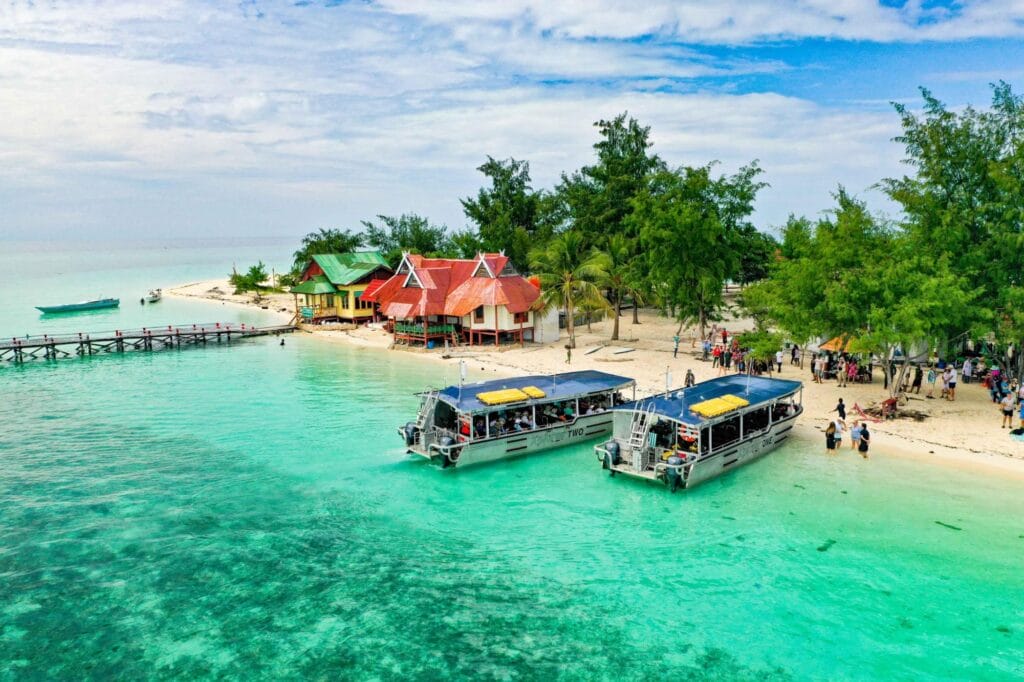
The wonderful uncertainty of Melanesia
With Papua New Guinea as its anchor, Melanesia stretches through Bougainville, parts of eastern Indonesia, the Solomon Islands, Vanuatu, New Caledonia and Fiji. There are, of course, places within this vast region that have embraced conventional tourism. Yet many others remain far removed from established visitor circuits and continue to receive expedition ships only occasionally.
That rarity matters. So does the manner in which visits are arranged.
At their best, expedition encounters in Melanesia are not simply a matter of arriving, taking photographs and departing. They depend on relationships, advance consultation and an understanding that a village is not an attraction created for the benefit of visitors. Permission, timing, cultural protocols and payment all require careful negotiation. Communities must be able to determine how and whether a visit proceeds.
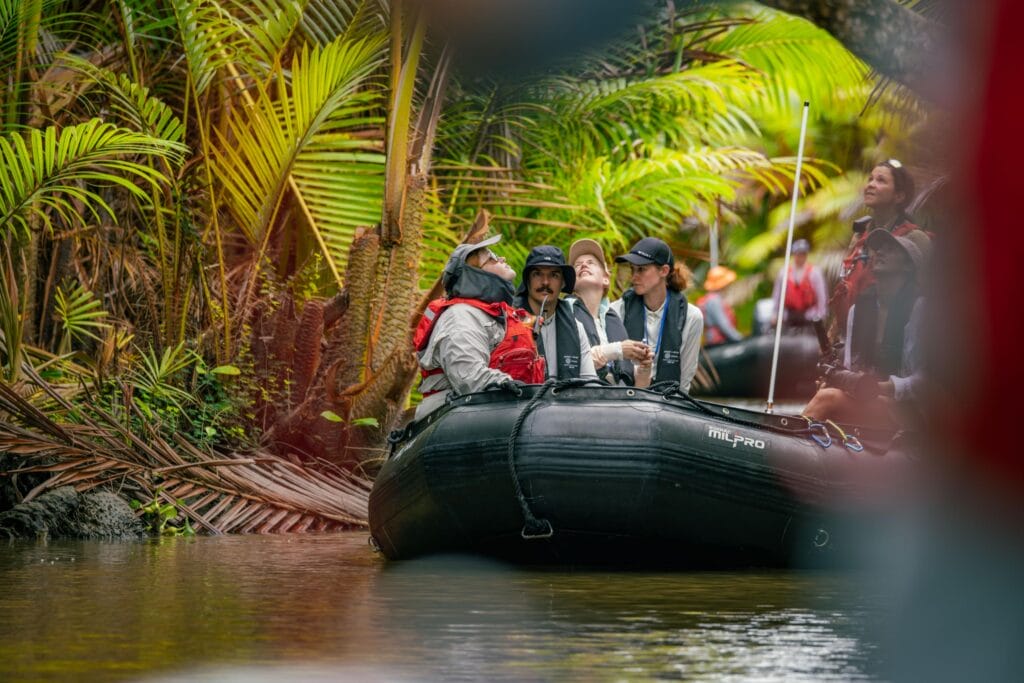
One operator beginning itineraries in the region is Pearl Expeditions. While its vessel may be new, those behind the operation have considerable experience, including Mick Fogg, the company’s General Manager and Head of Sustainability.
Mick and I have sailed together numerous times over the past 20 years, giving me ample opportunity to observe his fastidious approach to operating in delicate environments.
“Done properly, PNG is one of the few places on earth where luxury and genuine authenticity not only coexist but actually reinforce each other,” Mick tells me over a Starlink connection from somewhere in the Bismarck Sea.
Expedition cruising in PNG regained momentum during the mid-2000s, when Coral Expeditions, Orion and True North began heading north after their Kimberley seasons.
Their itineraries introduced more travellers to volcano-scarred Rabaul, the mystic Sepik River and the vivid Trobriand Islands, with their distinctive artistic, ceremonial and trading traditions.
“What we found was a destination that demanded something different from everyone who entered it: patience, humility and a willingness to let the place set the terms,” says Mick.
“We developed a blueprint from scratch, with traditional welcomes, cultural ceremonies and guided village walks, followed perhaps by lunch back on the ship and an afternoon at a tropical beach. It worked because it was built on relationships, not logistics.”
My most recent experience in the region was aboard another relative newcomer, Swan Hellenic, on a voyage from Honiara through Bougainville and Papua New Guinea to West Papua over two jam-packed weeks.
Ever cynical of debutantes in unfamiliar destinations, I was pleasantly surprised by both the quality of the ship and the expertise of the expedition operation. The latter remains the critical test for any cruise company claiming the title of “expedition”.
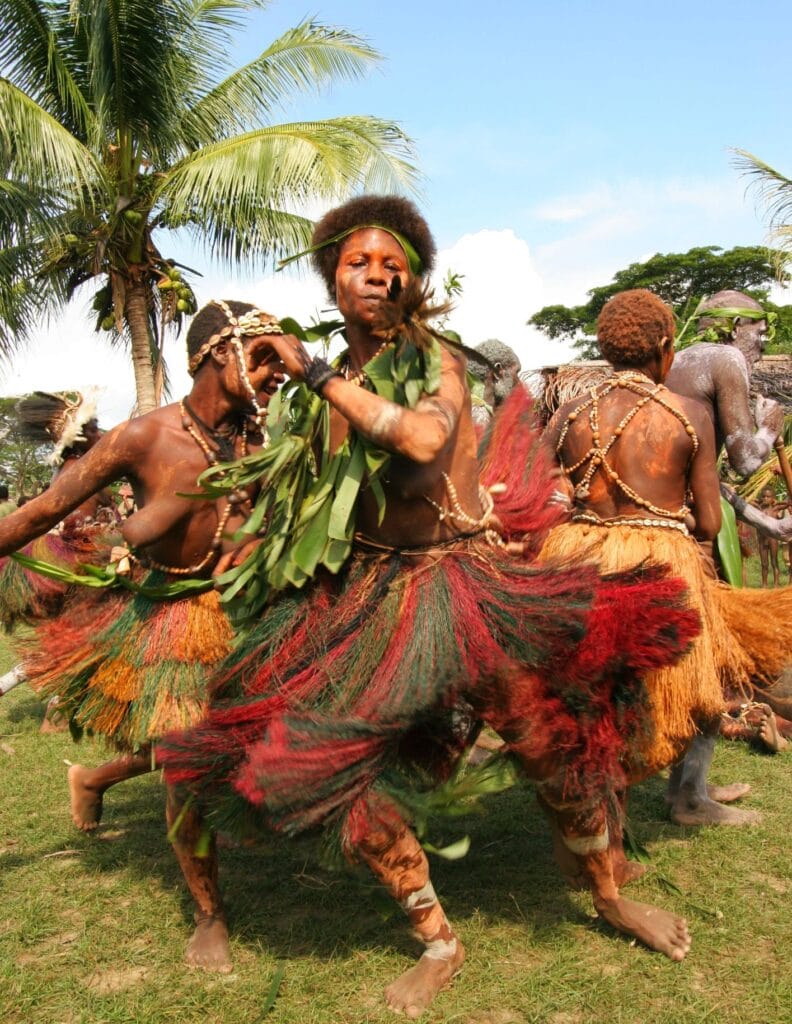
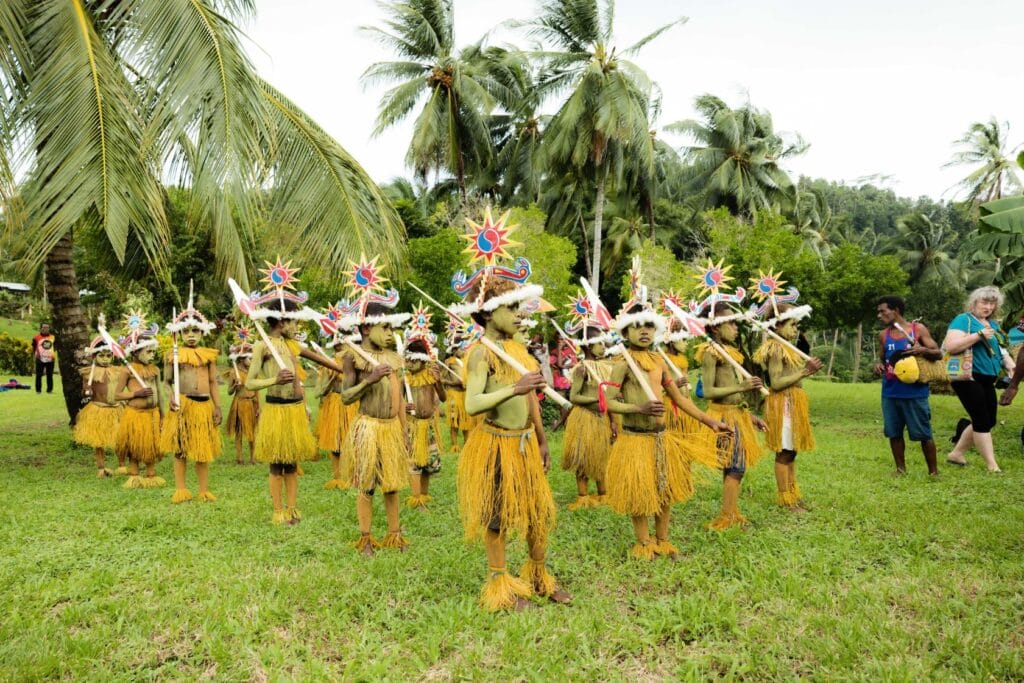

Done properly, PNG is one of the few places on earth where luxury and genuine authenticity not only coexist but actually reinforce each other… What we found was a destination that demanded something different from everyone who entered it: patience, humility and a willingness to let the place set the terms.
A warm welcome
To my surprise and delight, Swan Hellenic’s Expedition Operations Manager, Jane Wilson, was aboard. Jane and I first sailed together 20 years earlier in the ice-choked Chukchi Sea north of Siberia.
What is it that she finds so compelling about PNG and Melanesia?
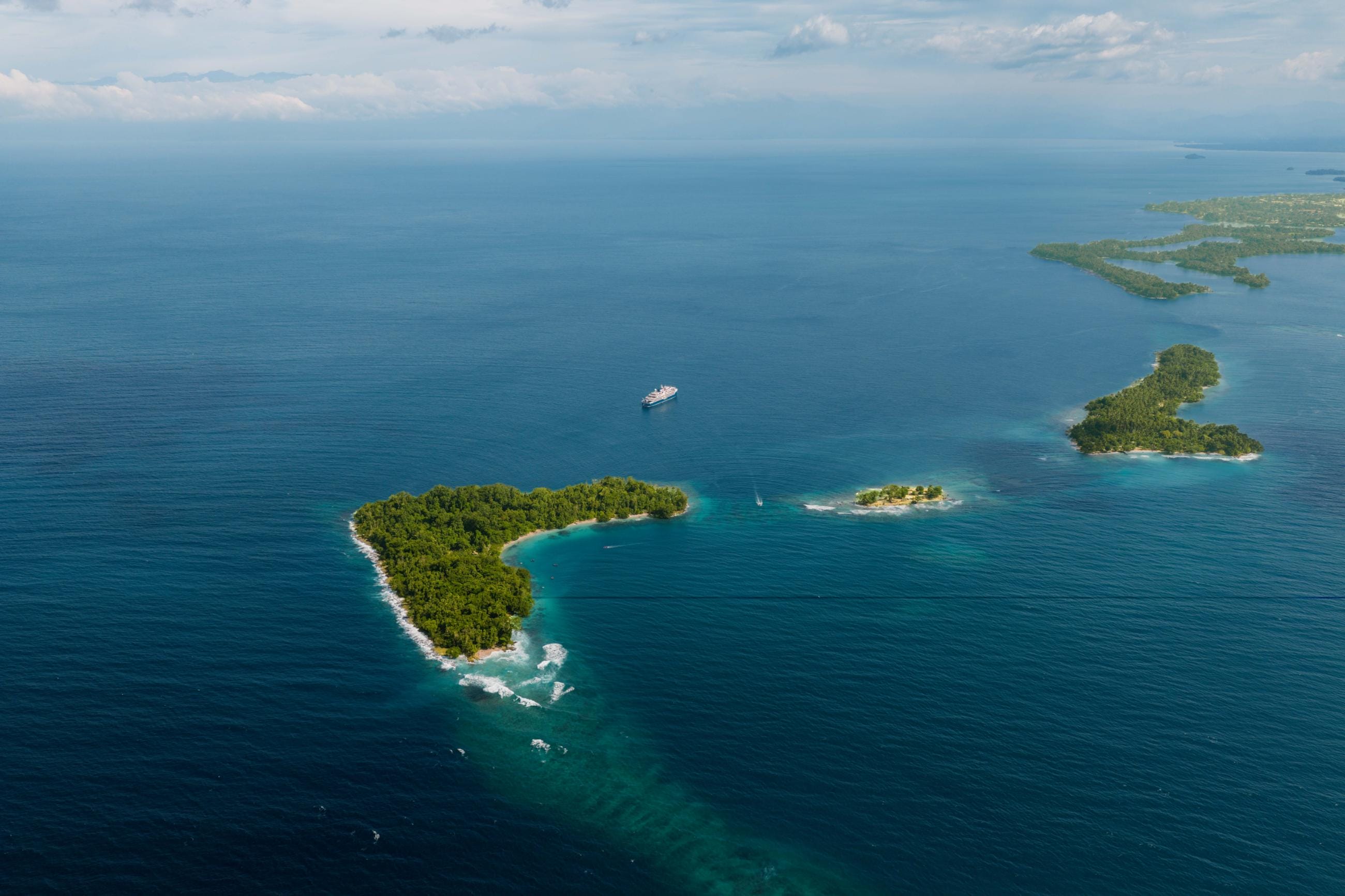
SH Minerva carries just 152 passengers, allowing it to access small anchorages and communities that could never accommodate a conventional cruise ship. During the voyage, we visited tiny islands with only a few hundred residents as well as larger regional ports.
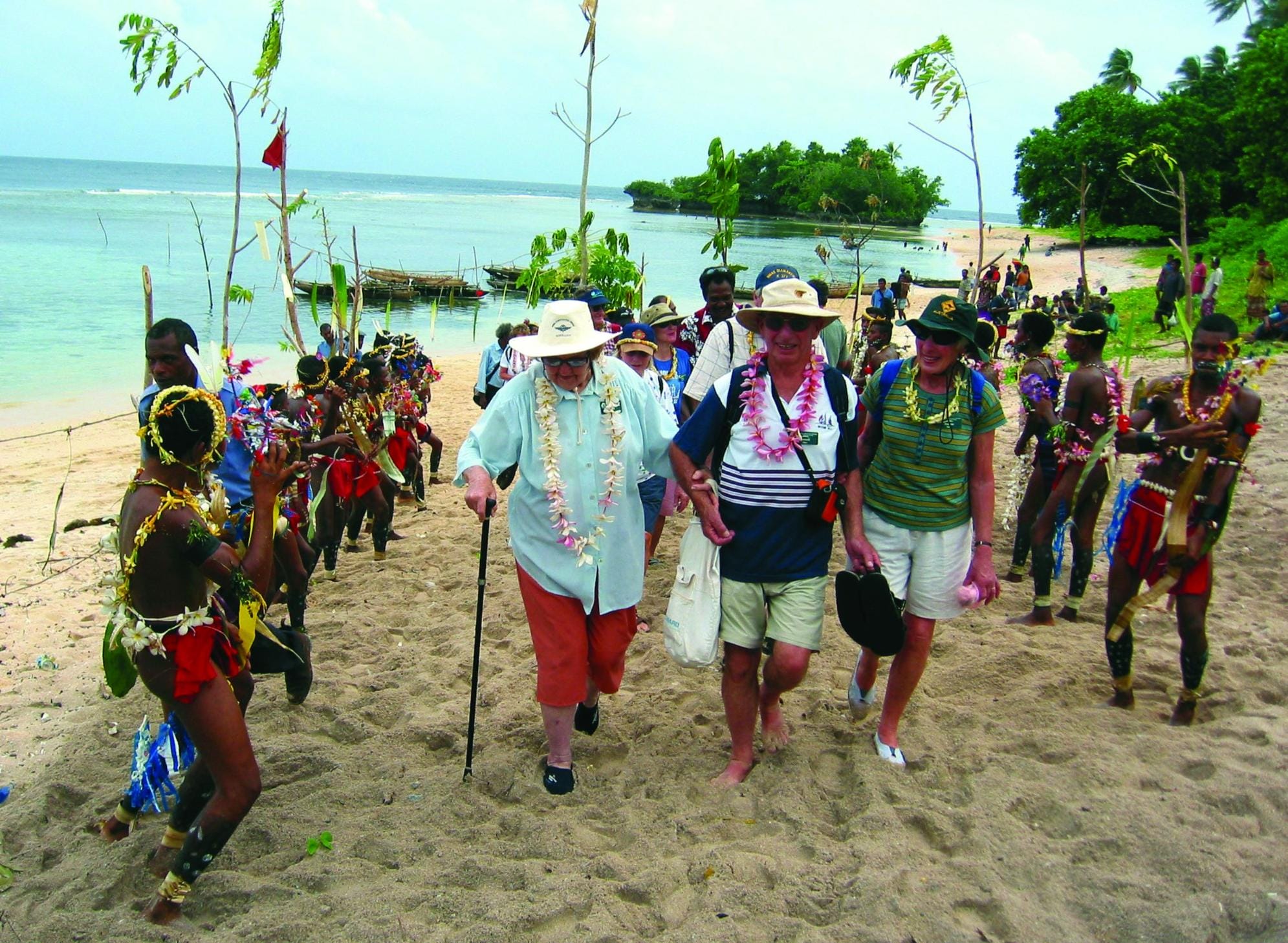
At several landings, we were greeted with elaborate welcomes performed in some of PNG’s hundreds of languages. There were vivid dance displays, beautifully made handicrafts and, often, the welcome refreshment of cool green coconuts.
Yet the most affecting moments are not necessarily the formal performances. Insight is gained through casual conversations, walks through villages and unexpected reunions. On several islands, I met people I remembered from visits two decades earlier. Exuberant young children have grown into inquisitive and intelligent young adults.
These encounters reminded me of my earliest journeys through the region, but they also demonstrated that communities are not preserved exhibits. Mobile phones sit alongside customary practices. Churches, schools, outboard motors, and satellite connections coexist with ceremonies inherited over generations, and it’s a mixture that does not diminish authenticity rather it makes the place real.
Offshore, the category 5 tropical cyclone Maila added another layer of uncertainty to the voyage. Thanks to the experience of our expedition leader and captain, it caused relatively little disruption to our schedule. Nevertheless, the storm’s impact elsewhere was a sober reminder that what appears as navigational drama from the shelter of a ship can be a serious threat to communities ashore.
Papua New Guinea can still feel genuinely confronting to travellers accustomed to smoother tourism experiences. Infrastructure is limited outside the major centres. Weather constantly interferes with planning, while even a seemingly straightforward landing may require negotiation with tides, reefs, surf and local conditions.
For expedition crews and their guests, that unpredictability is precisely what makes the region so compelling. It also demands restraint – not every landing should proceed, not every ceremony needs to be photographed, and not every community requires a regular procession of ships.
Back on the bridge, the officers continue to watch the screens while keeping a close eye on the water ahead. The channels are narrow, the reefs unforgiving and complacency has no place here.
PNG and Melanesia still resist easy packaging. They have not surrendered entirely to the machinery of modern tourism, nor should they. Their appeal lies not in being frozen in time, but in remaining complicated, self-determined and capable of surprising even the most experienced traveller.
It is this, I contend, that makes Melanesia one of the last true expedition destinations left on our shrinking planet.
Latest Articles
Don't miss the latest from Luxury Travel